What memory exercises should I do in order to improve my passive memory? Instead of learning and continously improving at certain memory techniques and devices (eg method of loci, chain method) that are limited and require a lot of planning-ahead in order to effectively use, how could a person improve their ability to spontaneously memorize raw data through rote?
In short, what should I do to improve at rote memorization?
The best case is when you begin applying subconsciously memory techniques. For example you learn many things and your brain has more pre-formed associations ready and you can juggle with bigger chunks in your working memory. (I think people with “naturally” good memories just have good habits and memory techniques they use without being conscious of it)
I don’t really understand why you would deliberately not use them. It’s a bit like saying “how do I train felling a tree only with my hands?” Why not train yourself to use an axe more quickly if you think you’re too slow?
I thought you could train passive, mnemonicless memorization through just paying more attention to everything you do? I’ve been realizing that I really didn’t pay much attention to things since I’ve started this journey. Stopping myself from being inside my own head helped tremendously, and the one I can back from my personal experience.
There’s also this habit I found on youtube of mentally reviewing everything you’ve done today before going to bed. Never tried it for myself though. You could. Kept meaning to do it but… forgot to
Actually that’s a very good point. Paying attention to what you’re doing, especially if you’re in a special situation… Like how does it feel… The small details, smells, sounds…
I don’t know if it’s “a technique” or just… living in the moment.
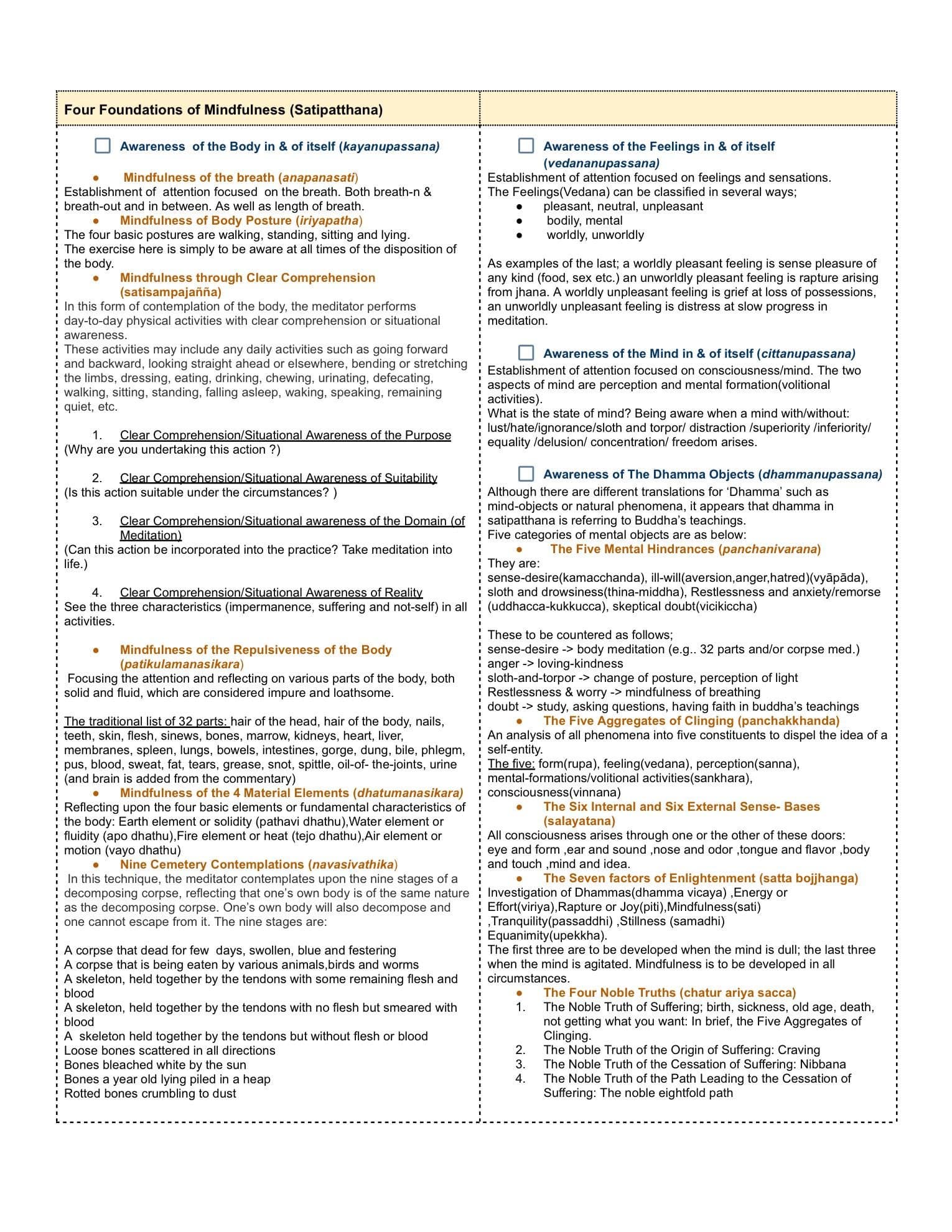
I’d call “living in the moment” a technique, with a whole meditation style being dedicated (Mindfulness Meditation, if I’m recalling it correctly) to it. @zeozea can look that up if he wants to know more. It’s pretty simple, but subtle, so not easy to get a hold of.
Before I stated using memory techniques I used too remember a whole deck of cards using just raw rote memory it has not improve my memory at all. I using remembering 56 deck of cards it would literally take 20 or 30 minute try and error. I like to say that remembering cards without meaningful learning improve my short term memory but that incorrect. You can not improve your short term memory but you can improve your working memory by using mental math and improve long term memory using meaningful learning(memory loci and visualization ). I hope this helps.
In Buddhism, mindfulness leads to jhana (meditative states of elevated conciousness Jhana Sutta: Mental Absorption) and to The Seven Factors of Enlightenment. Raw attention is what nourishes both skillful and unskillful states of mind, mindfulness is the “restraining”, controlling factor of attention. I found this source to be helpful, it aligns very well with the idea of mental training through memory exercises. The practice of mnemonics can be regarded as the practice of concentration and ‘mindfulness of mental objects’, or as the practice of “keen investigation of phenomena”, which is regarded as an awakening factor. The practice of mindfulness comes automatically with the fullfilment of it’s causes and conditions, through the practice of conduct by speech, mind and body, and through one’s effort of establishing it. Its like a chain, a cause + a condition = a result. And it’s how it evolves into neater stuff like the jhanas
I see. I’m relatively inexperienced with memory techniques. From what I’ve learned about mnemotechnics, they can help you memorize huge chunks of information quickly and effectively but tend to be inflexible, they are hard to apply spontaneously, without having to first create PAO lists, locis, memory palaces and so on. The information has to be first organized and systematized before it can be memorized, while rote learning enables you to jump straight into memorizing but requires more repetitive action to fully finish
But yeah, you’re probably right. In the long run it would be much more useful to have a large toolbox of memory techniques that can be flexibly applied in memorizing information, than relying on rote memorization all your life and never improving at it much. I’m convinced that memory techniques are vastly superior to rote but…I don’t know anything about them therefore why I’m currently not practicing any lol. Do you have any sources on getting started on memory techniques? (I’m aware of the irony regarding my lack of knowledge about mnemotechnics considering the forum we are on)
Hmmm I don’t entirely agree. You can spontaneously learn a new thing and stick it to the objects that are in front of you, and remember it that way. Memory palaces don’t always need to be that super organised structure prepared in advance.
Same for PAO / the major system. I read about converting numbers to phonetics years ago and used the idea for years without having done a PAO list, only coming with associations on the fly when I needed. With time, I realised I was using always the same people and things, and that I almost had a full list and formalized it.
In fact one can argue the more complicated you make it, the less effective it is.
I’m not sure about that at all. It can be as simple as “Here’s my to-do list - I’ll put the first item on my thumb, the second item on my index finger, the third item on my middle finger, etc.” Or “Here’s my grocery list - I’ll put the first item on my kitchen sink, the second item on my kitchen counter, the third item on the fridge, etc.” You don’t need a 100-station memory palace to do most of the everyday stuff that we need to do, and it can absolutely be applied spontaneously. Any place in your house can be a memory palace.
As for the PAO list, while I do have one, I like the Major System much better. All you have to do for that is remember 10 correspondences - each digit corresponds to a sound. Then you can look at a number and “hear” it as a word. So, instead of a credit card number, I have a series of nonsense words that are much easier to remember than a 16-digit number.
I’m not a memory athlete at all, and I don’t have vast amounts of trivia memorized (never needed it), but I use mnemonic techniques every day for stuff like the above.