I always enjoy hearing your thoughts, Fred! I’m gonna be critical here, but please don’t take it the wrong way and please keep posting up ideas for discussion!
There’s a distinct difference between “images” and “elements” within a system. “Elements” are the simplest single items that can be visualized that encode information. An “image” can be made up of a single element or many elements. (Incidentally, a “scene” can be made up of multiple “images” containing multiple “elements.”) You will still need to decode each “element” individually in an image or scene to accurately retrieve your information.
Learning a system requires learning all of the “elements” within it that encode data. There are 100 of them in a basic two-digit person system. There’s really no cheating that number.
You could have a setup where you combine 10 elements into a single image and then create “only” 10 images that contain all 100 of your elements, but that doesn’t mean you only have to learn 10 things to learn your system. You still have to learn 100 individual encodable elements.
Does it really?
Or do you initially spend twice as long on half as many sets? Because now you need to decode and learn two elements per set instead of one. You need to practice seeing all 45 of the merged pairs in BOTH directions, and you have to practice isolating the correct half of the image based on which direction those numbers are read. (Note: this would be brutal for someone with dyslexia!) Ultimately you’re still learning 100 elements, whether it’s in 100 x 1 format or 10 + (45 x2) format.
I could very easily see this approach having tons of issues with swapping. Accidentally encoding 30 as Steve McQueen. On recall, accidentally decoding a mental image of Marge Simpson as 03. There wouldn’t be any real “red flags” to clue you into a mistake if you’ve practiced these numbers and elements as a singular image.
You say that eventually the paired images will “fall away” but in order for that to happen, you’ll need to spend additional time retraining yourself to only see that 1-to-1 connection. This will likely take at least the same and very possibly more time to achieve than if you practiced 1-to-1 from the start. This is adding an extra conversion step in order to make it “faster” at first, but then you’ll need to spend extra time removing it from your conversion process later, likely nullifying or surpassing that initial time “saved.”
The goal of a number or card system should be to get you to instant direct association. Ultimately, you want to see the number and instantly visualize ONLY the element that relates to that number. This system adds an extra conversion step that will need to be eventually unlearned in order to get to that instant direct association.
Picture someone playing a game where the goal is to roll a ball at a target and hit it as many times as possible in a minute. Lets say the most effective rolling form is to swing the arm back and then forward like a pendulum, like in bowling. Someone who just does that motion once per roll will be able to roll twice as fast, twice as many rolls, as someone who swings back, then forward, then back again, then forward again before releasing the ball. (Sometimes they lose track of their swing and release the ball backwards too!) There is nothing gained by that extra back and forth. Its a redundant action that can and should be eliminated in favor of a direct single swing and roll.
I view system learning in a similar way. Sure, you can learn it with an extra conversion step, like a double swing and then eventually phase it out to a single direct connection, but wouldn’t it be better to learn and practice it as close to the way you want it to end up as possible? I think it’s better to avoid unwanted habits entirely than try to change them after they’ve been burned in.
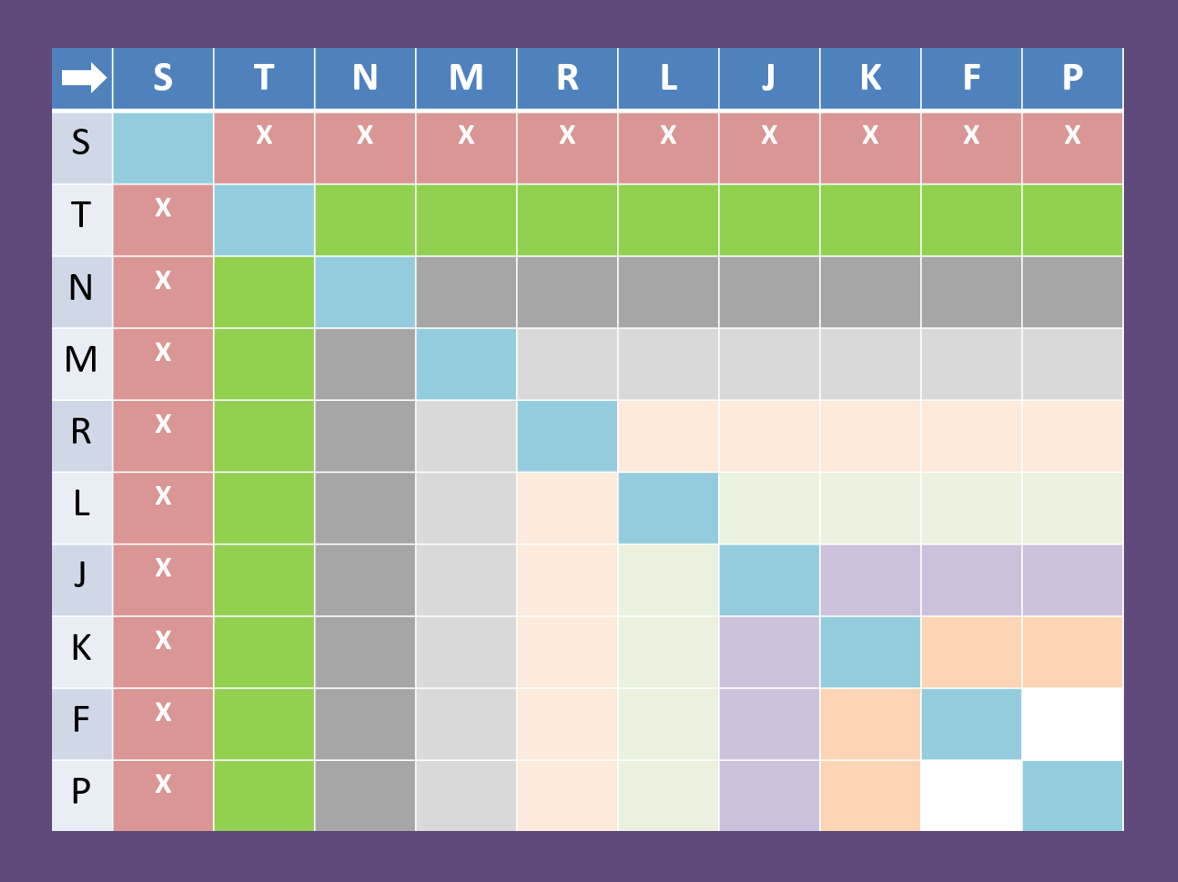


 :)… Ben’s system that I want to start next year Come on… I already saw that I’m going to have to work hard to create 2702 Portuguese words… at first I was going to get the English ones that I saw in the book by the 2x American memory champion, Ron White… but I was worried if it would take more work to memorize the 1000 objects… ufff… a lot of work with that… I think that only in English can you find a ready-made system… for those who are native to other languages, I suppose you have to invent things to set up the systems… but that’s fun