Hi all, I’m new to this, and I was wondering what would be the fastest way to memorize mnemonica stack.
Should I use Harry Lorayne pegs?
Or maybe the dominic system? Or a PAO system?
As far as I’m concerned, the method Lorayne’s suggesting would be easier if I want to convert a number to card. Is there a way to do that using a loci based method?
1 Like
If you want to use a memory palace, you can do it the same way people do in memory competitions… just search the forum for “speed cards.”
But if I use memory palace, how can I convert a number representing the position to the actual card and vice versa?
Use markers every 5 or 10 loci (or whatever intervals work for you). You can search the forum for “memory palace” for a more detailed explanation.
1 Like
Yep agree with Fred - we tried lots of methods and for a memorised stacked deck where you want to know the number (position) and card, we found the most effective method is to have two peg systems: Cards and Numbers and associate the two ( using a memory palace for initial memorisation ) - We suggest a ‘cast’ (using people to represent the items based on initials) for numbers and a cast for playing cards which allows easier association both ways.
1 Like
Can you give an actual example of card peg and number peg put togetger into an image? Because we’re talking about 2 people (no action).
Also, how do I connect this image to a memory palace? Do I need a palace with 52 locations?
Good question. What I understand from Paul’s post is exactly as you have stated it. Two people, one a position peg and the other a card peg for the example I’ve given you. My story is that a “Hitch-Hiker” (Position #42) is ‘hitching’ (action) with Donald Duck (Card for 4 of Diamonds) as encoded - DD from the Dominic Playing Card System. But you could choose really any action in your story to make the two characters interact with one another, it really doesn’t matter as long as it’s memorable. That’s what I understood Paul was saying? The trick is to ‘associate’ the two characters together in an unforgettable image whereby you can readily call up both characters unambiguously together. In my mental picture, I have Donald Duck (4D) ‘fuming’ as he and the “Hitch-Hiker” have been standing hours alongside the road “hitch-hiking” but to no avail as nobody is stopping to pick them up. Perhaps Paul can comment if this is what he meant by his system but that is my interpretation of what he means?
We use rhyming letter getters to change numbers/cards into initials but the same would work with the Major System or Dominic System
We have as cast of people for the numbers 00-99 and a cast for 52 playing cards.
To build the stack we give the number cast, the ‘action’ of the playing card cast member at the position of the card.
For a practical example:
Thinking of ‘Mnemonica’ - if I think of the number 27 I have the initials PH (using rhyming letter getters) and that is Paul Hogan in my personal ‘number cast list’ - The card at position 27 is Two of Clubs which is PC and for me that’s ‘Pat Cash’ (the tennis player) - so my movie scene is Paul Hogan climbing the stand at Wimbledon (in other words Paul Hogan is doing the action of Pat Cash) which I can decode quickly to tell me the 2 of clubs is at position 27.
1 Like
Thank you for clarifying the way you are doing things with your NLG System. From Pat Cash = Two Clubs, one can deduce that your NLG System is using “Poo” as your rhyming word for number 2. Hahaha!! Key to you NLG Card System is your prescribing the number cast member the “Playing Card’s cast member’s action”. Do you use double digits 01 - 09 for the first nine numbers of your 52 peg word position cast? Meaning 01=NB; 02=NP; 03=NT; 04=ND; 05=NK; 06=NS; 07=NH; 08=NG and 09=NW. I picked up from a previous post that your rhyming keywords 0-9 were: Nero, Bun, Poo, Tree, Door, Knife, Sticks, Heaven, Gate, Wine. Am I correct in also assuming that you are using Paul Hogan as both a Position Peg at #27 as well as a Playing Card namely Two of Hearts in position 2? I’m guessing that Nelson Piquet could occupy the placeholder for position 2 where Paul Hogan would be associated with as the 2 of Hearts? Giving Paul Hogan’s action (maybe wrestling crocodiles), it’s then a short step to imagine ex-Formula 1 World Champion Racing Driver Nelson Piquet wrestling crocodiles?
The real skill and art in Memdeck work to my mind is all the “Patter” and misdirection that magicians use when working with their preferred Memdeck stack they have chosen. There is some skill for instance in breaking the seal of a new deck of playing cards in front of an audience, fanning them to show that they are new cards in NDO (new deck order) and then going about a set of faro shuffles to arrange the deck from NDO into a Tamariz Stack order. After the dirty work is done involving some false cuts and one is in the Tamariz Stack order, then the art of “Jazzing” as magicians call it comes into play (unless one is performing any number of tricks as given in Jaun Tamariz’s book Mnemonica) and isn’t jazzing. In other words one is performing a set routine and is not ‘winging it’ or ‘jazzing it’ as magicians call it. All the so-called ACAAN (any card at any number tricks) involve a pass of some sort (which is cutting to a particular card to put the deck in an order that will locate a specific card at a specific number of cards down from the top card. I think the investment in learning to do Memdeck routines can be most rewarding and there are a great number of tricks using Juan Tamariz’s Stack to be found in his book “Mneumonica” as well as some Youtube videos that one can make reference to.
Yes Fred, I always use (and advocate) two digits for a number cast list - so 00 to 99
and yes you got the idea that we use on our magicians course 2 of Clubs = 2C = PC = Pat Cash
The court cards are ‘cast’ by type so for example ‘King of Hearts’ is my father in my personal playing card cast list.
and yes the Rhyming Letter Getter for 2 is P for Poo (the fact you instinctively knew is the very reason we chose it).
1 Like
The great advantage of having multiple systems to encode playing cards to positions in a deck of cards is that its very useful if one is wanting to play around with the idea of learning multiple Memdecks for example: Redford, Aronson, Mnemonica etc. Your NLG System is right up there with the best of the systems I know about. Thank you for your very detailed explanation given in explaining it for everyone’s benefit.
Thanks Fred, as an experiment I memorised the Nikola stack recently to see how long it would take start to finish - 15 cards a day - in total it came to 37 minutes to memorise the stack (and of course the positions) and a few minutes each day to review. And it’s there forever!
1 Like
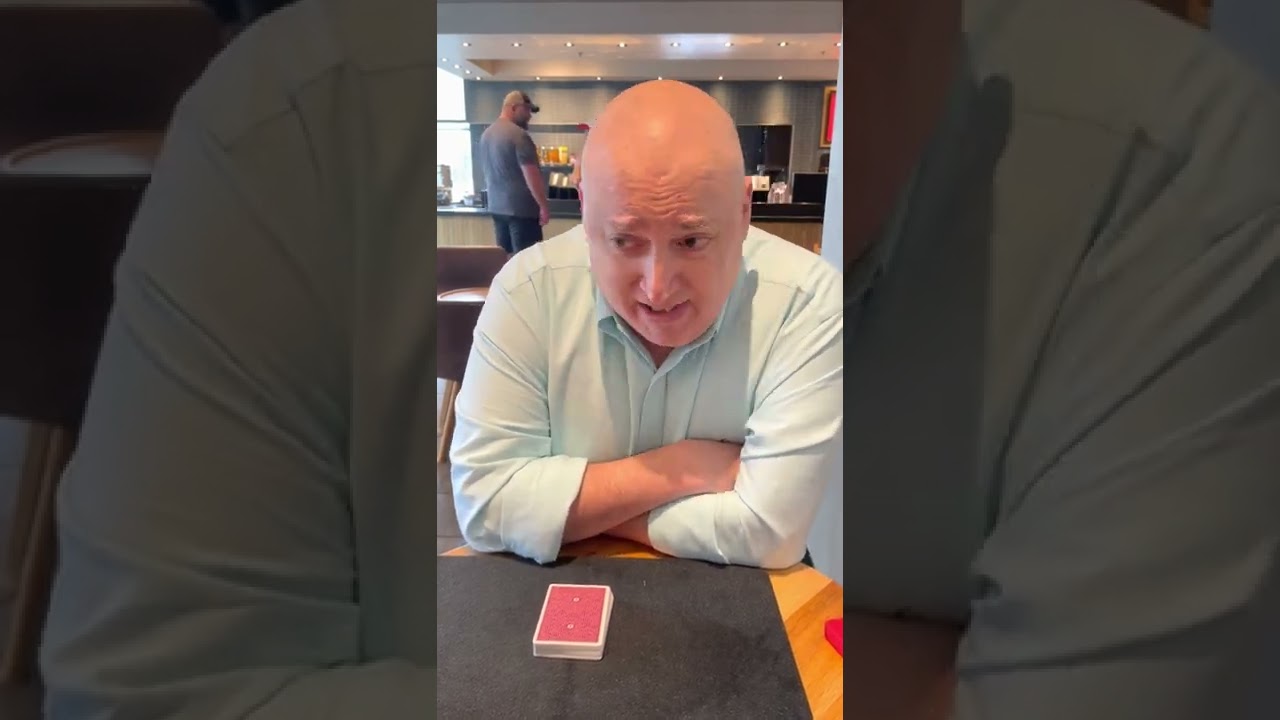
I performed an “instant memorized deck” routine recently; the video is shown below.
2 Likes
Welcome! How many seconds does it take you? Can you do a video where you get two decks and a timer? Shuffle one deck, start the timer, memorize the deck, stop the timer, then take the second deck and arrange it in the order that you memorized. Then compare the two decks to see how you did. This is how it is done in memory sports, and will increase your credibility on here a bit. I would also recommend reading and commenting on the threads regarding photo reading as many of us on the forum have a different view in the subject than you appear to have.
I did this exact thing recently! Had Aronson stack memorized and wanted to try mnemonica too.
I made a memory palace path through my parent’s house, making sure to mark 52 stops along the way.
Before even trying to encode the cards, I used my major system objects for each number and integrated them into the locations.
Example:
Location 01 is a parking spot in the driveway.
01 = “SeaT” in my major system list.
I pictured a giant kids carSEAT blocking my way
Location 02 is the garage door.
02 = SuN.
There is a giant phoenix suns logo painted on the door.
Once I could mentally walk through the path and see each number object, I then added the person that represented each card into each location and had them interact somehow with the major peg object.
Example:
01 - 4 of Clubs
My Card person for 4C is tony RoMo.
I picture Tony Romo in the parking spot lounging in the big car seat like its a throne.
02 - 2 of Hearts
the NaNNy is wearing a suns jersey, throwing bounce passes at the suns logo on the garage door.
Etc.
Obviously theres a prerequisite here of having some kind of peg objects from 1-52 and having a system where you have a dedicated person to represent each card. If you need any tips on those theres a ton of resources and people here who are happy to help!
Nicely done! Juan Tamariz would be proud of that routine. The fact that the person whom you performed your routine on needed the assistance of a cell phone to add up the digits of the cards before the named card, made that feat appear even more miraculous than it actually was to do. I won’t divulge to others how you did the trick - Magicians Code. I think I’ll trick my grandson with your tricks within the Mnemonica Stack. Positions of all “Jacks” within the mentioned Mnemonica stack could be achieved through a simple PAOL system. Well more accurately, remembering the positions of all cards with the same face values (of which there are 13 different ones from: Aces, Twos, Threes… Jacks, Queens and Kings) could be achieved by a PAOL system. But nice routine none-the-less!
1 Like
I think given the fact that this performance is under the “Magic Tricks Section”, it is indicative of the fact that @iOSDeveloper is a magician. He is making use of a prearranged stack (a Mnemonica stack as developed by the Spanish Memdeck Guru Magician himself - Juan Tamariz). Take the performance for what it is - just that - a magic trick being performed. Spoiler alert @iOSDeveloper never really summed up the cards to the selected card. He actually used a mnemonic to perform that feat. What I particularly like about Memdeck work is the fact that the magician is working not with “one keycard” but with “52 keycards”.
1 Like
This may be far too late for anyone who contributed in the post above to be interested, but I am planning a follow-up book to my ‘Memory Tools’ that will include memorising a deck of cards. I am going to use the Mnemonica stack at the order, but to readers not in the know, it will seem as if I am just talking about a randomised deck order.
Here is a part of a post I wrote on Magic Cafe in response to someone who seemed to be making memorisation of Mnemonica far more difficult than it needed to be:
To be honest, I think you are making things FAR more complicated than they need to be - and I mean no disrespect by that. I learned Mnemonica in about an hour, using the method I’ll outline in a moment.
Full disclosure, I’ve written a book about applying memory techniques and have also competed in Memory competitions. However, to see how easily this could be done, I didn’t rely on my previous card associations, though I suppose I already know how to make memorable images and associations, etc.
Oh, the pedant in me also wanted to let you know about a few inaccuracies in your initial post. Dominic first developed his method for cards, not numbers. He devised it after seeing Creighton Carvello memorise a deck on BBC’S Record Breakers.
Also, PAO developed out of PA, not the other way round. Before Dominic, almost all competitors were using the Major system. Then when Dominic combined his system with the method of Loci, it cause a lot of reimagining and creativity, as others sought to topple him. One extension of the DOMINIC system was PAO.
Anyway, here’s how I would suggest learning a stack to anyone who asked. Convert your cards into characters in any way you choose. If you didn’t want to learn 52 characters, you can use the number of the card to give you one of 13 characters and the suit to give you an action and/or object. Just make sure the 13 characters are distinct and memorable. (E.g. 10 might be Bo Derek in her famous bikini from the film 10.)
The real game changer for me was simply devising 52 loci to place the cards in. Instead of devising a 52 stage journey, I suggest coming up with associations for each number and then making a location from that. I’ll give some examples:
1 = the finish line of the London Marathon (1/won)
2 = a shoeshop (2 rhymes with shoe)
4 = my front door
6 = a pool hall I attend (“sticks” is too abstract)
8 = a hotdog eating contest I once entered (8/ate)
18 = a cinema
29 = a diving board, because Feb. 29th is leap day.
36 = the Olympic podium Jesse Owens stood on in 1936
39 = steps near me (reminds me of the 39 steps)
45 = a scene from the movie Oppenheimer (set in 1945)
Now, if I think about what is taking place at location 18, I see Michael Jackson (King) hitting people (clubs) because they keep talking during a showing of the extended Thriller video.
If I want to know where the 5 of hearts is, I can immediately see a pregnant lady (5) eating so many hotdogs that her heart explodes.
Not sure if that helps, but thought I’d share. I had thought of writing an ebook on the topic, along with fuller info, but hopefully that helps for now.
1 Like
That’s exactly how I did it too! The importance of memorizing a mnemonica stack (or any other stack) for that matter, is to quickly be able to go from card value (say Queen of Hearts) to position in stack and visa versa. The pegs you are using to link the cards to are memorable as numbers in and of themselves which makes the encoding/decoding spontaneous. The far greater skill required by any aspiring magician is the actual “passes”, false shuffles and false cuts that usually go hand-in-hand with any ACAAN (any card at any number) effect. Paired association of linking 52 discrete pegs to 52 distinctive cards (that you have encoded as people) to my mind anyway, is the easy part.
I did 13 rank images
Through 4 suit versions of each
(Like your second option)
But attaching numbers i found easiest by attaching my existing alphanumeric letter/number index to it, then just building a second alphabet for 27-52
This mixed with chunking by 5s (noting every 5th card number super hard) got me there in about 2-3 hours
Attaching numbers is definitely the hardest part and the better the number system the easier to compress