If anyone can find a flaw in this - i’d be grateful…
Grey cells at the ready…
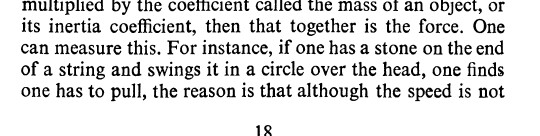
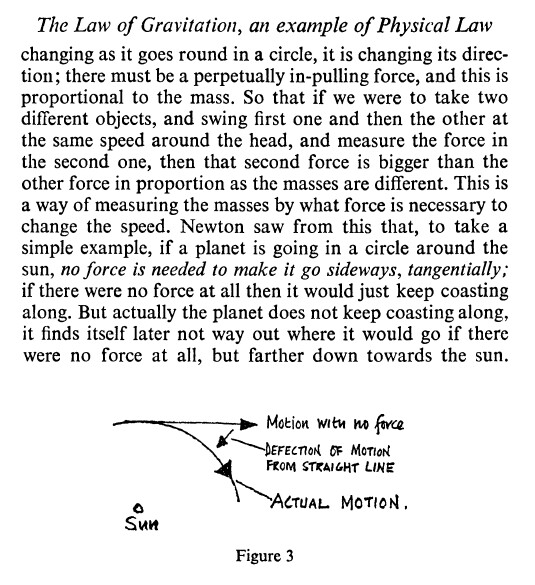
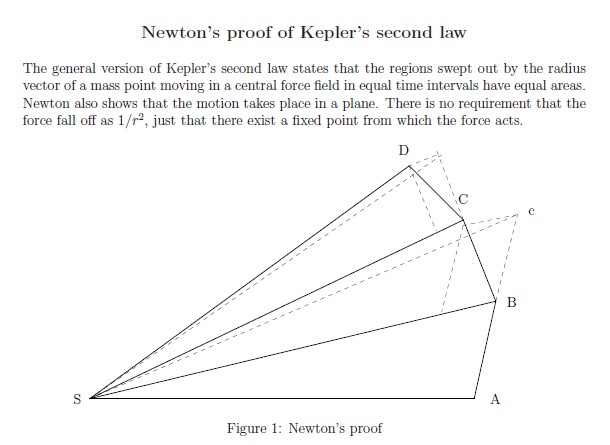
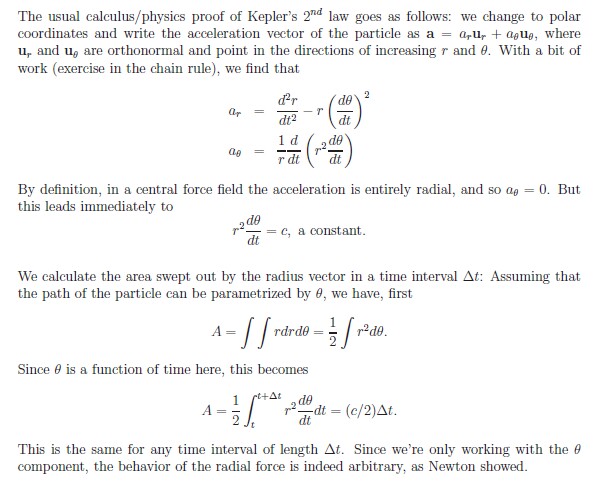
I was looking at Richard Feynman’s Lecture - The Relationship of Mathematics to Physics Equal areas in equal times where he ‘borrows’ from Newton’s Principia an argument about showing equal areas are swept out in equal times, it is all very entertaining… but I could not help but think “WHY SO COMPLICATED?”
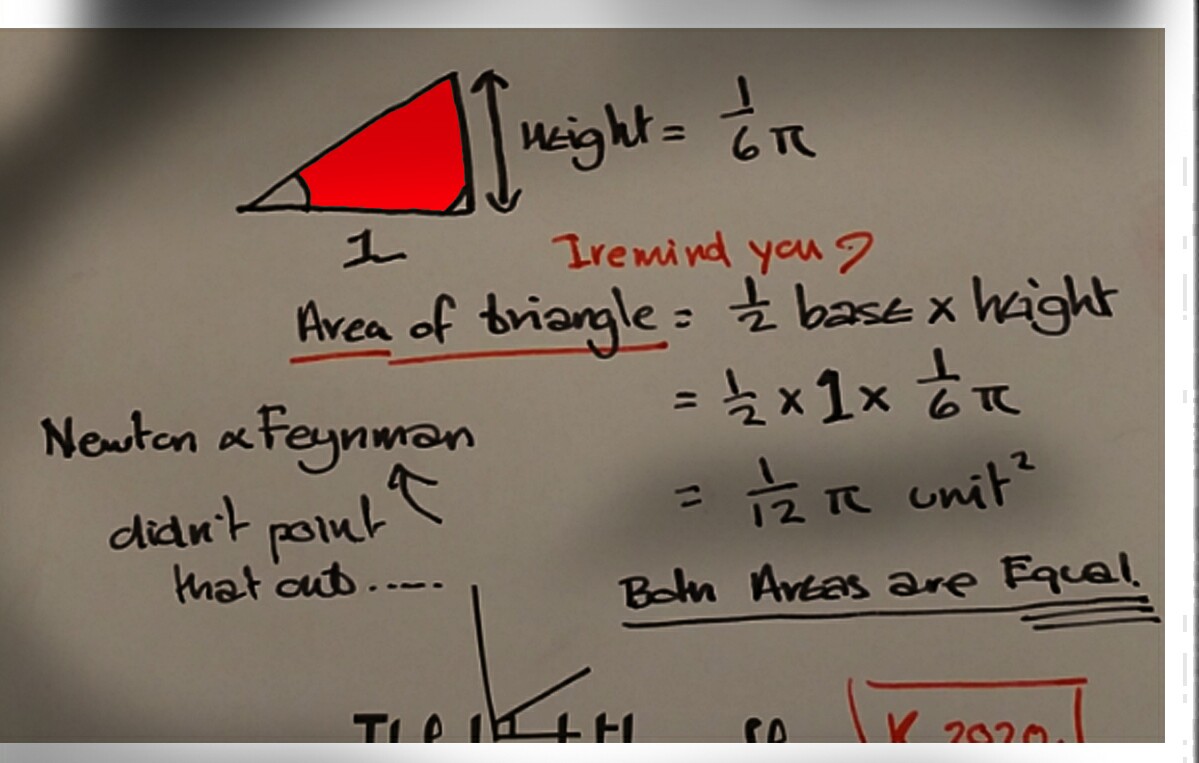
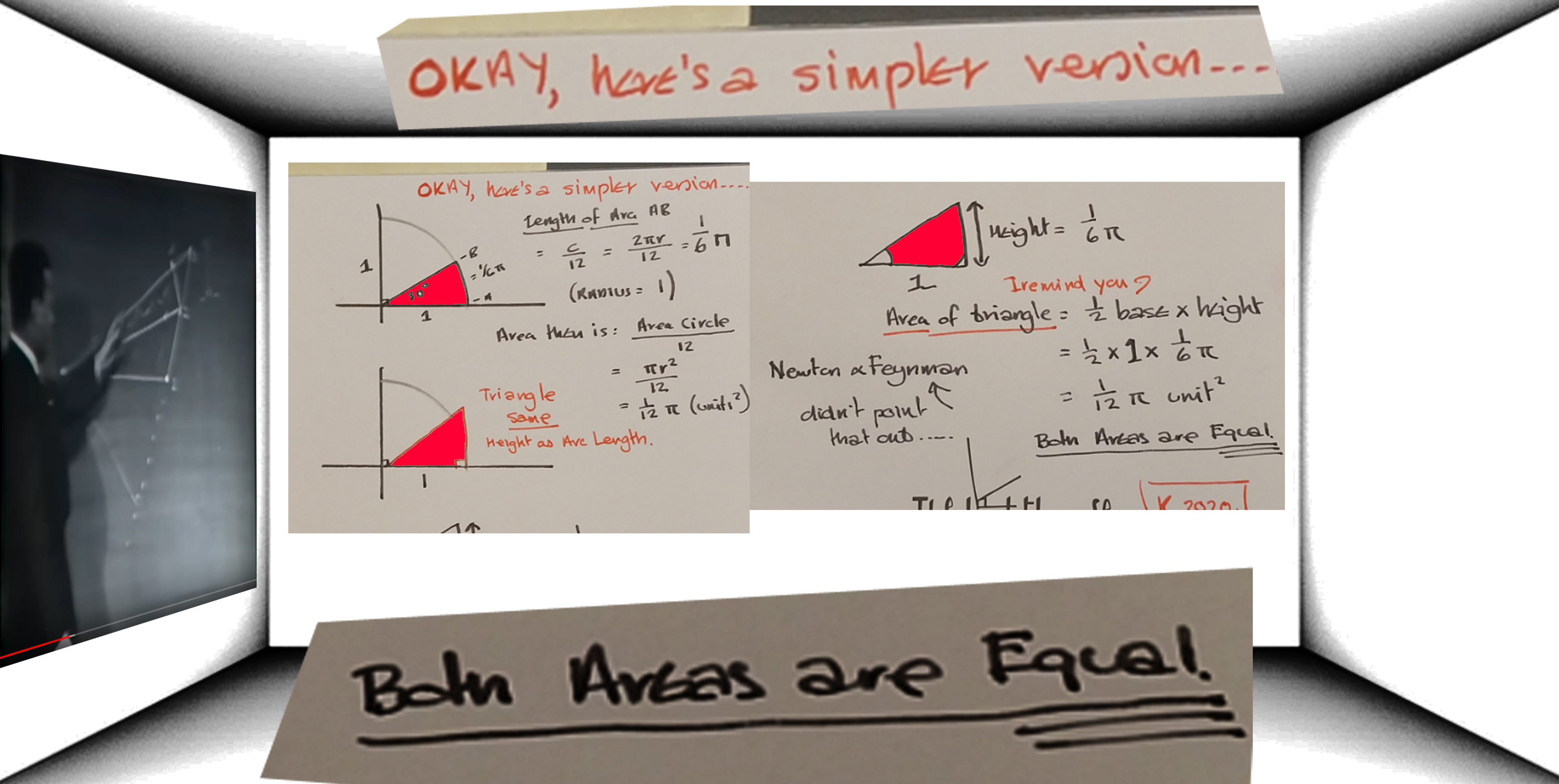
Why did Feynman not ‘just’ SAY and show that a right-angle triangle of height equal to an arc length of a circle is the same area as the area of the arc length fraction of the circle. Did Newton not know two pi radius equals Circumference? I think he did. Or that Pi times radius squared was equal to the area?
I don’t get it.
Then if the particle / planet / whatever is going at the same speed it will sweep out the same area from a fixed point whether it is going straight or being bent by gravity or at the end of a string from a circle.
So maybe I am wrong… but I cooked up a few images for my own use using my roman room …idea
If anyone can find a flaw in this - i’d be grateful.
It is not a proof of course, Pi wasn’t called Pi in Newton’s day but Feynman knew…
Maybe this is not common knowledge??


Thanks for looking and using your grey cells.