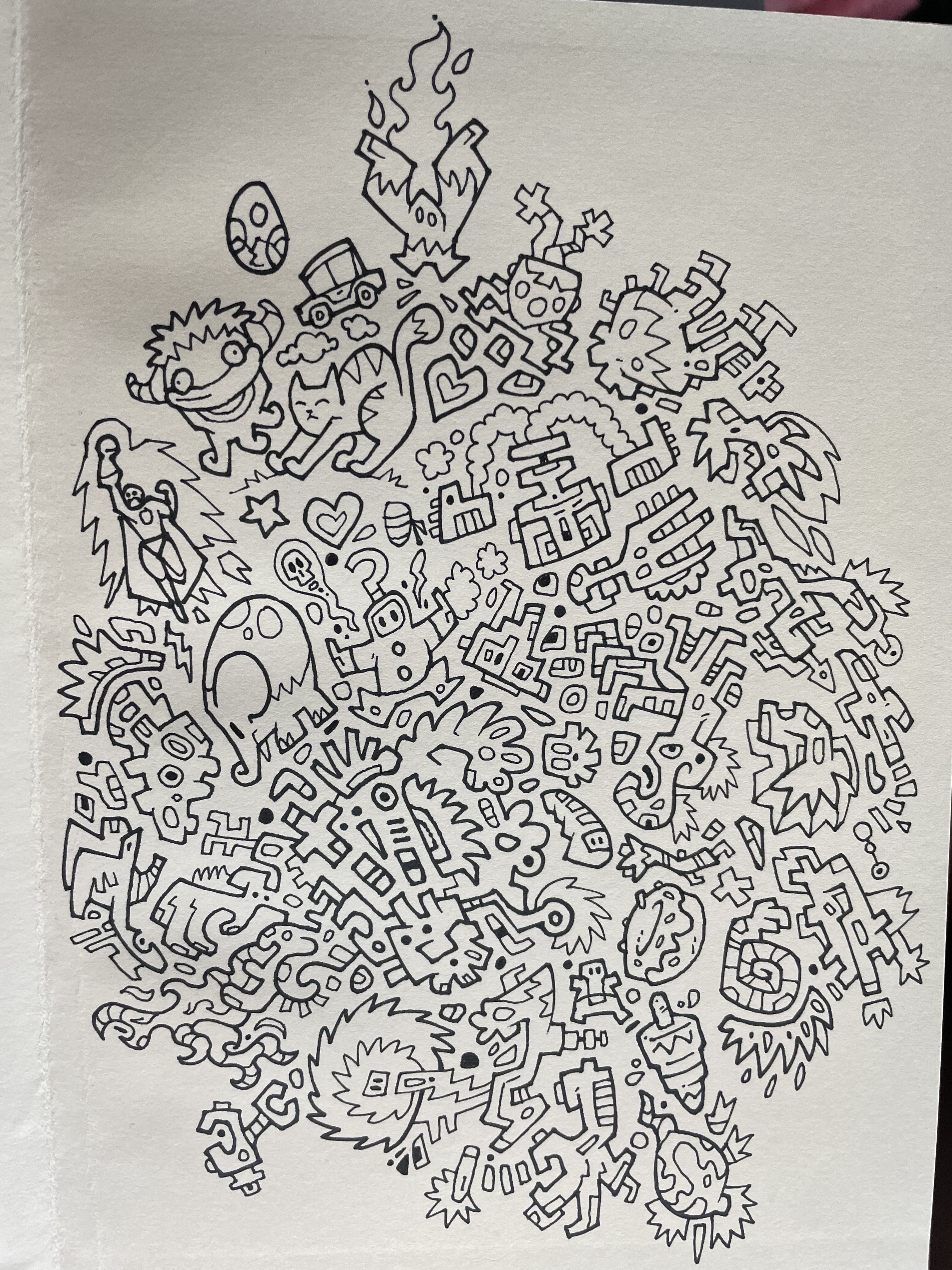
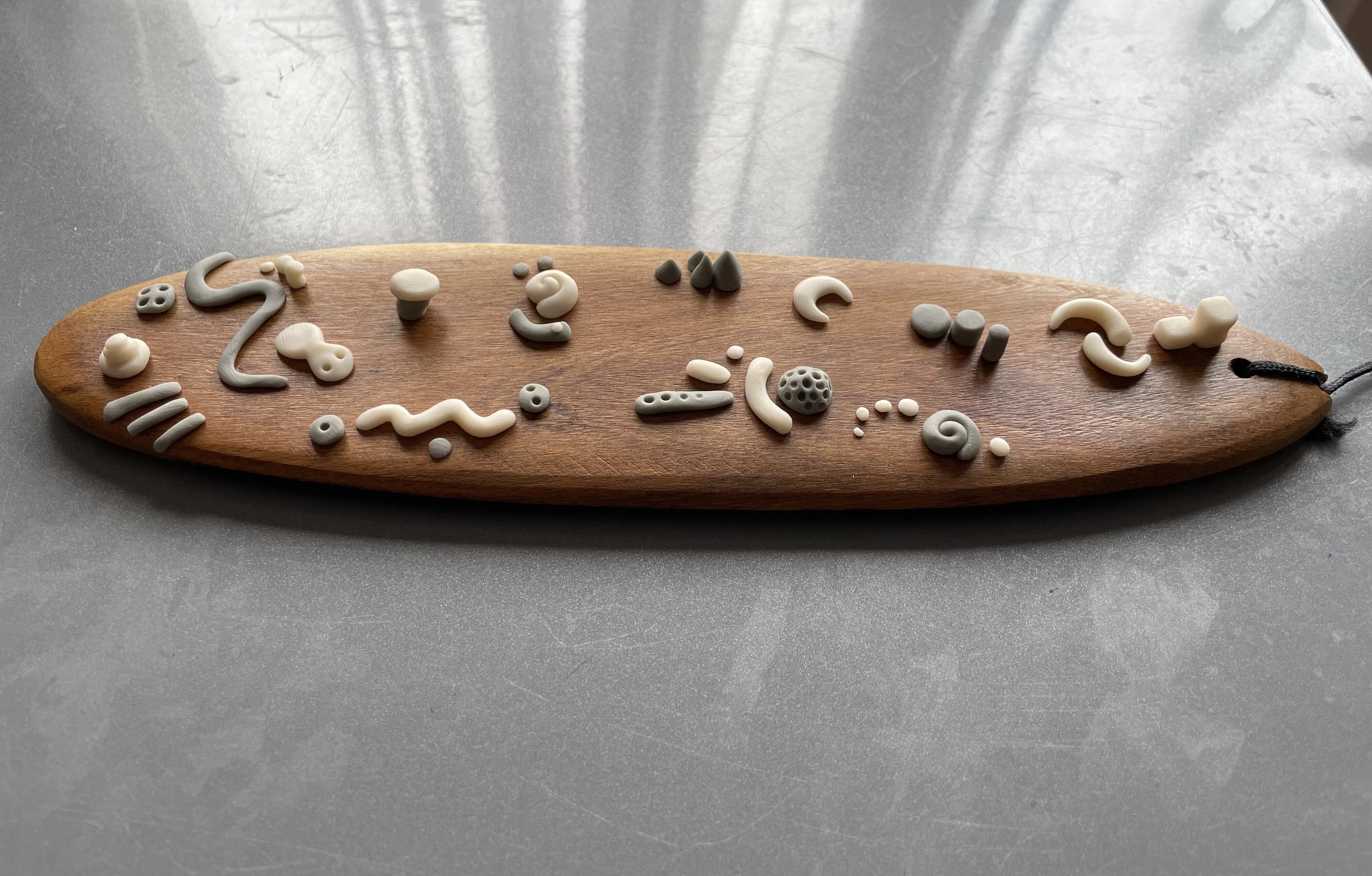
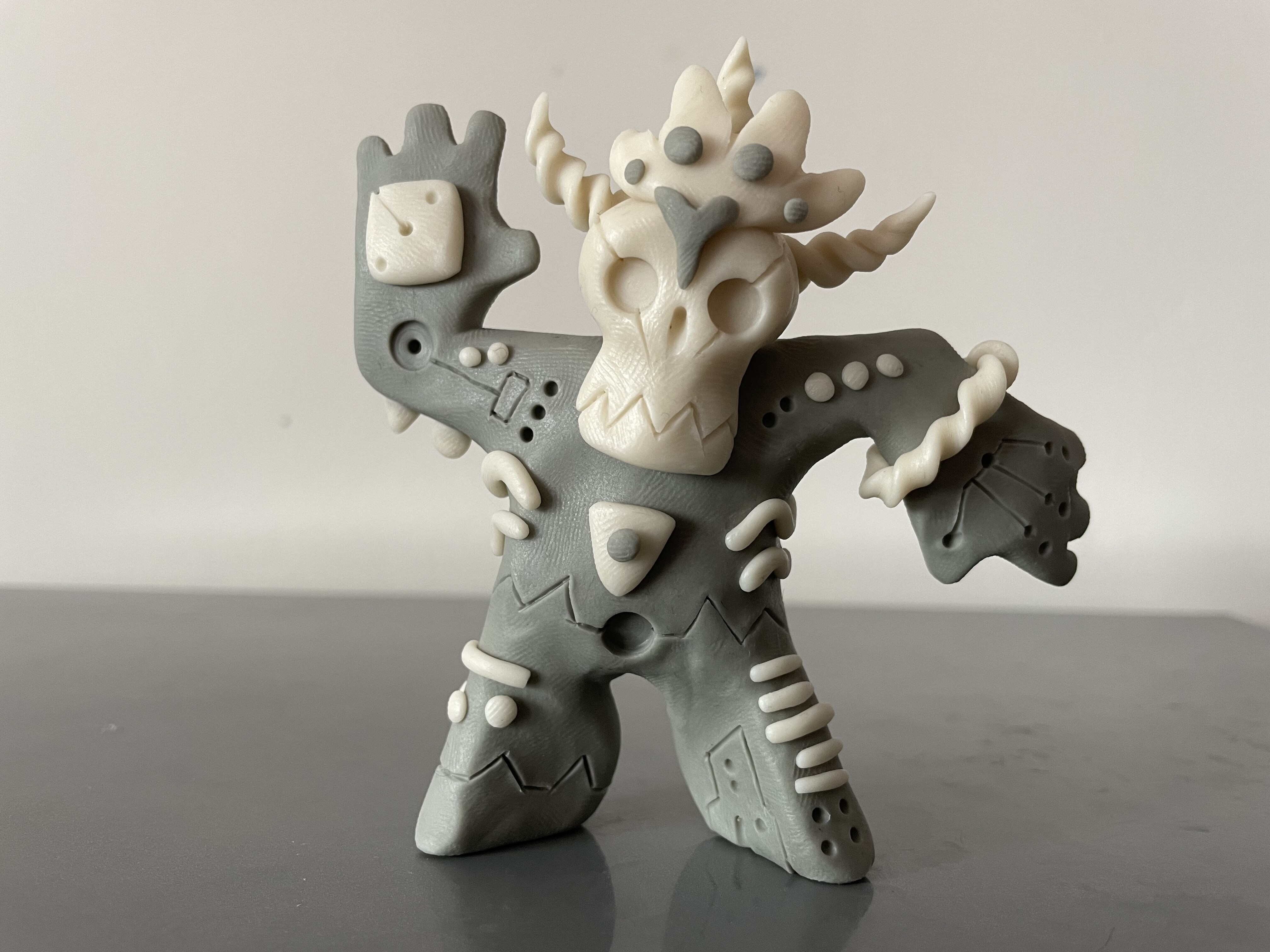
Hi, I’m fascinated by the revelation that ancient cultures could attach memory associations to a myriad of devices. I’m interested to know if any of the attached attempts I’ve made would be up to the job,
or have I over complicated things
Appreciate it. I really can’t grasp how the originals work, seems difficult to distinguish between similarly shaped and sized beads, but I guess they were masters of the craft. I’ll follow those links
HI @BarKeegan - these are gorgeous! I am still astonished how well my original works even with so many similar beads on a boring rectangle. But it works wonderfully well. It was an experiment I expected to fail so I could understand more about how the Luba actually get their lukasas to work.
All your examples will work. Just try them and you may also be astonished how your brain makes the patterns and associations.
However, a lukasa designed to fit the set of data you have already structured works far better. When I do workshops, the participants have the data they want to encode and then choose beads, shells, shapes … which evoke the data item. I have done a number of workshops where university students encoded the 88 astronomical constellations. They chose beads from a huge range on a central table, slowly considering - that selection process was hugely valuable in the initial memorisation phase.
It’s funny how you mention expecting the experiment to fail. I originally discovered the concept of loci through Derren Brown’s book, Tricks of the Mind. Always a fan of his shows, I didn’t expect that particular topic to be covered. So when he challenged the reader to memorise a list of random words in minutes, I thought, ha! No chance, and then amazed to discover I could pull it off, by following his instruction.
I suppose I’ve always been drawn to natural history; a lot of time was spent reading about dinosaurs and other prehistoric life growing up. I think I’d like to challenge myself with something by taking major groups of dinos: sauropods, theropods etc. and seeing how many species I can retain. (I’m already picturing a series of skulls laid out in various shapes and sizes, but am I over complicating it?)
I’m impressed by the amount of attention you give members of the forum, and also humbled to receive it. Like I’ve said before, your Ted talk really impacted me, the sheer scope of the revelations leaves me dumbfounded.
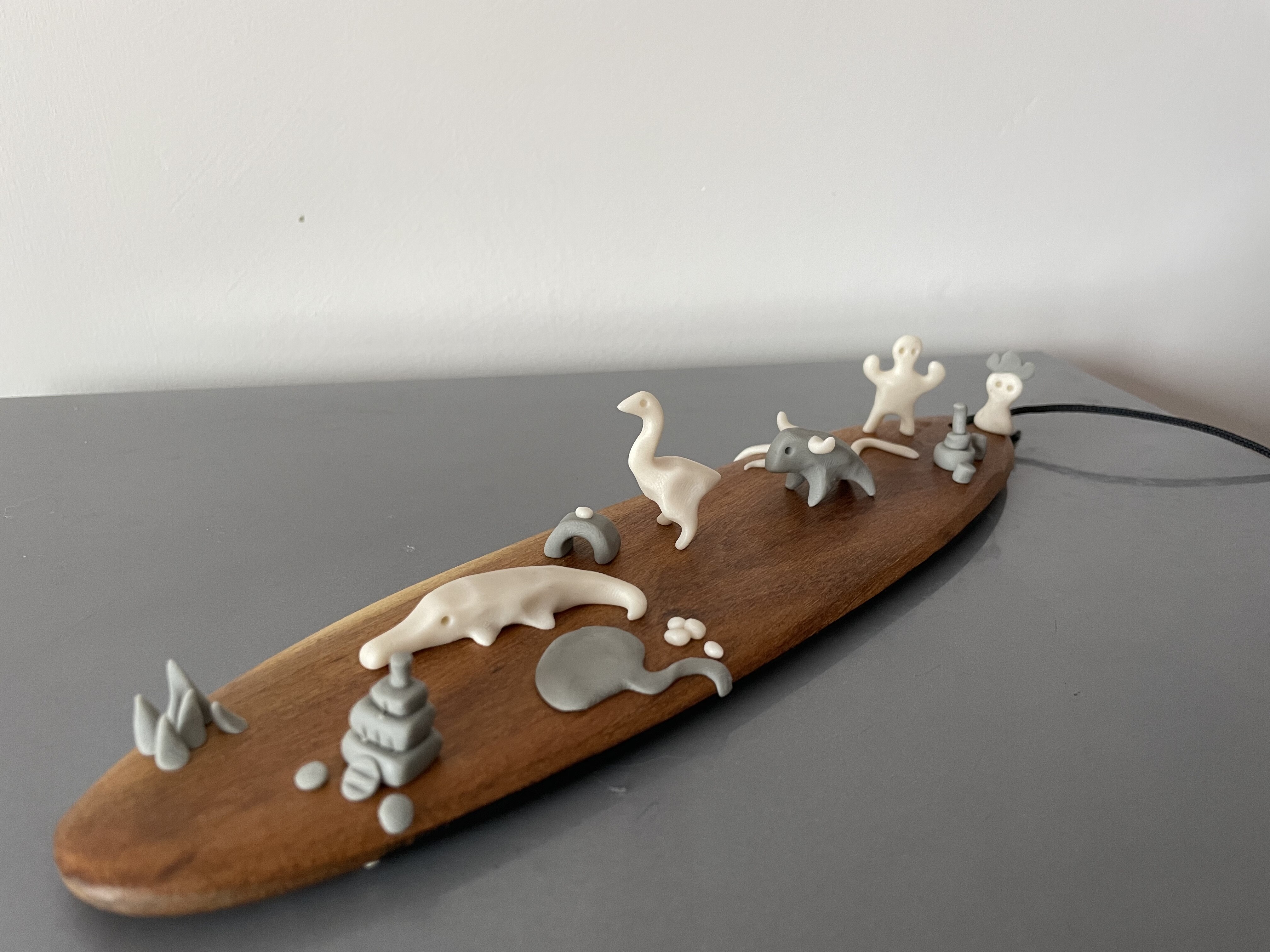
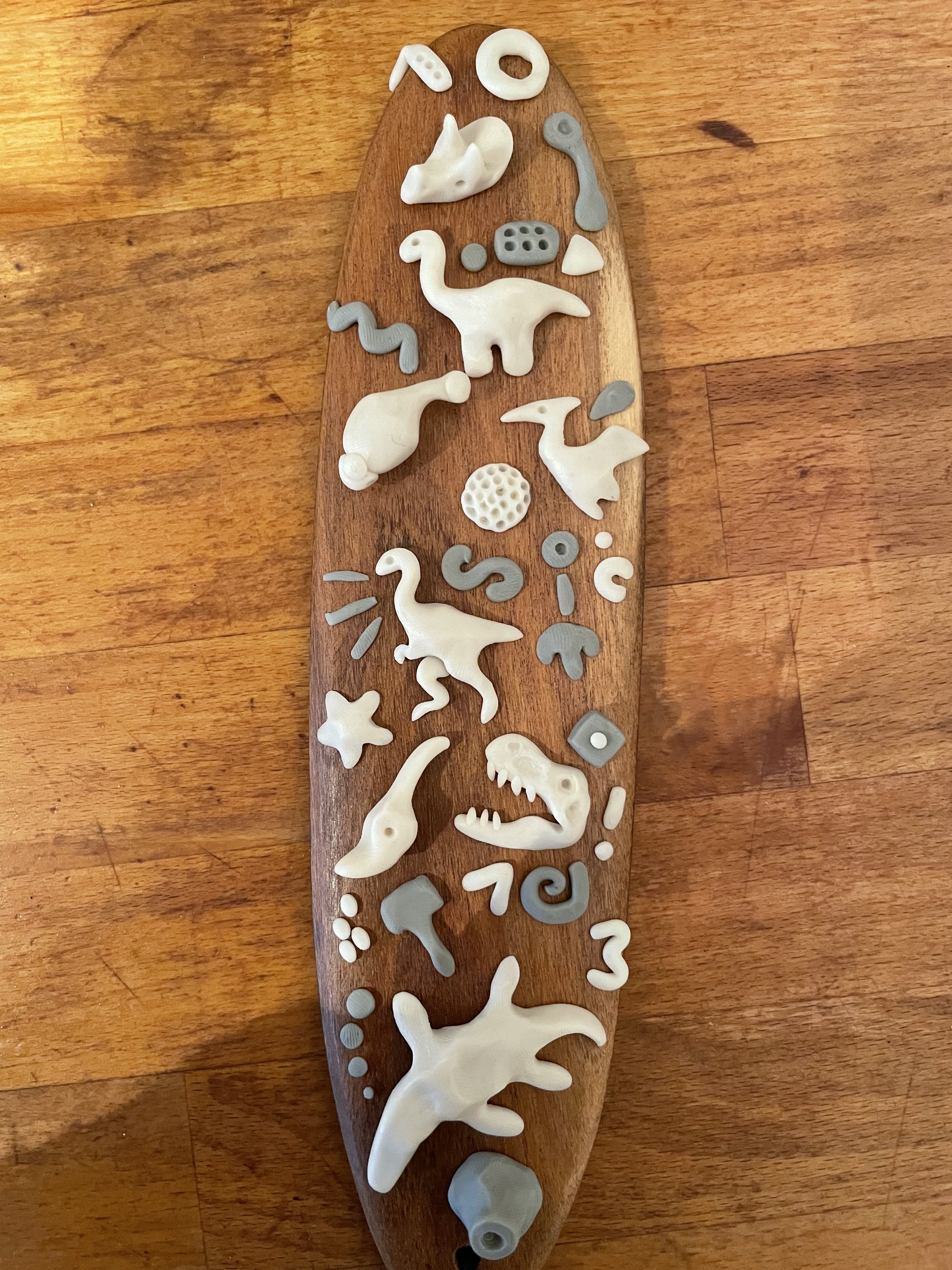
I got around to updating my board, leaning into a prehistoric theme. @LynneKelly I listened to one of your interviews where you mentioned the development between your bird and spider boards, and how there was more purpose put into the layout of your spiders, although missed the tactile quality of the original.
I’ve gone with a combination of recognisable creatures above, as well as clusters of random shapes. I presume abstract shapes are useful because there’s a wider range of interpretations/ directions to take them in?
As for the frequency of objects and overall layout, there’s no real order to it, more like a stream of consciousness. Again, not sure if that advantageous or not.
Also considering, fitting in smaller symbols/ marks on these objects, to maximise the space, or is that too much fuss?
You are not overcomplicating nor making too much fuss. The idea is to memorise the basic layer, which is the foundation, the mini-locations … and then add mroe and more detail. You can include any amount of complexity over time. It isn’t static. Don’t try to do it all at once. What matters is laying down a firm foundation, as your board will do. Especially as it is so gorgeous!
That board is perfect. The more you play with it, then more familiar it will become. eventually, you will know the board so well, you won’t need it physically with you.
Choose any order through it, and start saying the sequence out loud: sauropod, theropod … or whatever it becomes. You will probably find your brain creates a rhythm out of it, especially as you have rhyming words. The song / music mnemonic will kick in. That’s what my brain did with the bird families because they all ended with -idae. And a song emerged naturally. I then could sing the families and used stories to add species. I keep adding to those stories as I get more and more complexity. That is the way songlines work.
Don’t worry what is advantageous - just start playing. Doing works way better than overthinking!
I appreciate that Lynne. Years ago I’d been on a bird watching trail, where our guide was drawing our attention to each distinctive call, and identifying the associated species without seeing them. Because of the scale of the forest, we were quickly coming across a large variety, and it was interesting to note the clear rhythms differentiating each bird.
I hadn’t thought of introducing sounds to the process, but eager to do it, to intensify the immersion
I know @LynneKelly, you’ve mentioned that abstract designs are more versatile when attaching associations, so I might dial back the details in some of these (although I’m torn, as I’m drawn towards the bestiary you’ve created). It makes sense to me, and I’m guessing good for your brain; bit more cerebral heavy lifting to discover associations and cement them in memory.
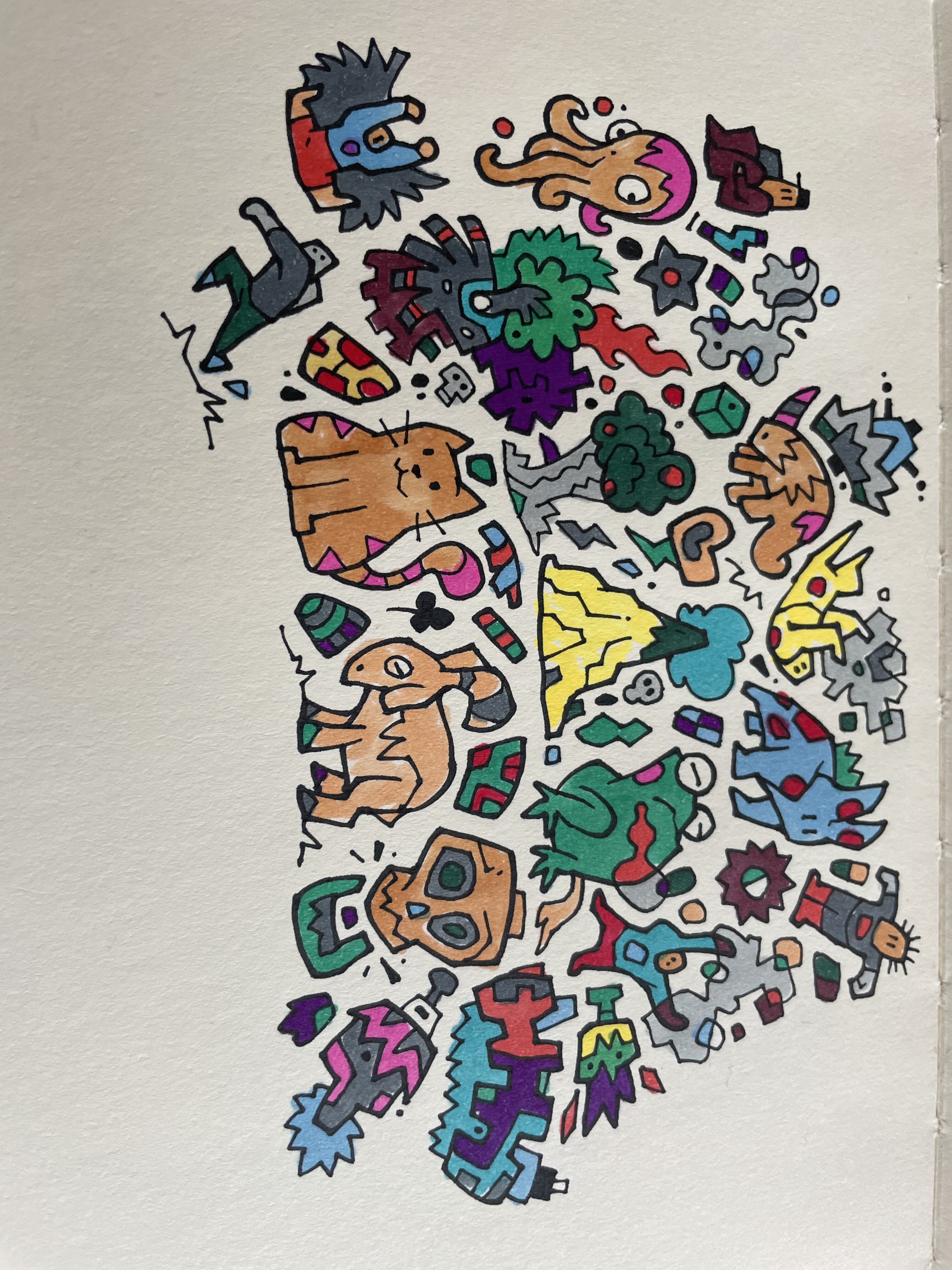
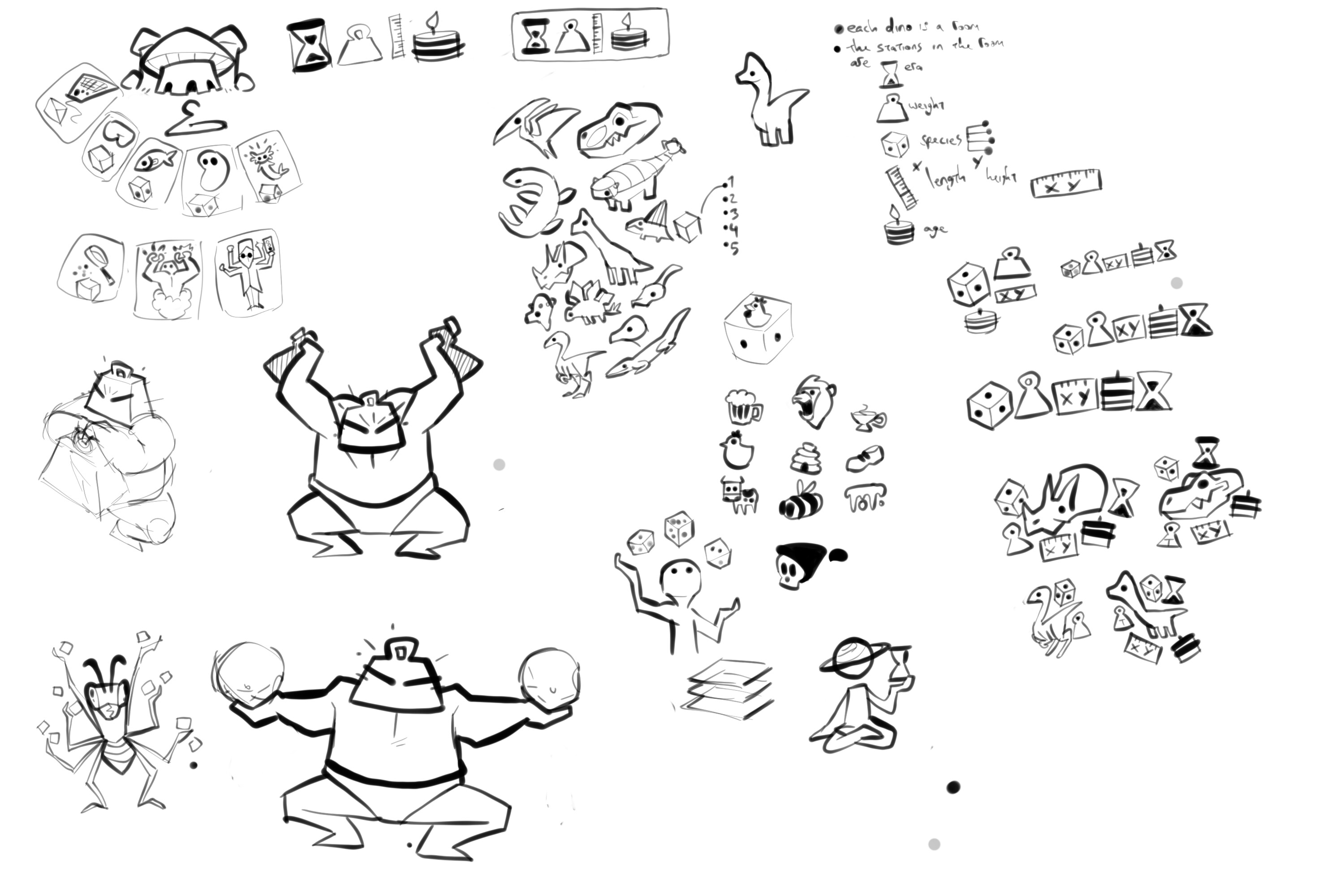
The images to the top left, are the result of a quick mental exercise, to get the rusty cogs turning. It was to see if I could come up with some novel associations for the major phyla of the Fungal kingdom. (hopefully decipherable).
Also wanted to see if I could come up with some persistent icons I could use for remembering metrics. I expanded upon that notion by designing some quirky little rapscallions in order to distinguish them from other mnemonics.
Eventually I’d like to have species remembered along with typical facts like population, weight, habitat etc. I guess like having a bunch of collectible sports cards committed to memory.
I talk about the versatility of abstract designs when you want to connect multiple concepts to them. Or retain some secrecy as is the case for restricted knowledge in Indigenous cultures. I don’t think it is an issue for you. I think you should just go for what works! These are such fun!
It’s funny, I find myself drawn back to recalling the Fungi classification experiment in the top right. Thought I’d find it really difficult to break down those long scientific terms into a manageable visual, but shocked how fluidly it came to me
It really feels like somethings been unlocked. Massive potential in schools to lift all boats through your work, just hope arts integration is taken more seriously everywhere