Lets say I want to memorise geography and want to learn countries, captials and population.
Would you focus to learn one thing at a time like first learning the countries and then adding on captials and adding on population, or would you try to learn things in batches of country+population+capital?
2 Likes
First figure out your “prep-time tolerance.” Obviously, it will be faster to figure out mnemonic representational imagery for just one category than all three. Prep your imagery for the first 10 or so countries. See how long that takes, then multiply that by about 20 to estimate how long it will take you to determine images for all countries. It should take 2x that amount of time to build countries and another category, and 3x that time to build all three. If you look at that total and dom’t mind committing that amount of time at the start, then go ahead and figure out all your imagery.
If that seems like more time than you want to invest right now, start with just the country names.
You can also do a small scale sample test to see if you can handle larger compound scenes with multiple mnemonic images in them. I assume you’ll use a memory palace journey to store these…
If so, you can do a test with your first 30 loci. Try getting images for the first 10 countries just by themselves, then the next 10 countries plus their capitols, then the next 10 with capitols and populations. (You could even just test these in sets of 5 and only need to test prep 15 scenes.)
Start storing and memorizing this info along your first 30 (or 15) loci. You’ll discover pretty quickly if the more complex scenes are too taxing for you. If they are, stick to one or two categories. But you may find that its not all that much tougher to memorize scenes that represent all the data…
I think you’ll find that really it only takes more prep/image creation work for the larger data sets and that the actual memorization effort is pretty similar!
2 Likes
I went through this exactly. I had memorized all 233 countries/territories in population order (as they appeared on a 2017 list), using a large memory palace. I wasn’t concerned about population specifics; I just wanted a general idea of each country’s size. So as I went through this the first time, I placed a number image (rounded to the closest million, when possible) at every fifth place. So, Spain, for example, was a Spanish woman with a RaSH on her leg; using the Major system for numbers, that gave me 46,000,000. (As Spain is fairly early in the list, I know that the “46” refers to millions and not, say, thousands.)
Only later did I think I should add the capitals. I can’t say whether this was easier than doing everything at once, but I think it was. With the countries themselves locked in memory, I was able to add images above those images—or which otherwise interacted with them—that gave me the capitals. Let me know if you need any examples.
There may be better systems if you’re going to be updating your mental list as data/ rankings change. I’ve chosen to stick with the order of countries/territories as noted in a 2017 UN list, although I am updating both countries and the capital cities whenever I learn that a name has officially changed.
Bob
2 Likes
I have to use couplets because I need at least one other piece of data to link each piece of data to. So when I memorized all the countries I linked them with all the capitals, and when I memorized the US states I linked them with all the state capitals, and when I memorized the US presidents I linked them with the number they were. There are many possible strategies, though.
So are you memorizing via a Linking system rather than using a memory palace?
Bob
It varies. Does a map count as a memory palace?
1 Like
It certainly can.
I was asking, though, because typically the location in a memory palace (or, map, if you prefer) is what the memorizer would connect to the information being stored. But if I’m understanding your earlier post correctly, it sounds like you’re including an additional memory trigger at each location, which also connects to the image for the information you’re storing there. Is that right?
Bob
I think you’re right. My mental map of Germany contains all my geographical knowledge of Germany. I feel like there’s no point in knowing about Moldova without knowing about Chisinau. 
Summary of the text:
The “Memory Graph” is a mnemonic tool that aids in memorizing locations and other information by using letter and number combinations corresponding to positions on a map or table. Each letter and number are linked to key words where the initial letter and the subsequent consonant sound represent a specific location. For example, “Car” represents the location C4. This system allows additional information, such as names of post office stations and zip codes, to be linked to these locations using associated words. The method is highly efficient and enables organized and quick recall of a vast amount of data.
Simplified example:
Imagine you need to remember the location of various fruits in a supermarket. Each aisle and shelf in the supermarket is designated with a letter and a number, respectively. For example, aisle A (fruits) and shelf 1 might be represented by the word “Apple”. If you need to remember that apples are in aisle A, shelf 1, you associate “Apple” with that location. When you think of “Apple”, you’ll automatically know that apples are located in A1 of the supermarket.
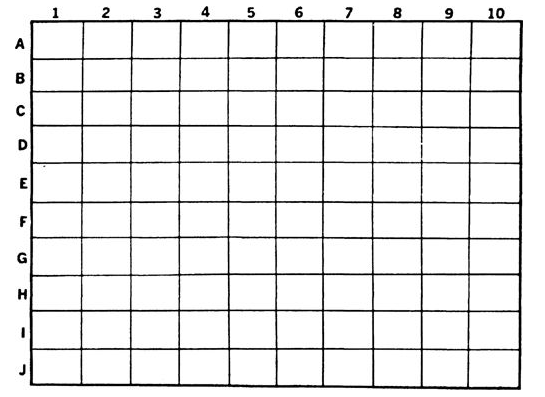
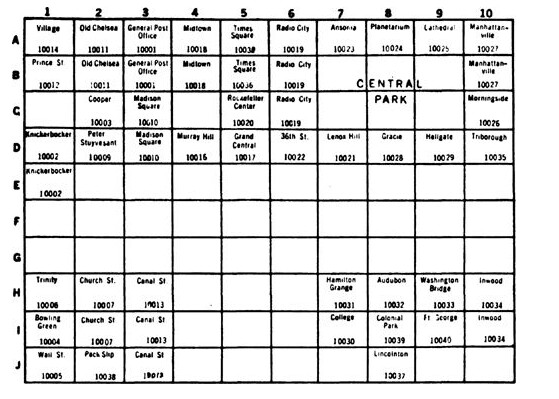

Credits to the book: The Memory Book (Harry Lorayne, Jerry Lucas)
Did you intend to copy this to this thread?
If there’s no rush (see @TheHumanTim’s preptime suggestion), I agree with @RMBittner that it can be easier to add things when the information is locked in.
I do this a lot with topics that go deep (like internetworking). It was also part of my strategy for when I memorized huge chunks of Python’s documentation.
We could call it Kaizen-style mnemonics. 
1 Like
Lest the lingchi (death by 1,000 cuts) create an overload or overwhelm by the amount of information, it is better to go gradually or continuous improvement (kaizen) is a much more effective method to take small actions and incrementally increase them.
Thank you everybody for your tips and insights and especially @TheHumanTim with the thought of experementing and checking the results which I now have spent some time on.
My results so far are inconclusive which takes more time if I learn item by item or if I weave the items together as a batch and learn the batch. However if I learn things like a batch I feel my linking of knowledge kind of looks like this :
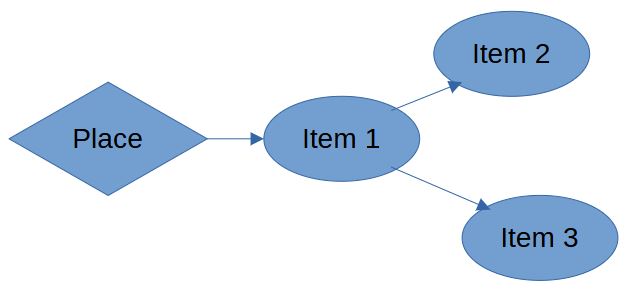
So if I forget the original item I placed at a place all my knowledge is lost. However if I learn things item by item it feels more like this :
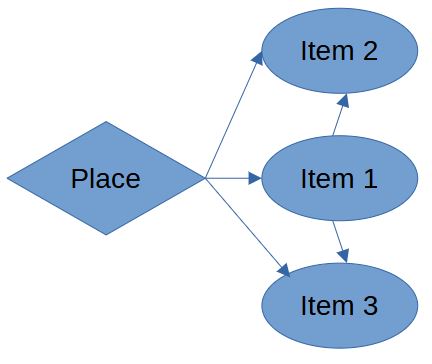
Meaning I have more chances of remembering what is at one place and if I remember one I can “find” the others by association. So this feels much stronger.
Now this is done on a smaller set of data and just my own experiences, just found it interesting enough to share.
2 Likes