Learning Chinese

(There are already several topics here about learning Chinese, but they all appear to be about studying specific sub-fields of the language (such as characters) or specific methods for learning it (such as memory palaces). I don’t see a topic devoted to learning Chinese in general. (If there is one and I’ve missed it, please let me know and we can link to it.)

@LynneKelly suggested starting this thread. (Lynne, is this the right way to tag you?) I’m eager to hear about some of the things that she has learned in her studies, as well as ideas that other members have to contribute.

I find Chinese especially difficult because it’s so hard to come up with associations for Chinese words, because the sounds and the words themselves are so different from what we speakers of western languages have experienced.

Hopefully we can all learn together!

16 Likes

Thank you for starting this thread, @magicspeller. This topic dominates my thinking at the moment and has done for quite a while. I am so hooked on learning Chinese and developing memory methods, I’d love to hear what others are doing. Vested interest declaration: this is one of my major academic research projects. That means that I need to know if people say something that they would prefer I didn’t quote or use. I will be writing this research up in some form or another. Obviously, I will acknowledge anything I learn from here.

I’ll talk about what I am doing in the next comment but in this post I’ll talk about the methods and resources I am using so you can skip the rest if you just want to join a conversation on the methods themselves.

I am doing two courses to compare in terms of memory techniques: an online self-paced set of courses, Yoyo Chinese (The Best Way to Learn Chinese Online | Yoyo Chinese) and live classes from the Confucius Institute through my university (https://www.latrobe.edu.au/confucius-institute). Plus doing my own thing which I’ll talk about more if people seem interested. Neither course includes memory techniques to any degree. YoYo does a bit. Confucius hasn’t so far. I’m in the third semester - we started with 40 people in first semester, had 15 last semester and are down to three this semester. I am the only one with no Chinese background. This decay rate is typical of Chinese courses in schools, an issue I want to address.

I have talked to someone doing Mandarin Blueprint who is very happy with it: (https://www.mandarinblueprint.com) which includes memory methods - the ‘movie method’ and memory palaces (https://www.mandarinblueprint.com/chinese-memory-palace-sets-for-pinyin-finals/). The memory palace bit relates closely to what Alex Mullen talked about on his site.

Their ‘movie method’ bit reflects various books on memory methods for characters, such as Remembering simplified Hanzi : how not to forget the meaning and writing of Chinese characters by James W. Heisig. I am using both memory palaces and the movie concept, so influenced by these, but my methods have diverged a lot as I have implemented them.

My problem with trying Alex Mullen’s method was that I needed to come up with 56 people to start with and then use 4 positions in each of 12 locations for the tones. As I want to create a system to use with kids in schools as well, this was just too difficult. Plus there is an issue with any word which is two or three syllables. Plus there is the big issue that was mentioned in an other thread - the need to deal with pronunciation and tones in pinyin first.

I have developed a system which I am testing which enables me to learn Mandarin and characters together. I have found exactly what @magicspeller says - that methods seem to address one or the other. My techniques will work separately for vocabulary in pinyin and characters, but is way better used as a combination, which is what I now do. But it is not yet fully developed so feedback and new ideas here would be wonderful!

I am also learning French and applying the same methods to enable me to compare. The same basic methods have ended up being implemented wildly differently because of the structure of the languages and the hooks which I already have for French as an English speaker, and the total lack of hooks for Chinese.

Our ABC reported on the claim that there are only 130 fluent Chinese speakers in the country who don’t have a Chinese background. I found that astonishing.

Talking to Chinese teachers in schools and the university, and they acknowledge that they can’t keep non-Chinese heritage students. I am convinced the lack of memory techniques is a major contributor. So thinking in terms of education is key to my research. Hence I want to hand over a method on a platter - not require kids to come up with their own set of people or animals.

I really want to know if others have tried any of those techniques, any courses and tried various methods. I find this topic endlessly fascinating.

Onto the methods … next post!

Thank you @magicspeller .

Lynne

10 Likes

I’ll start to explain my methods for learning Chinese - still in the development and testing phase, so there are many wrinkles. My ideas are all for Mandarin, but I gather could be applied to other dialects. I don’t know but would be interested to hear from others who know more.

The starting point is pinyin. The difference between learning Chinese and other languages is the structure of the syllables. Every syllable, which maps to a character, has an initial and a final. So dian has the initial ‘d-’ and the final ‘-ian’.

I use the pinyin chart which is publicly available on YoYo Chinese:

I am using a combination of PA (People-Action) and a bestiary - a cast of animals and human critters. This lets me do pinyin from the start without the characters, although they entered the picture soon after.

For each of the 23 initials (way fewer than Mullen’s 56) I have a critter/beast. I have worked hard to get the beast to match the pronunciation of the initial. So d- is dragon. Easy. k- is kitten and so on for most of them. Happy to post my current version of anyone wants to see it.

I’d be delighted if people came up with better solutions to my problem ones.

c- is a problem - pronounced ts. A year into developing and testing I came across czar which is also written tsar! Very pleased with that one.

X is a real issue, so I ended up (have had Xena acting out things for a year) with going Chinese, and using xióngmāo, which is panda in Chinese. Ensured the right pronunciation of x- which is a sound we don’t have.

Zh gave the same problem - it’s not used in English. But they have the Zhōu Dynasty, which is pronounced Joe - so Joe is my character but he’s an ancient Chinese imperial guy. So my character looks impressive, is called Joe and gives me the correct pronunciation.

For the finals, I associate each with an action, again based on the pronunciation. dian is d-, a dragon, and -ian which is pronounced the same as in magician, so dian is a dragon doing magic.

Happy to share the spreadsheet with the current state of my initials and finals.

I get the tone from the direction of the action. For example, electricity is diàn, 4th tone, downwards and fast. So for me, electricity is dragon magic! And the dragon directs his fiery electric shock rapidly down into the ground.

So in one image, I have the pinyin, the correct pronunciation, the meaning and the tone.

I actually place that image in the memory palace at the location for the radical, the key part of the character for diàn, which is a field. So the same image also gives me a big clue to the character.

Problem finals I’d love ideas better than the ones I have resorted to:

-ou is pronounced as in over. I couldn’t find any such word in English, so I use over - for pronunciation and action.

-iu is ee-oo. I have resorted to saying Jiu Jitsu that way - I didn’t know how to say it anyway! The action is fighting.

-iong - nothing - not a single word in English that I could find. I use crying as the action because I failed. It sounds pretty much as it looks, fortunately.

-uan. We have an animal in Australia called a tuan, which is pronounced the same way. But that only works for those of us who know that animal, which doesn’t even include most Australians. It has a very furry tail, so I add a furry tail to the critter.

-uang. We have a mountain in my state called Mt Donna Buang which is pronounced the right way. Again, useless for most of the world, including most of Australia.

-un is never pronounced in English as u-en. But the UN is! Works a treat. Action, add a blue cap.

-uo was really hard, but I finally found liquor, which has the -uo correctly pronounced. Action: drunk.

That should give you the idea. Two or three syllable words - I just make a story linking the images. So diànshì for TV, becomes my dragon doing magic and my little tiny shrew kicking the TV to make it work. -i is the action of an imp, who kicks everyone. Pronunciation of -i varies, so that is another issue I had to address. I’ll save that for another post if anyone is interested.

I made my critters as different as I could for the images. Little shrew, big fiery dragon, ancient Chinese nobleman, panda …

Soon enough, you know that diàn is electricity and stop using the mnemonic. So it is only new words you need to decode the image.

That was enough to get me started on vocabulary without a memory palace.

The dictionaries are organised on the radicals for the characters - the key component. I based my memory palace on those, because of this article:

I can’t imagine doing Chinese without my radicals memory palace, but I have written enough today and want to hear what other people have to say.

Happy to expand on anything!

Lynne

7 Likes

I find it interesting that all Mandarin learners (there are more than one Chinese language) seem to focus on reading characters. There are a lot of people in the world (probably millions) who are fluent in Mandarin, but are illiterate. :slight_smile: Also you need to decide if you’re going to learn traditional or simplified characters or both.
I had a stab at Mandarin, which I’ll eventually return too, but first I need to learn Korean. If you want a few pages of learning resources, we maintain a Master List of Resources for over 300 languages on the language learners forum. Here is the Mandarin list.

(If you get a lot of 502/503 errors just persist, we seem to be under some kind of denial of service attack at the moment. Hopefully resolved in next couple of days after I upgrade the server.)

You might be interested in reading the log of Dr Mack Rettosy who has taught himself to read and speak Mandarin in a little over a year. I think he started posting in his log back in October 2020. He is attempting to reach professional proficiency in 2 years. In other words, he is planning to be able to work as a medical doctor in Mandarin after only 2 years. Which is quite a feat!

He does a lot of listening comprehension practice as well as character memorisation. He isn’t using any mnemonics as far as I’m aware.

Also, as far as the memorisation of radicals, you might want to read this article which explains that radicals are only really useful for looking things up in a dictionary.

Another interesting log on a very old forum is this one by irrationale who learned to speak in 4 months. Although I think he/she was doing something crazy like 7 hours per day of study.

Hopefully, some of those links will be useful and appealing for you. Except for the characters, and tone, there is an argument that Mandarin is easier for an English speaker than Japanese or Korean, since word order and grammar is more similar to English. Although for me, Korean is easier than Mandarin because I learned the Korean alphabet in a day, and I don’t have to deal with tones or Japanese pitch accents. :slight_smile:

Good luck with your Mandarin learning.

4 Likes

Hi Rick (and everyone),

Lots of really good points there, Rick. Thank you! I guess different people are going to have different approaches to Chinese depending on what they are learning and why.

For me, it is simplified characters. As for learning to speak Mandarin without reading Chinese, I would be intrigued to know why people would want to do that, but can see that it is completely possible, and there are probably plenty of good reasons.

In my case, it is the characters that I want most of all. My academic research area is non-literate memory systems. Chinese is the only language which I can trace the physical mnemonic techniques from the Neolithic right through to a written and spoken language today. I am interested in the development of traditional characters, but my main focus is the application in education of memory techniques, and it is simplified characters which are taught in schools. Plus two of my books are being translated into Simplified at the moment, and I wast to read them when they are published.

The Chinese memory techniques are not just linked to characters but also the use of art, such as the amazing handscrolls. I see a huge application for that form of narrative art in schools in lots of different subjects. But I digress.

The article on radicals is excellent reading. He says that radicals are the way dictionaries are organised, which is exactly why I use them. I needed an order for my memory palace. I never use radicals to look up a dictionary, given we have great online dictionaries now. As it says in the link I gave. ‘Radicals organize the chaotic swarm of characters into a logical system’. Without that organisation, I can’t use a memory palace or make any kind of mnemonic structure in which to collect the characters.

It seems from what I have read that they are way more useful to someone learning Chinese from English than for someone who is immersed in the language. This is part of my research, so I still have a lot to learn. Your perspective, Rick, has been really wonderful to read and think about.

I use this source for identifying the radicals and for my first dictionary, because, as your article says, there are inconsistencies.

But those inconsistencies don’t matter for my purpose. I just need a list to set up my memory palace and can use any radical as long as I have some way of placing the word in my palace. It wouldn’t matter if someone else used a different radical to put a word in their palace. I include all the Kangxi radicals, but modify my palace a bit to have separate locations for the common but different versions of radicals such as rén and shuǐ.

I think the article’s emphasis on components rather than just radicals is exactly right. But so many components are radicals and then, like many of the references on the ‘movie method’, I make up meanings for the common components which aren’t radicals. Soon, those stories start to include characters embedded in other characters rather than their component radicals, such as 也.

I did get the error trying to access the Mandarin list you gave which is really annoying because I am so keen to see it. I am also keen to check out your forum. Thank you hugely for those pointers.

My website is under huge attack from Russia at the moment, but I am married to an Internet security expert, so he’s enjoying monitoring it. Plus my traffic is very low so it isn’t having much impact. He wasn’t surprised about your denial of service type attacks. All the best for the recovery.

Lynne

4 Likes

You could go with bopomofo instead of pinyin…

*might need to expand the above to get the screenshot.


Of course the Mandarin in Taiwan is written using traditional characters, but that shouldn’t be a big issue here. It’s a bit similar to using furigana in Japanese. In fact, looking at how Japan “morphed” Chinese characters into todays hiragana and katakana via Manyogana might give you some additional ideas with how you want to tackle Chinese.

3 Likes

I use bopofomo instead of Pinyin for my beastiary, and works very well. But unless someone is living in Taiwan, learning with Taiwanese material, or having Taiwanese language partners, I think it would be more practical to use Hanyu Pinyin.

In fact, whey typing in my phone, I use bopomofo to type traditional characters, but Pinyin to type simplified characters (while communicating with people from Mainland China). While using the computer, I always type in Pinyin, since it is much faster. To type in the computer using bopomofo is much slower, since the sounds are in a very impractical place. The pinyin uses the qwerty keyboard.

2 Likes

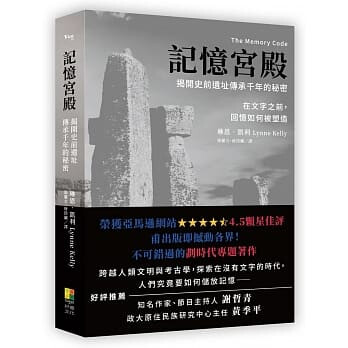
The memory code in traditional characters.

1 Like

@Magicspeller wants a thread about learning the language in general versus a thread about “specific sub-fields.”
For me it is difficult to talk about learning Chinese in general without focusing on specific sub-fields, even more than in other languages, since I find the need to distinguish between pronunciation, characters, vocabulary for specific fields, conversation, etc.
I am not an expert, and my Chinese is not close to native, but if someone who is just beginning (and the scope is fluency in speaking) asks me to share my experience, I would suggest to spend hundreds of hours listening to Mandarin (music, movies, series, news) before beginning to try to talk. “Hundreds” here is not an hyperbole. I mean it literally.

2 Likes

…the Chinese title is just Memory Palace?

2 Likes

Yes.

1 Like

Im using the Mandarin Blueprint Method and can HIGHLY recommend it.
It has been very well thought out and starts with pronunciation and then develops through memory techniques to reading characters very quickly.
Check it out. 14 day free trial.

3 Likes

I agree as far as the resources… that’s why I mentioned Japanese furigana at the same time. With Japanese it’s generally a good idea to learn hiragana and katana to be able to read the onyomi/kunyomi for the Chinese characters afterwards (rather than using romaji).

The problem with romaji in Japanese and pinyin is Chinese is that you’re using Latin script to represent sounds that don’t exist. That’s why I thought it’d be an interesting cross-read for @LynneKelly

In both cases it even depends which romanization standard you follow… which is how we ended up with Beijing and Peking. The Korean company 삼성 is written as Samsung instead of Samseong for the same reason.

At least from that perspective, bopomofo would be the safer option even though pinyin would appear as a more easily accessible one due to the familiarity with the Latin script. However, I’m not saying one or the other, it’s just food for thought. Personally, I use both handwriting and pinyin keyboards on my iPhone, but I think it’s good to have some knowledge of the various systems that exists before you end up reinventing the wheel.

4 Likes

I must get out my copy and see if I can read any of it.

Two different publishers are each bringing out The Memory Code and Memory Craft in simplified characters, theoretically early next year. I’d love to be able to attempt to read them!

1 Like

Great to hear from you, @malmemory. The guy I talked to about it said that you needed to memorise the memory palace system first along with a swag of people for the initials. He had done so and found it great. Can you tell us about whether you found that an issue? Do you think that would work for kids too?

1 Like

Feel rather stupid now. A Chinese-born good friend’s Australian-born daughter speaks Mandarin but has no interest in reading it. And one of the three in my Confucius Institute class doesn’t want to learn the characters only to speak it. I suspect she may not make the distance because in the last two semesters the focus was entirely on pinyin and speaking, while this semester the teacher is using characters a lot.

4 Likes

Yes, this is one of the advantages of bopomofo.

1 Like

This article is a very enjoyable reading.

1 Like

Wow! Thanks for the great responses, everybody! I’ve already learned a lot just by reading quickly through the thread. I’ll be responding to some of the individual threads, but it will take time to fully digest the ideas and come up with a response.

I appreciate the time that you’ve spent producing such informative information.

Keith

4 Likes

Hi Lynne.
I can do no better than THIS W3.alllanguageresourcesDOTcom/mandarin-blueprint/

to give a good overview of the course.
For myself I went from knowing a few stock phrases of the language to recognising and reading basic sentences through characters (without English or pinyin) after a little more than a leisurely 2 months.
I’m very happy with that although I could easily be much further down the road with more application
As for kids; well the instructors are very personable and the technique clearly explained. It wouldn’t hurt to sign up for the 14 day free trial and put some young aspirant through their paces.
Good luck.

2 Likes