Learning a summary of all 1189 chapters of the Bible

Hello again,

I’m curious of others’ thoughts on how best to do this:

I’d like to memorize a short summary of all 1189 chapters of the Bible.

Nothing crazily long or detailed.
Just enough to be able to quickly locate any significant piece of information.

Example:
Genesis 1: Creation days 1-6
Genesis 2: Summary of creation
Genesis 3: The fall of man
Genesis 4: Cain kills Abel, descendants of Cain
Genesis 5: Line of Seth to Noah
Genesis 6: Wickedness of man, calling of Noah

Note that none are very detailed.
I’ve read through the Bible 20 times in my life, and am very familiar with the information.
The idea is that more details can be mentally filled in once I remember one of these 1189 “bookmarks”

The Bible is comprised of 66 books with anywhere from 1 to 150 chapters in each.

How would you go about learning something like this?

Here are some of my thoughts:

The 150 chapters of Psalms can seem very repetitive.
More detail will likely be needed to mentally differentiate between them.

Much of the 31 chapters of Proverbs is comprised of standalone proverbs.
This may make it difficult to summarize a given chapter.

Part of me thinks that some sort of loci wouldn’t be a very effective way to learn this.

It may be helpful to first learn the more major bookmarks.
Example:
Abraham is called in Genesis 12, and dies in Gensis 25.
Other events could then link to those major bookmarks:
Abraham sepates from Lot in chapter 13.
Abraham arranges a marriage for Isaac in chapter 24.

I also feel that some sort of linking the chapter numbers to the story with the Major System wouldn’t be very effective.

My style of memorization is more closely associated with concepts instead of visuals.

There’s no timeline for this project.
Just something I hope to do someday.
2 Likes

Here’s how I do it. I don’t know if it’s « the best way », but it works for me because it’s relatively quick to put into place, and quite fun, once you get the hang of it.

I go for a walk and visualize the things of each chapter happening at the places I walk through. (Snap one picture for each one if you want to make flashcards later).

For example, for Exodus I know that in the beginning there’s baby Moses in the Nile so I chose to start near the river.

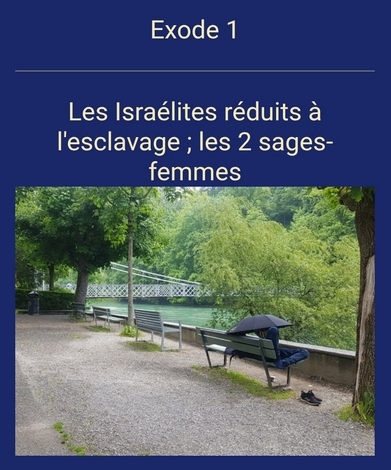
Chapter 1 : a Jewish woman is giving birth on this bank (because of the edict of the Pharaoh to kill all baby boys and the midwives who refused). Leia Organa is the midwife (my PAO person for 1).


Side note: I’m slightly amused at this guy who decided to take a nap on the bank, protecting himself under an umbrella but didn’t think to protect his shoes too… should’ve put them UNDER the bank… in any case this “story” gives an emotional connection to the place and helps me remember it better than just “this is a random bank along the river”. A good anchor to start a book.

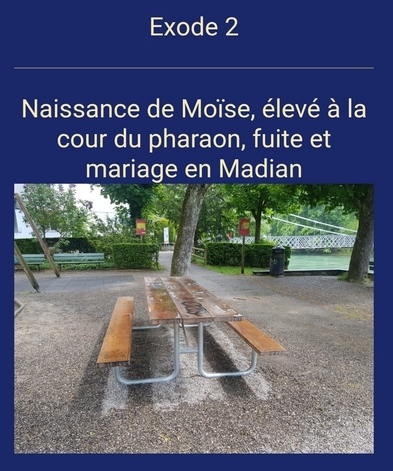
Then I go a bit further away and imagine chapter 2 (Moses growing up): the Pharaoh’s daughter just found Moses in his basket and put him on this table (imagine her all compassionate exclaiming « oh the poor thing ! I’ll take it home »). Noah Bennet (PAO person for 2) is the servant who took the basket out of the water.

Etc.

Maybe for some chapters I’ll want to memorize a bit more details.

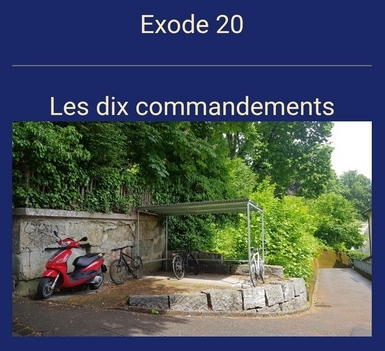
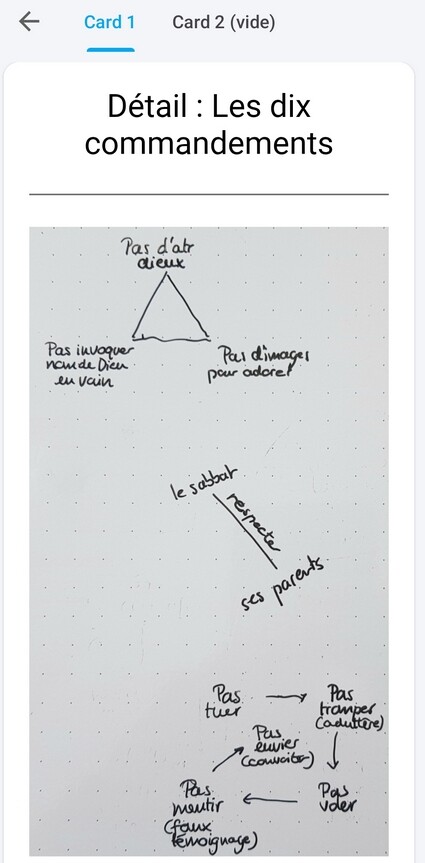
For example, at chapter 20, the ten commandments : Nora (person for 20) is nailing a sheet of parchment with the ten commandments on the bike shed, so that people can come and read/learn them. Imagine her making a lot of noise (banging the nails in, attracting attention) and people assembling, a whole crowd reading the parchment, commenting about it, some find it good, some complain, etc.

I zoom in and imagine this announcement parchment to be this :

I figured if Jesus walked around, going to different places, telling stories (parables) to people, it must be a good way to remember things. Seems to work for me. And being outside and walking is always a good thing.

2 Likes

I like that method and that it allows future additions to be added easily since it’s in open outdoors rather than if it was done in a house on smaller items for locations

I was thinking the link method would be a good alternative too. Or just to mix up the process of doing it as a journey and taking photos you could try some as linked unconnected scenes and see which sticks best

You could do something like a standalone mental snapshot of your person representing the chapter interacting with the theme of the chapter. For Adam and Eve while getting kicked out of the garden Adam is cradling a big haM with him for remembering ch 3, or your number 3 is being thrown out with them

Ch 4 Cain murdering Abel with an oaR

and/or your #4 Pao person is hiding behind a rock witnessing the murder

Ch 5 A long genealogy scroll each end held by Adam and Noah to depict the start end of it. Ita being read by my #5. She can be a Genie for Genesis so when she is repeating in other books ch 5 it remains clear what role they are playing in each.

In Judges 5 she can be dressed as a judge singing a victory song with Deborah. The links should be strong enough that you don’t need a specific loci for them just thinking what was my 5 as a judge doing and having a distinct theme for each chapter.

Abraham is called on a cup and string phone by your #12

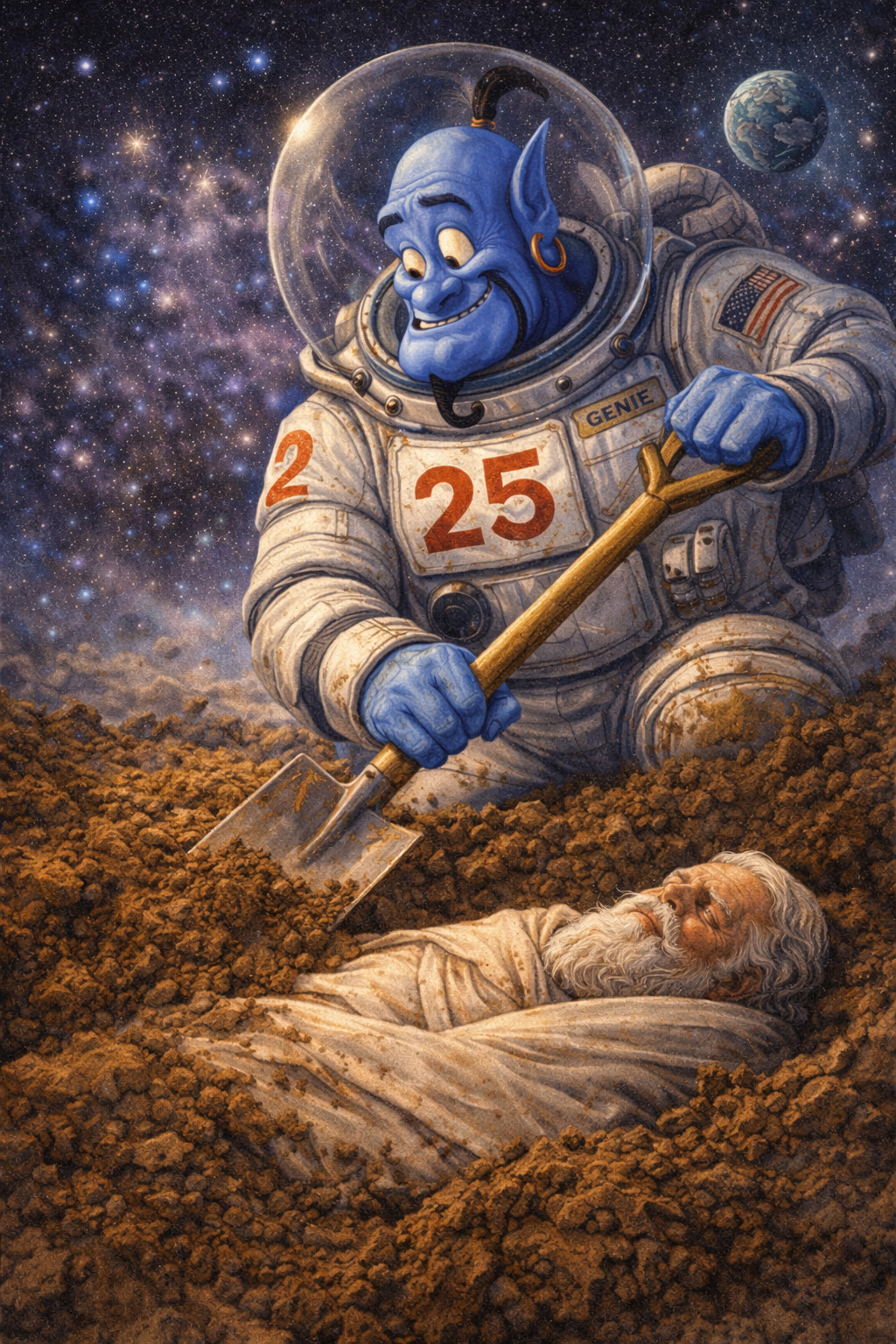
Buried by number 25 for me it’s Genie in a space suit for NeiL (Armstrong) my 25 burying him. I’d probably picture Abraham Lincon as my Abraham. .

2 Likes

There’s really two ways I can think of doing this:
Transform each chapter into an image and put them into a memory palace. I have a spreadsheet that has an image for each chapter. Old Testament and New Testament, under O IMAGE.
The other is to just ask an ai to make a poem with a line for each chapter. Should be very memorable with a little repetition. This can be as many lines per chapter as you want to use if you find more detail preferable.

2 Likes

I have started using a SEM^3 system to help me with learning the Quran. I have 114 characters with 100 foods. (There are 114 Surahs.) I then link the character/food combo to the Surah. I have other characters for some government codes I need to know and have spent most of my time working on those so I know it works. I also have ways to expand on it with other aspects (10 instruments, 10 materials, etc.) Working with the government codes, one set only has 35, has helped me adapt and change what I thought would work to something that works in a practical manner. That caveat may be my best advice. Start with a soft opening, something you can refine and don’t worry about changing and don’t have to spend much time with before you commit to the big project.

2 Likes

These books are harder to understand than others, like Genesis, where you (mostly) follow a story in chronological order.

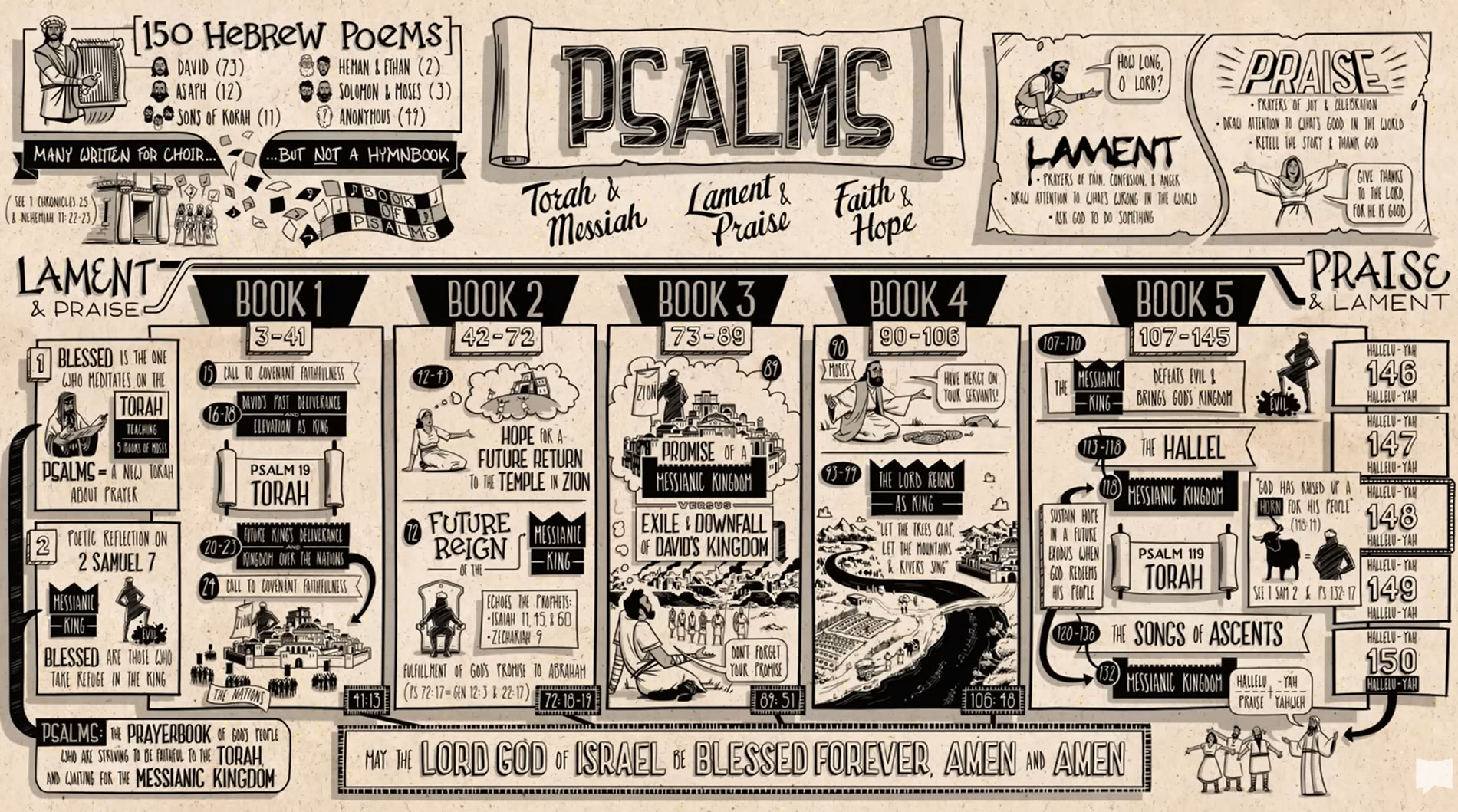
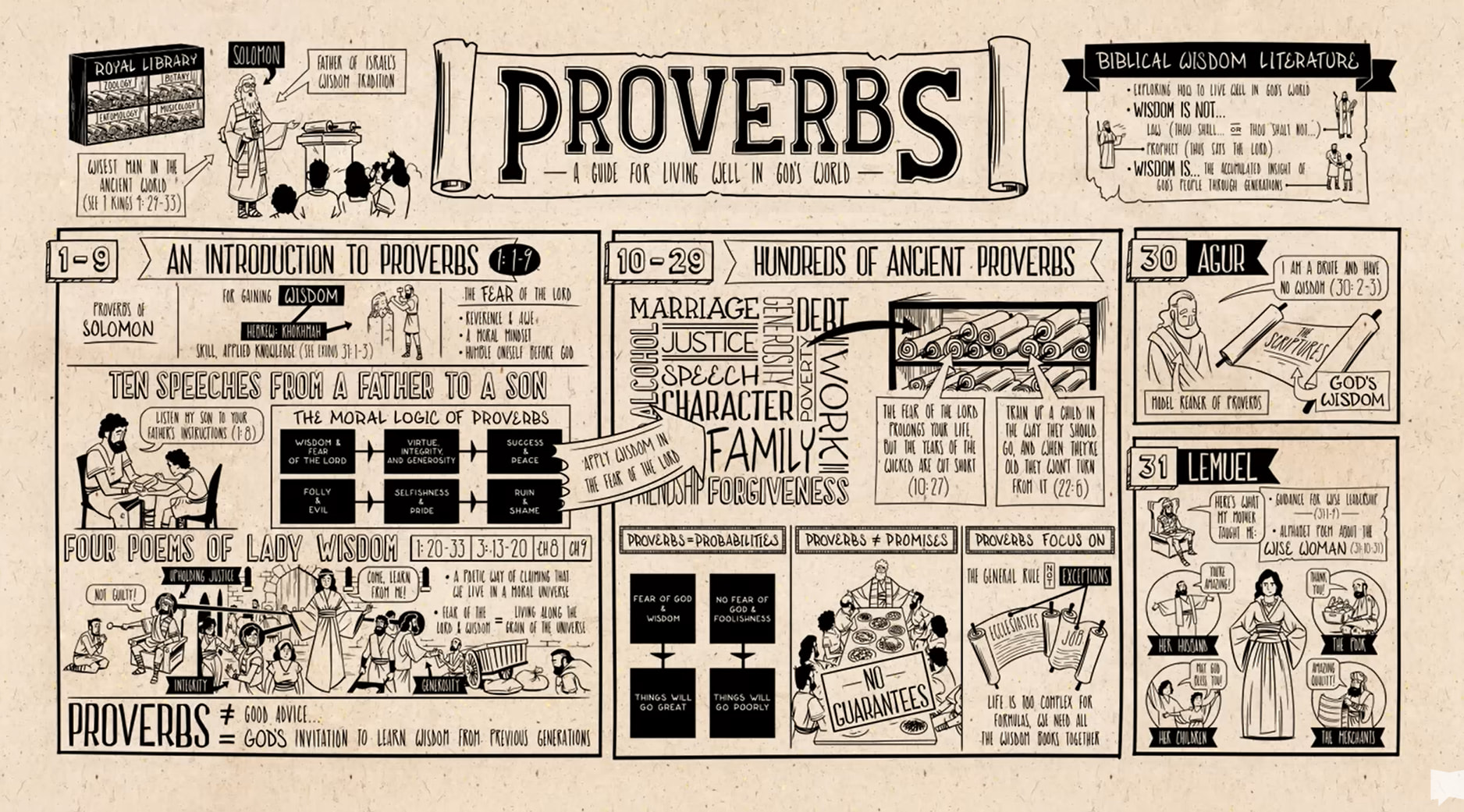
I found the “Animated Overview” series of the BibleProject very useful to understand these books. It really helps to get the overarching structure and ideas, then the smaller divisions (plus some basic explanations, given that we live in a VERY different historical and cultural context).

BibleProject has a youtube channel or you can find their content in the app youversion.

Here for example for the Psalms:

Here’s the final image (but you need to watch the video to understand how all the pieces “interact”):

And the Proverbs:

1 Like

I’ve enjoyed Bible Projects videos. That helps to have it grouped like that since they mostly are by theme rather than chronologically ordered. I believe the Jewish reader would recognize scripture by hearing the first line since Chapter and verse were much later additions. So the first word Berisheet “In Beginning” they would mentally go to Genesis one.

When Jesus begins to quote Psalm 22 in Hebrew Eli, Eli, lema sabachthani? Jewish listeners would think of the rest of that Psalm and realize that he was fulfilling that specific scripture. Surrounded by enemies, hands and feet pierced, Gambling for his garments..

Having even the first line of the Psalms would be fun to know and which ones have Messianic prophecies like 2,16,22,110,118 and more

  1. Blessed is the man
  2. Why do the Nations rage?
  3. Oh Lord how many are my foes!
  4. Answer me when I call O God of my righteousness
  5. Give ear to my words, O Lord

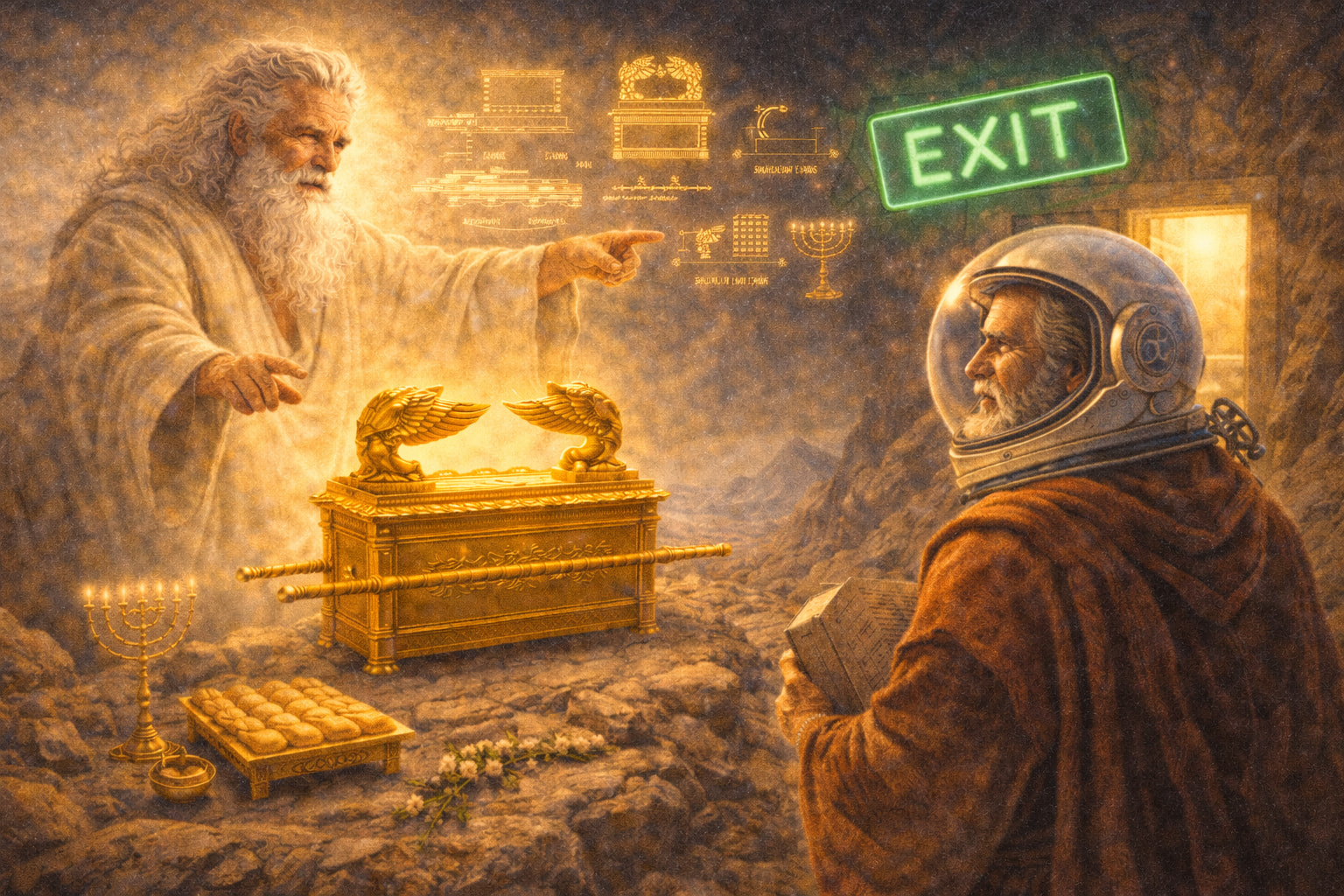
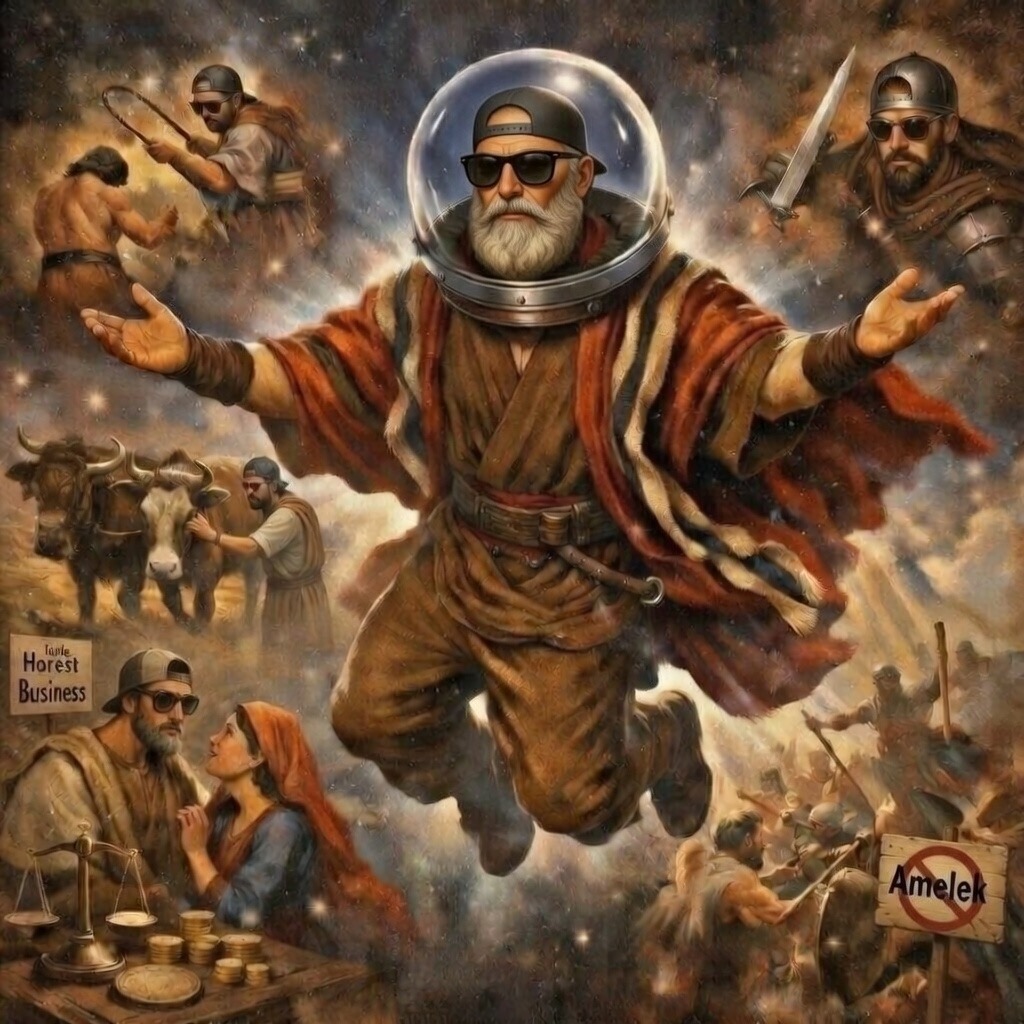
I was going through some of the chapters and seeing how linking would work with a Major System PAO for the chapter number and an image to represent the main points of the verse and an element to show what book its in. I worried that with repeating chapter numbers for different books maybe I would mix up which book I was in. I made some images in ChatGPT for first few Genesis chapters and then did CH 25 for a few books to make sure there could be enough distinctions for having Neil Armstrong, my 25, show up every book. I had Genie dressed as Neil in GEN. In Exodus an Exit sign, in Leviticus theres a Levi jeans denim theme. Numbers they all have tats of random numbers on themselves. Deuteronomy there is a “dude theme” they have backwards hats and sunglasses.
Since there’s more than one way to represent 25 I’d probably start some variety by using a different Neil or maybe a Nail like I did with Numbers when Phineas is killing the Hebrew and the Moabite woman who were worshiping Baal.

GEN 25 Abraham dies

Exodus 25

Instructions for building Ark of the Covenant

Lev 25

Numbers 25

The Israelites fall into sin with Moabite women and begin worshiping Baal of Peor, which brings a deadly plague from God that is stopped when Phinehas zealously kills an Israelite man and a Midianite woman committing the sin.

Deut (Dude-eronomy) 25

Moses gives laws about fair justice and humane treatment—including limits on punishment, kindness to working animals, marriage duties to preserve a brother’s family line, honest business practices, and a command to remember and oppose Amalek for attacking Israel.

1 Like

That’s a very good point.
For now I only use my PAO people to walk into the paintings I use as memory palaces so I know the number of the psalm, but that doesn’t tell me anything about the themes.

Choosing a title for a psalm could be difficult (because of too many elements to take into consideration: What’s the main point? The context? Etc.) so using the first line as the “chapter title” is an elegant way to solve the problem (finding a title without hesitating forever).

In fact it’s a bit like the table of contents of a music book where they give the first bars as “titles” and it’s enough for you to remember which piece it is.

1 Like