First of all; the video looks great!
However; calculation like it’s done in the video is not always possible.
As you are accustomed from me; a simple example.
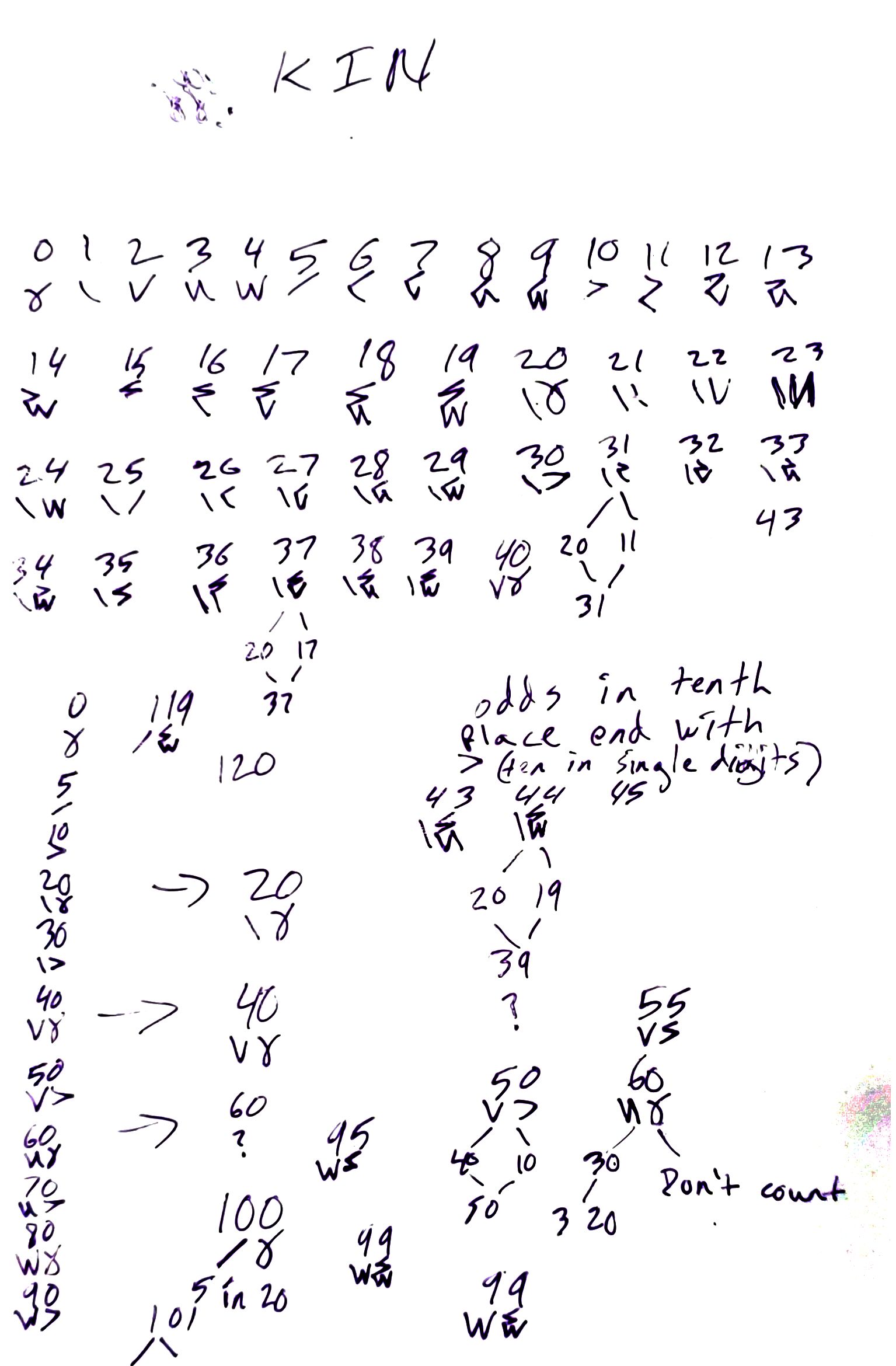
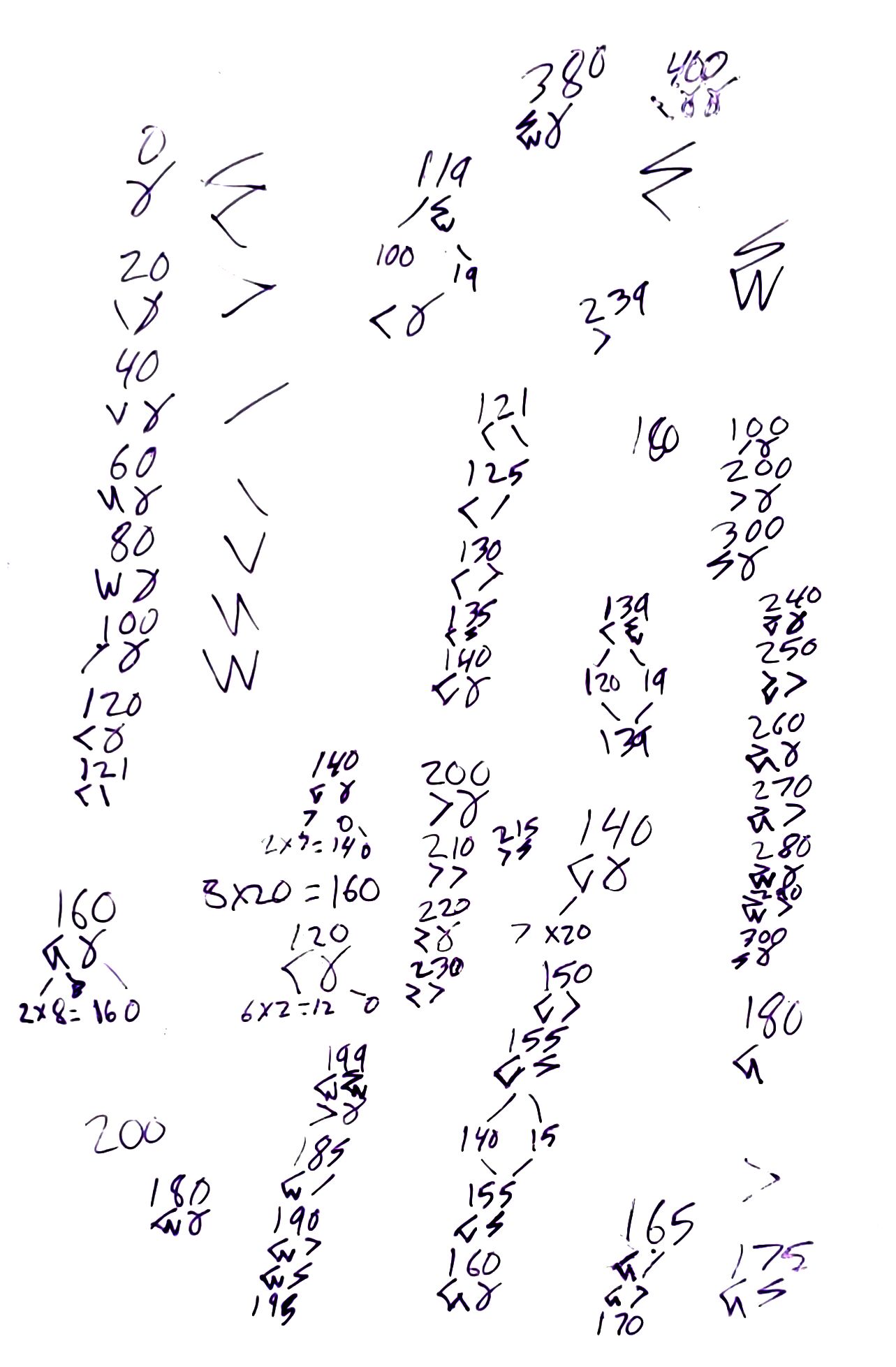
In decimal 21 divided by 7 would be written as 11 divided by 7 in Iñupiaq.
Looks like this:
I do not see a way - like it is done in the video - how to do this division geometrically.
Then; let’s look at the example of the first elaborate division.
I’ll rewrite the division in easy to understand decimal:
(61 * 400 + 61 * 5 * 20 + 61) / 61
Since 400 is the third position, comparable to 100 in decimal and 20 is the second position, comparable to the tens in decimal, and the ‘5’ in the ‘61 X 5 x 20’ means it needs to be raised, it is easy to see that the number 30561 can be easily divided by 61.
Also in decimal - admittedly not as fast or beautiful as in the video - it is easy to see that 30,500 is 61 X 500. If not immediately visible, 61/2 = 30.5, so apart from the decimal point, the sequence 305 forces its way up if you half 61.
Or you can quickly do 61X5 = 305.
Of course the second example: 46,349,226 / 2,826 is indeed more difficult in decimal compared to Iñupiaq.
Indeed, this is a calculation that is easy to do geometrically.
However; change one number and try to do the calculation again:
Now, try to divide the number above by this:
(It is not impossible of course, just a lot more difficult).
So I grant that the particular properties of Iñupiaq gives one an advantage.
I also like the properties of writing the numbers. The base 5 inside a base 20 certainly has advantages.
Just don’t think it a is a system that will solve all your problems with arithmetic.