How can I memorize the names of 206 bones of human body?
1 Like
Try searching this forum to start with, (https://forum.artofmemory.com/search?q=memorize%20bones)
E.g. this link seems to be one way: Memorizing Bones of the Body
3 Likes
I have not done it myself, just wanted to point out to you and others that there’s a search function in the forum.
If I’d need to learn the bones myself, I’d probably start with studying the skeleton to see how everything’s logically connected. Then perhaps build a ‘palace’ of each part of the skeleton, head, arm, torso, leg etc. and link the bones in that part together.
A quick search on the wild web found this game (needs Adobe Flash Player) that might make it easier, regardless of if you use mnemonics or not.
Edit: See Maya’s post below, this is more to the point.
2 Likes
I memorized the bones by splitting them up into different groups. My groups are:
- Skull
- Torso & Spine
- Arms
- Legs
For each bone I turn the name into an image, which I put in a memory palace. The Skull is the toughest, but it does follow the same kind of logic as the others, lets take an arm as an example.
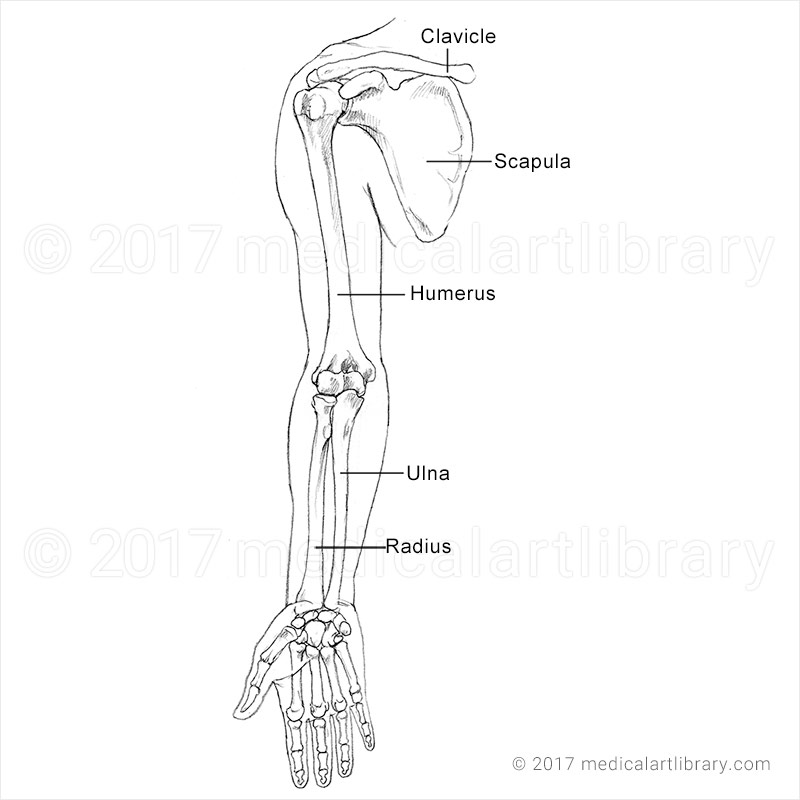
I count from the shoulder down, so the Scapula and clavicle are not included in this list. Putting them with the torso was easier for me, but you can take it any way you like and just add them.
In the arm and leg, everything is a line, and my line goes from up to down. In order, the bones I would come across are:
- Humerus
- Ulna
- Radius
Now it gets tricky, but I got a little list for the wristbones as well.
Basically there are four wrist bones in a lower row (the proximal row) and four in a line next to this (distal row), I just continue the line I started in the earlier bones (starting on the thumb side)
- Scaphoid
- Lunate
- Triquetrum
- Pisiform
Triquetrum has a little image to help me remind it better. It has the word Tri in it (originally from the triangle shape) and is also touching three other bones in the wrist! Quet becomes Quiet, and the pinky is the weakest finger, so the most “quiet”. So the bone on the quiet/pinky side that touches three others. Pisiform reminds me of Castform, a small, floating pokemon, and coincidentally it is a small, sort-of floating bone in the hand. That brings us to the side of the pinky finger, so I do the line of the four distal bones from pinky to thumb.
- Hamate
- Capitate
- Trapezoid
- Trapezium
This also has a few little quirks that make it easier to memorize. Lets start with the last two. The one at the far thumb side of the wrist is the Trapezium, because it looks like one! The Trapezoid is its smaller neighbour. Then we get the Capitate, the “Capital”, the most central bone. Hamate is the neighbour of the Capitate.
Lastly the fingers.
- Metacarpals
- Proximal Phalanges
- Intermediate/Middle/Medial Phalanges
- Distal Phalanges
Meta means “beyond” and carpal means “wrist”, so litterally the bones beyond the wrist, of which we have five. Proximal means “close to”, so the closest finger bones. Distal is the opposite, the furthest bones. Apart from the thumb, each finger also has one inbetween that, the Intermediate Phalanges (sometimes called middle or medial phalanges).
Maybe you have already seen a trick with some of the bones: their names show where they are, what they look like or what they do.
This is a huge thing, because by understanding why they are named a certain way, you can already find most of the bones in the human body. Also for most of the body, left and right are the same, so you don’t have to memorize 206 bones, you only need half.
10 Likes
Buy “The Memory Book” by Harry Lorayne and Jerry Lucas. It has every memory device for every memory challenge.