How do you actually structure a 4-year university degree using Memory Palaces?

Hello, I’ve been working with memory techniques for almost 20 days now, and I’m continuing to learn by applying various methods from Dominic O’Brien’s book. The main question on my mind is this: how do we actually use these techniques for university courses? Of course, everything explained in the book seems super cool and really intriguing to me, and I’m honestly amazed by how well it works, but how do these techniques play out over a 4-year degree?

Say you’re going to study Psychology—how are you going to fit all the information you learn over those 4 years into a memory palace? And how exactly do you execute this? For instance, courses are interconnected. How do you link related pieces of information together? Do we put them in the same memory palace, or do we create a bridge between two separate memory palaces? Or do you build one massive memory palace exclusively for Psychology, gradually placing everything in there as you go? When you add new information over time, if it connects to something you already know, do you reorganize things in your mind to make sure they’re linked?

Whenever I think about academic subjects and university, I can’t help but wonder how this process actually unfolds. At the same time, I don’t have that many memory palaces in my head yet, so I try to use my palaces and routes as efficiently as possible. I usually map things out on paper first, then work on linking the information together. Honestly, I’m still trying to figure out what approach I should take here, so any advice or insights you could share would be immensely helpful. Thank you.
1 Like

When I was in university (law) I would not store massive amounts of information on memory palaces, as the point of studying is to understand.

What I would do is study to understand the subject and then I would memorize key words that would serve as a reminder of the thing itself. Like, I knew and understood the different ways to transfer property, but if asked out of nowhere I would usually forget a few, so when encoding it into my MP I wouldn’t try to add the whole process and descriptions, just the word (example: traditio, I might forget the word itself but if I hear it I immediately remember what it is about).

4 Likes

That is some flex man. It took me 2 years on and off to actually understand the technique and apply it consistently. Yo are 20 days in and already good at it.

Intelligence has no bounds I guess.

2 Likes

I guess I need multiple memory palaces, and my main problem is that I don’t really have that many of them. I think what you said is true—the goal is to actually understand. Once you understand the subject, it seems you can regain access to the topic itself just by memorizing key words. Thanks

1 Like

Hey, I appreciate what you said, but it also made me blush a little. Honestly, I think your situation is even more amazing. You found this technique and put in the effort for two whole years to understand and apply it. To be honest, I’ve never been that dedicated and determined about anything.

1 Like

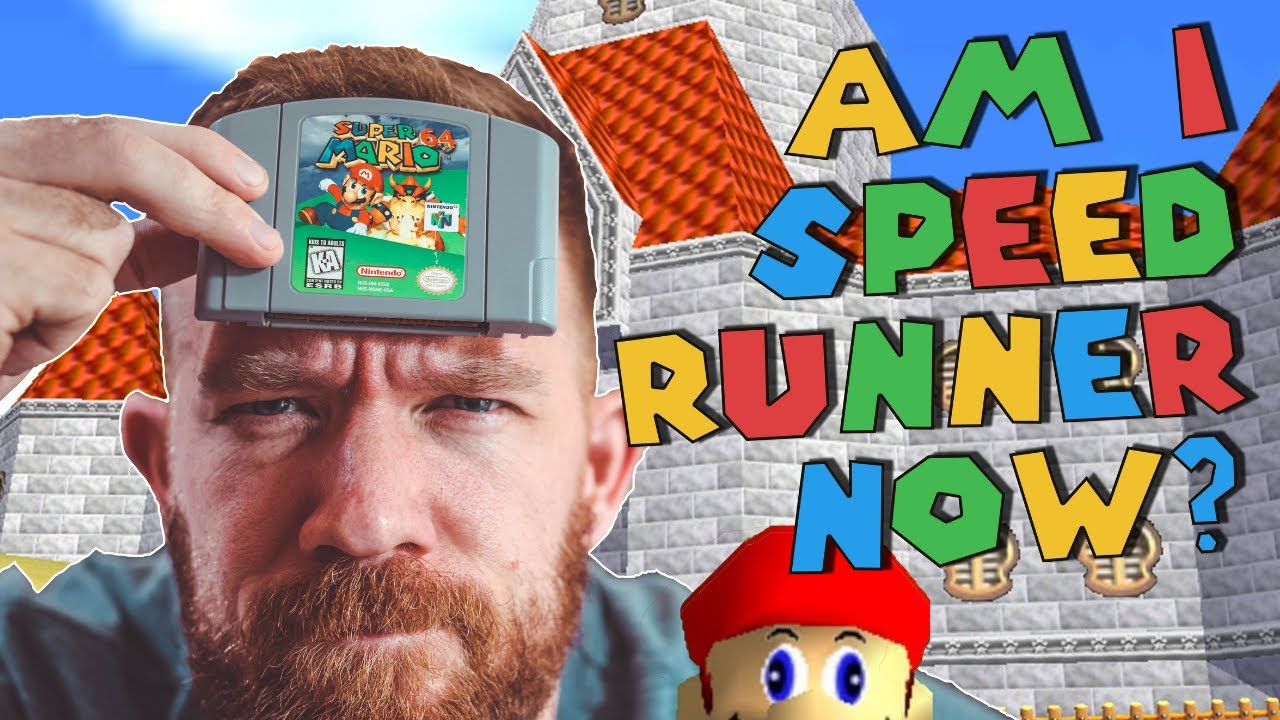
I’m still working on it, but for what is worth, I’m storing professional certification material using games as memory palaces. Works perfectly well and it saves you from all the work of harvesting large quantity of palaces. I have my AWS Architect Associated certification stored in the old good Quake II. To me, works like a charm, but I must admit I played Quake II more hours than I spent sleeping when I was about 20. Watch this video for some directions.

Hope it helps.

Cheers!

2 Likes

Uh, it depends heavily on the subject matter involved. If you actually went through the effort to systemize your knowledge well enough to put into a memory palace, you kind of have the problem solved.

So, consider an easy problem: the character 姿, “looks” is the keyword in Remember the Hanzi, “figure” in Remembering the Kanji, both refer to a person’s physical appearance. The top part is “次” meaning “next,” made of “欠,” lack, which we’ll mnemontize into a guy yawning (because it contain “人,” person, and the top part might be related to a radical that called “lying down.”) The left part two marks have to do with “ice” in other contexts.

The bottom part is “女”, “woman.” So we have a yawning guy looking down from an ice throne at woman, saying “next!”

But the character is also pronounced zi, and has a high tone. For zi, we can use a baby, since zi is how “子,” “child” is pronounced, and the child can have a halo, for high → heaven.

So, we have an guy on an icy throne, looking down on a woman, only for a baby in a halo with a playboy mag to show up, showing off the “looks” of a “heavenly babe.”

Once you have all that, you could also put it at number 480 of your memory palace, but by now, I hope you see my point: systematizing the information into mnemonics is by far the hardest part. There are books like Remember the Hanzi and “Healing Blade: Defenders of Soma,” but they are rare, and there’s probably money in it if you successfully solve the problem, even in a narrow domain.

1 Like

Hi, what you said makes sense to me as well. For me, that game could be Minecraft. I used to build a lot of things in Minecraft before, or there are already really great builds created by other people. Taking locations from those seems like it would make sense for me, and I’ll test it out to see if it works. Thanks!

I agree, ‘systematizing the information into mnemonics’ is definitely the hardest part. Focusing more on that seems like a better approach. Thanks!

2 Likes

Don’t forget to use spaced repetition. Anki works well for me. I use chat GPT (with Codex) to generate anki cards. I just upload my material (for me are PDFs) and prompt “generate anki cards in apkg format from slides 700 to 750”. Then I import them using the anki desktop application.

To me, learning has two parts to it. First is just getting familiar with the subject. Is what the people call “understand”. You go to classes, watch the videos, do the exercises. It’s important, it’s foundational, but it’s just the fundations. You have to build on top of that. You need to memorize. Otherwise, in three months time from the exam, you would have forgotten most of the material. I’ve been there. I passed a really complex certification and, after a year, when I had to put in practice the things I learnt, I had a very faint recollection of the stuff I was supposed to have the preparation for. The impostor syndrome was killing me.

Game memory palaces were a great discovery to me. I’m able to memorize really fast a vast amount of information. I don’t need to remember a large path in the game, just small areas. If I want to remember the differences between a NAT instance or a NAT gateway, that’s in a very specific area of the first levels of Quake II. I can’t mix that up with a Transit gateway, or a virtual private gateway, because they’re in different areas. Security groups, WAF and NACL are all firewalls, but again they all have a visual representation in very specific and separate areas of the game. I don’t have to walk through the entire game to retrieve the information. If I am to retrieve NACL, I just think where did I see Nacho Varga, my image for NACL firewalls. Security Groups are represented by a different person and does different things on a different area. So I don’t mix them up when I think of them. I prefer games that I’m really familiar with (and I have quite a past as a gamer) that are not generated procedurally, and that I can use a mod or a console command to eliminate the enemies, so I can go though without my brain entering in fight or flight mode. Then, just go through the game scenery while you’re encoding the material. And use Codex to generate anki cards (and use anki every day). Like I said, if your familiar with the material, you can go very fast without having to harvest large palaces in real life, which is costly and more complex.

Hope it helps.

Cheers!

2 Likes

I am not a heavy loci user. I do however have a tip to add to this endeavor-

By orienting yourself before ingesting the material of a specific class, you can make use of loci more effectively. For example, when learning about child/pediatric psychology, orient yourself by imagining a place from your own childhood, and use that as your loci or palace.

doing this orientation before learning, and not during, is the main effort of memory work, and it’s how we make it automatic.

other than that, I think the posts have covered how it is far more effective to have a tacit knowledge of the subject rather than an explicit one. In this way the information can become useful at all.

Best of luck!

1 Like

I agree that doing prior preparation is crucial: you check the subject of the lesson, understand what’s in it, and then pick a related location and set up the route accordingly. At the same time, grasping the underlying logic of the topic is really important. After that, I think we’ll do a much better job by memorizing the core terms of the subject. I agree with what you said, thanks.

Hello, as you said, I’m definitely going to use spaced repetition. A while ago, before I discovered memory techniques, I had only come across mind-mapping techniques. The basic idea there is that you take the key words from a subject and try to find and understand the relationships between them.

Trying to figure those relationships out actively involves you in the subject and also helps you understand it better. When you only look at the key concepts and the connections between them, it’s almost like seeing the whole picture and questioning how everything fits together. That’s how I’m trying to approach the “understanding” part as well.

At the same time, I experienced exactly what you described. I tried using mind-mapping techniques, and I was also reviewing things at certain intervals, but I would still occasionally forget things. And as the number of subjects increased, I started forgetting more and more.

As you said, using games as memory palaces makes a lot of sense to me too, although I haven’t tried it yet. I was thinking that using locations from certain games could work really well. I even wondered whether it would work if I went into Minecraft and walked around houses that I had built or other structures I was familiar with.

I think I’m going to give your method a try as well. Thank you!

3 Likes

@egtel , I’ve just discovered Alex Mullen’s site and it’s definitely worth your attention. 3 times world champion explains how he organized his methods to study medicine.

Alex, if you’re around, thanks for such generosity. I’m reading your page with close attention.

3 Likes

Thanks a lot, I will definitely check it out