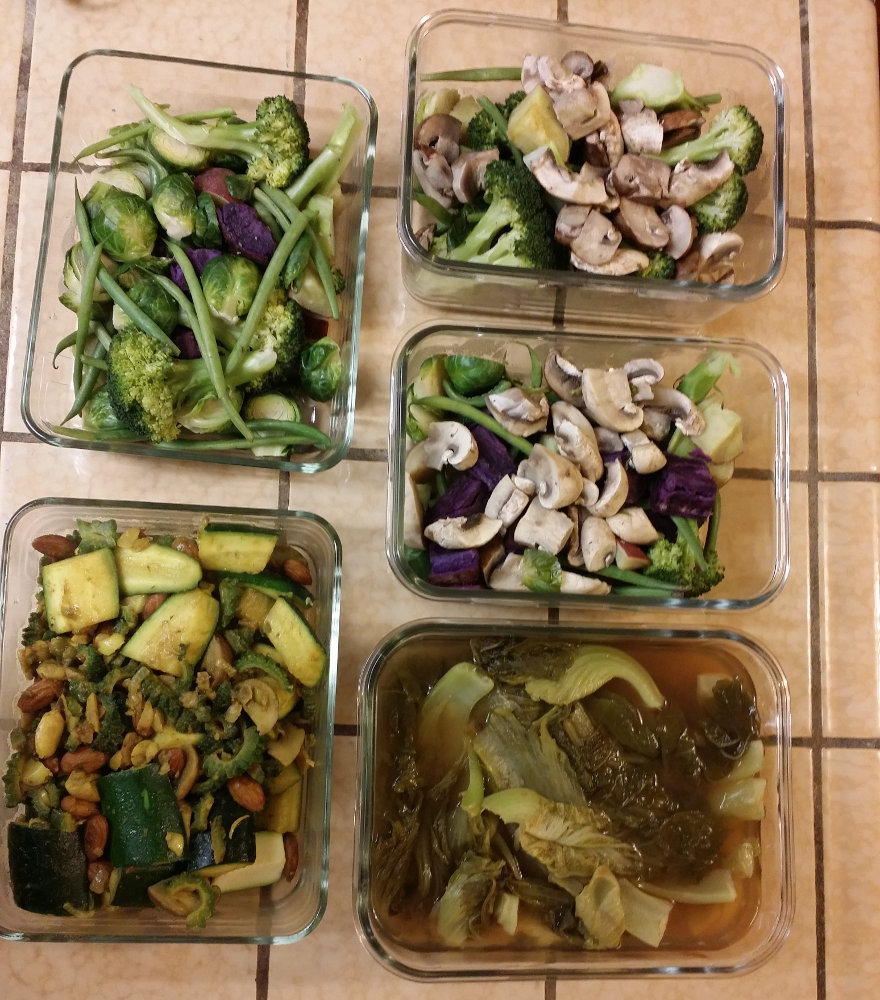
I use fresh vegetables, because I think they are more nutritious, but frozen vegetables would probably be better than no vegetables.
I usually try to eat a variety of different species and colors. The colors of the plants (red, yellow, green, blue, etc.) provide clues about the nutrition. The number of species of plant foods seems to be related to the diversity of gut microbes, so I try to eat as many different plant species as possible (30+ species per week).
One of my staple foods is Brassica oleracea (brocolli, cauliflower, Brussels sprouts, and cabbage are all the same species). I’ve only watched part of this video, but even just the first few minutes should be enough to get a general idea about its value. It’s easy to base meals on that plant.
I usually don’t reheat them, but you could. When I do reheat food, I just put the chopped ingredients in a pot with a little water. If I have soup in the refrigerator, then I take a little soup and add my vegetables to it and heat it up, though I still usually eat things cold, unless eating the food right after cooking it.
I don’t worry about making food taste good as much as making it as healthy as possible. I don’t have certain kinds of breakfast or dinner foods but just eat whatever is healthy and available.
Two of my favorite quotes about food are:
- “Eat to live, don’t live to eat.”
- “Food is not a recreational drug.”
Junk food is addictive – the less junk I ate, the less I wanted it, and the better that healthy food started to taste. There might be an adjustment period.
If I’m away from home and need some food, I sometimes buy a little fresh cabbage or broccoli and eat it raw – it’s cheap and prevents me from eating less healthy things. (See the video above for the nutritional benefits of raw cruciferous vegetables.)
I think 4-5, maybe more.
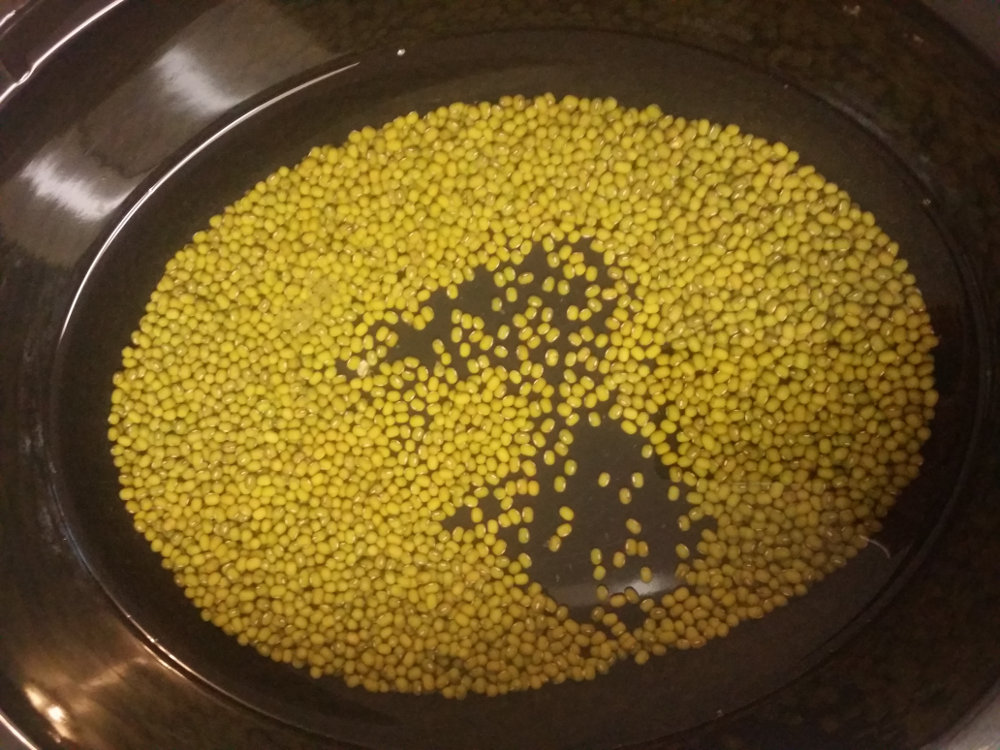
Another easy way to eat healthier without much effort is to make bean soups. Legumes are some of the most nutritious foods out there.
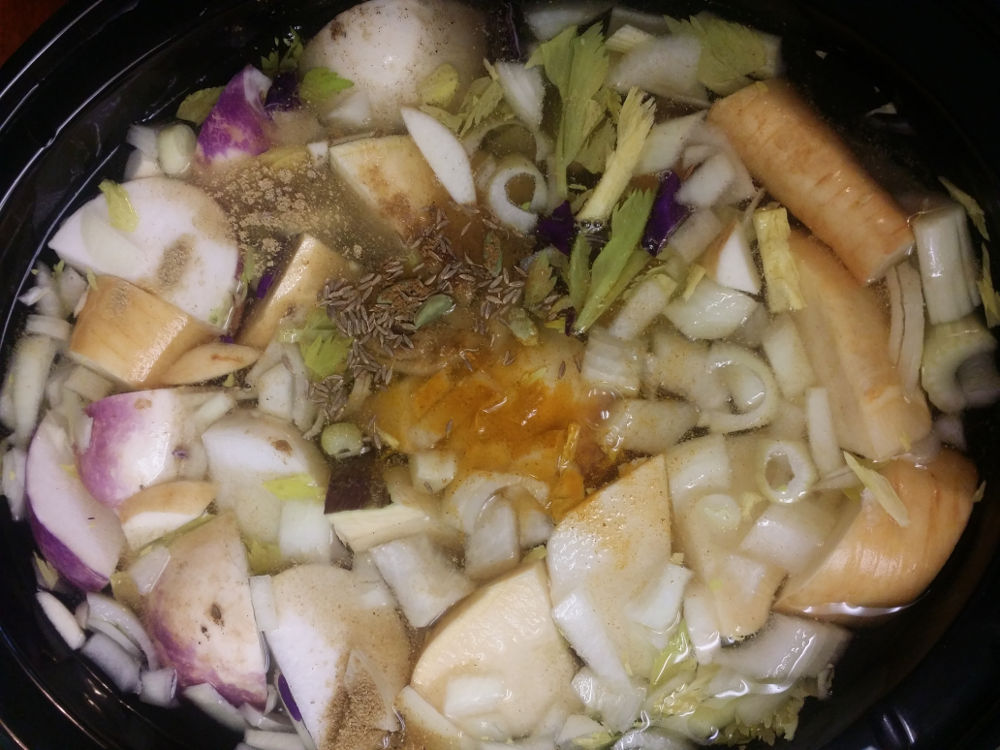
A list of ingredients like the one below can be put into a pot or slow cooker for a couple of hours to make 5+ days’ worth of food:
- some beans (soak them overnight, except for things like lentils, split peas, adzuki beans, mung beans)
- water
- a parsnip or two (chopped into 3-4 pieces)
- a chopped onion or leek
- some garlic
- some ginger
- a few carrots
- a few stalks of celery
A little while before it’s done add some leafy greens, like chopped kale or cabbage. Things like turnips, rutabaga, sweet potatoes, and squash are also good additions near the end.
I don’t add salt during cooking, but before eating soup, I usually add these things (4+ more plant species):
- chopped fresh Italian parsley
- chopped fresh cilantro
- a chopped scallion (a.k.a., green onion)
- crushed fresh garlic
- a spoonful of vinegar
- a spoonful of olive oil (a small amount of fat helps with nutrient absorption)
- salt & pepper
- chopped steamed vegetables
- chopped leafy greens (lettuce, etc.)
- seeds or nuts
- raw sauerkraut and/or sauerkraut juice
After you have the soup and the steamed vegetables, you can have more variety by mixing them in different combinations.
Rice cookers are useful for cooking rice without spending much time on it. I usually eat brown rice. Buckwheat/kasha, amaranth seeds, oats, and quinoa are also easy grains to cook.