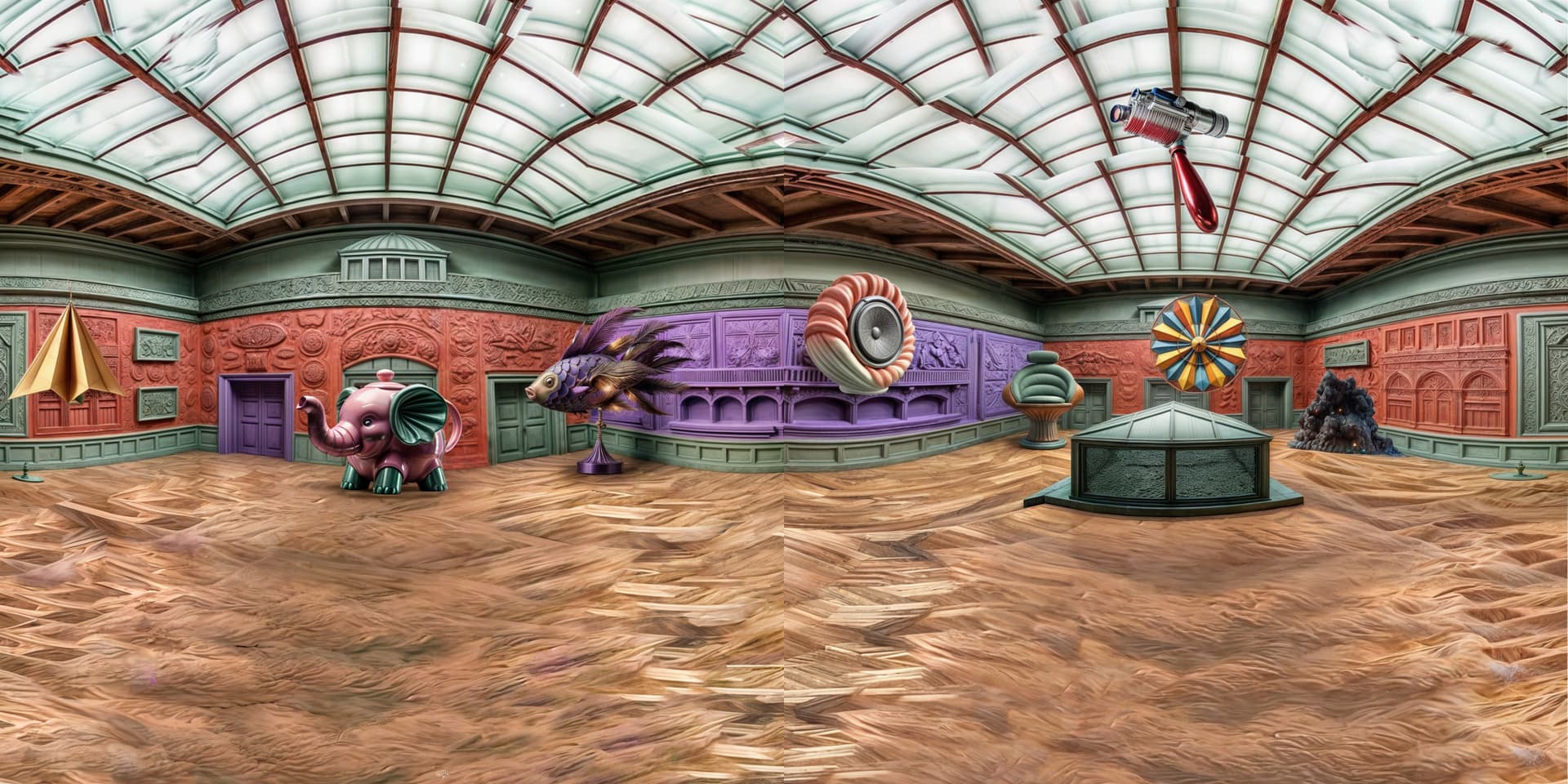
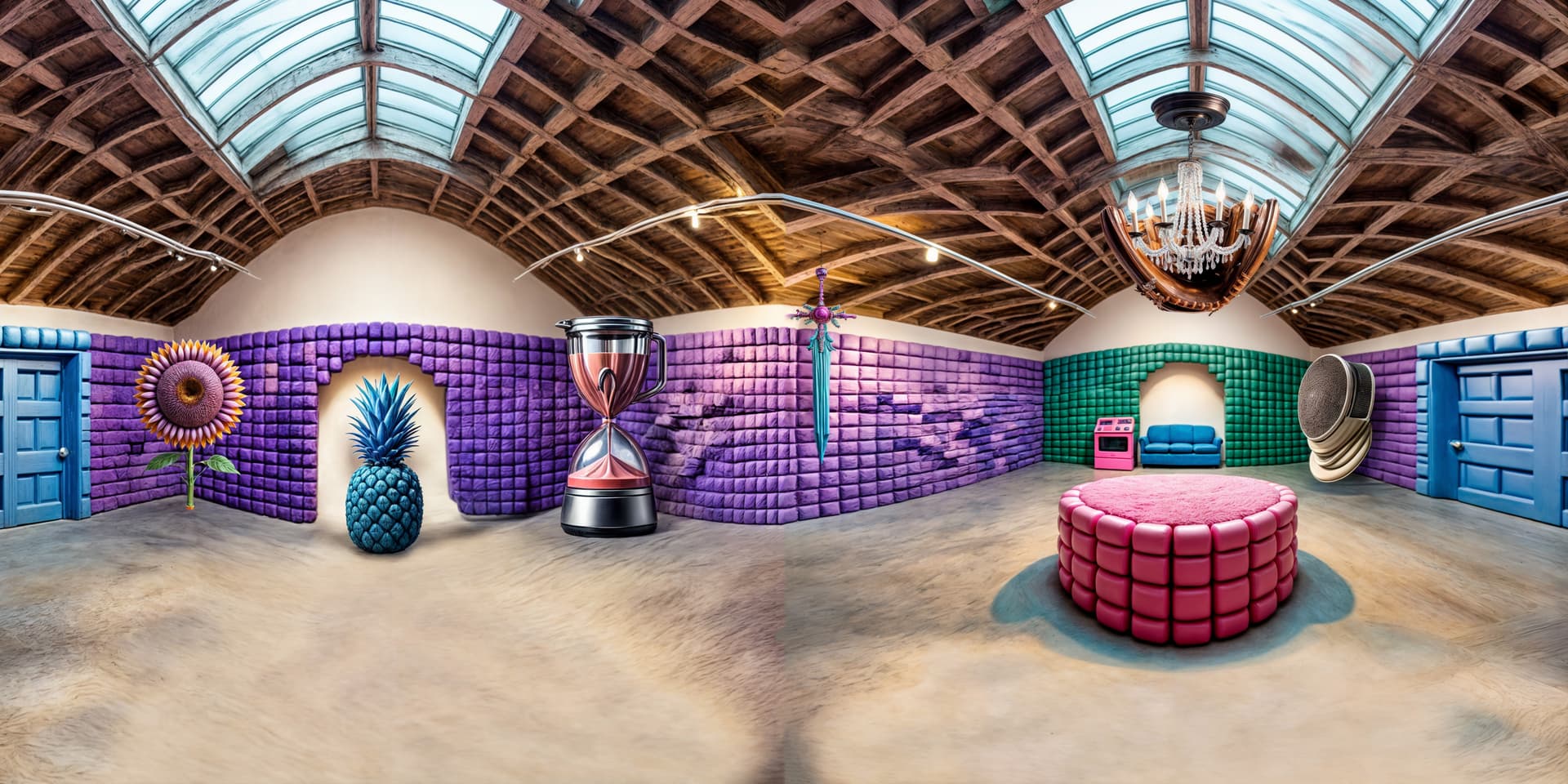
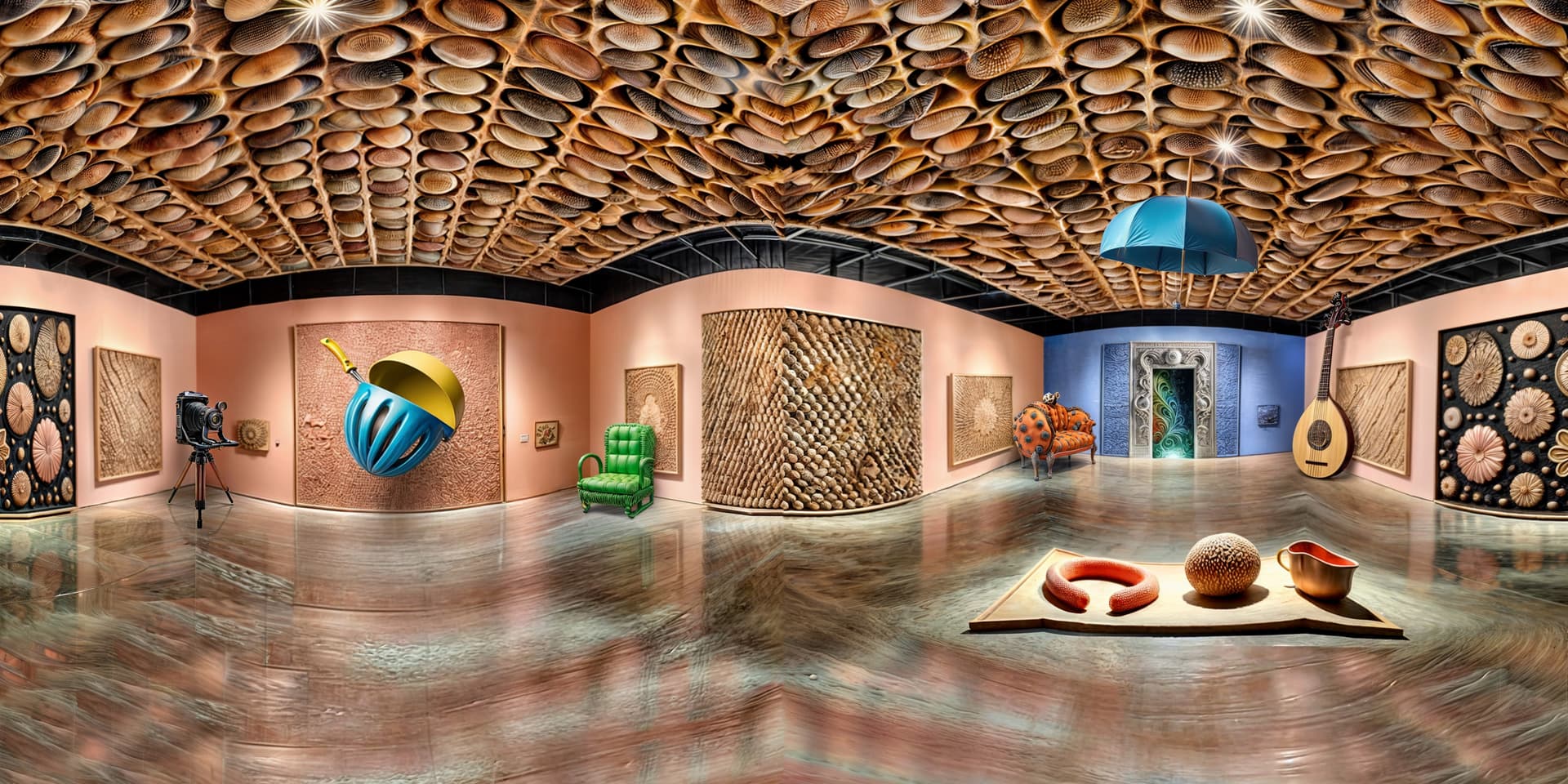
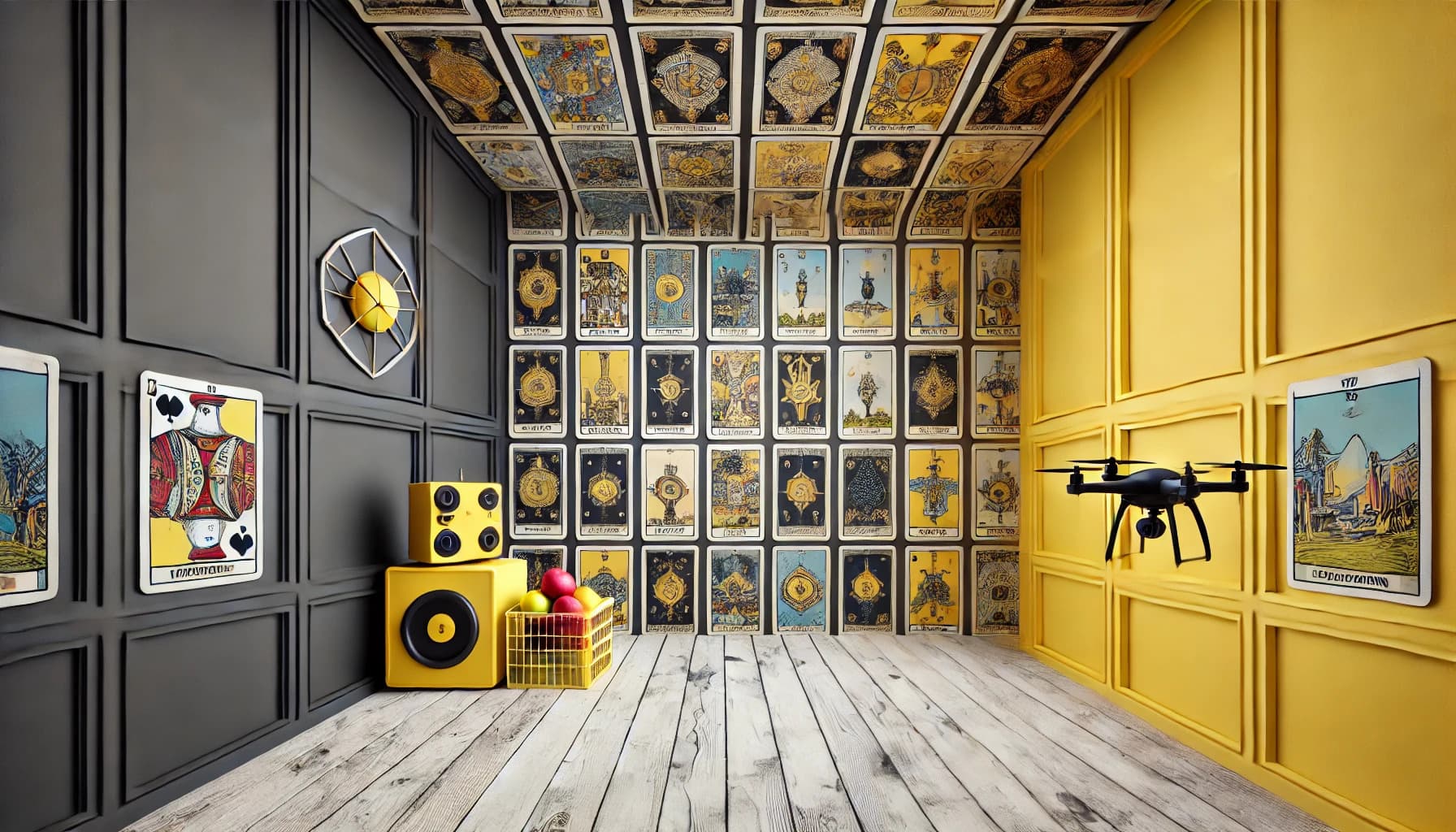
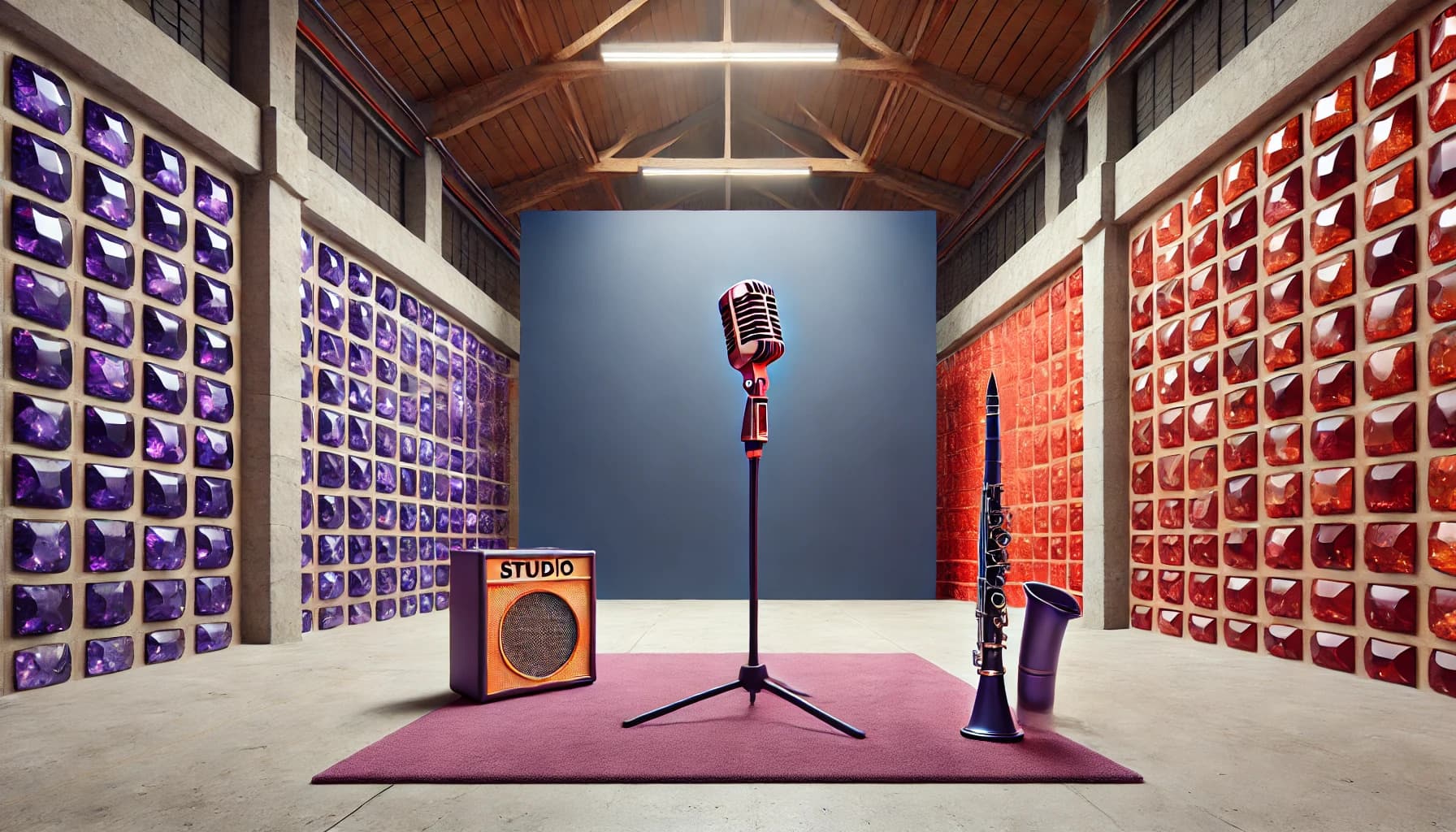
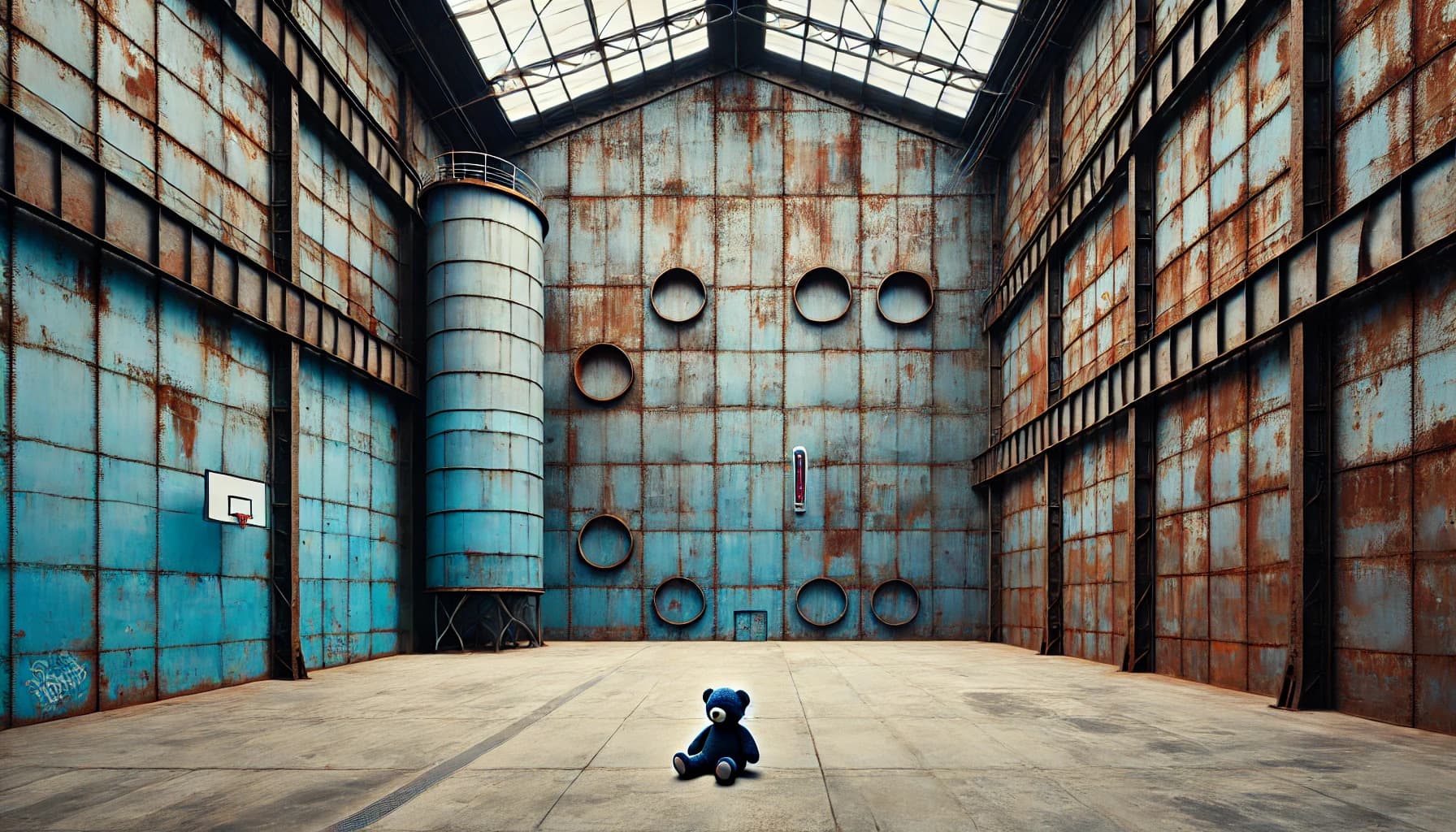
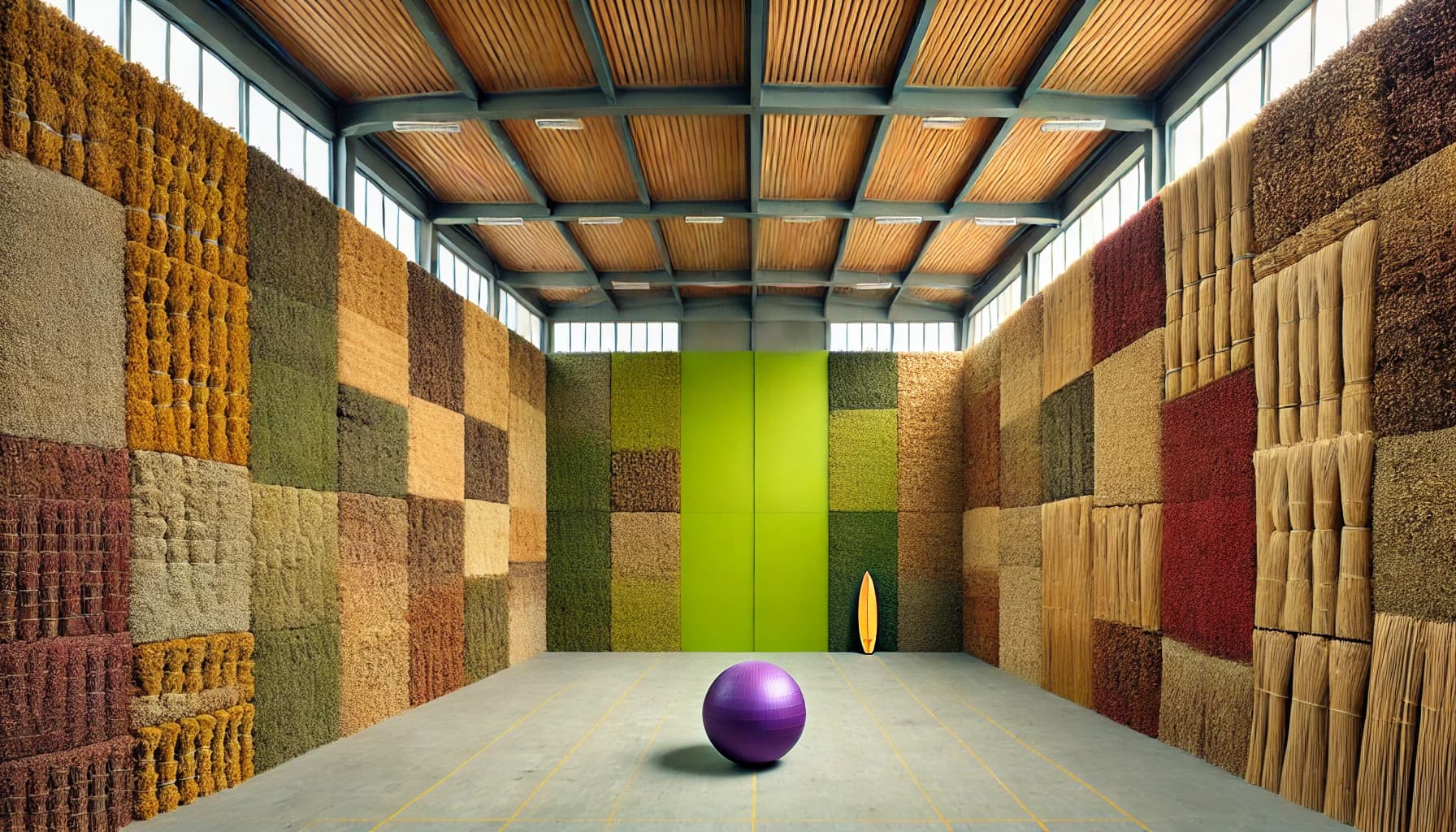
Alright, I’ve spent several hours playing with generative artificial intelligence, Photoshop, and my own non-artificial intelligence, and I want to share the result, hoping it might be useful to someone.
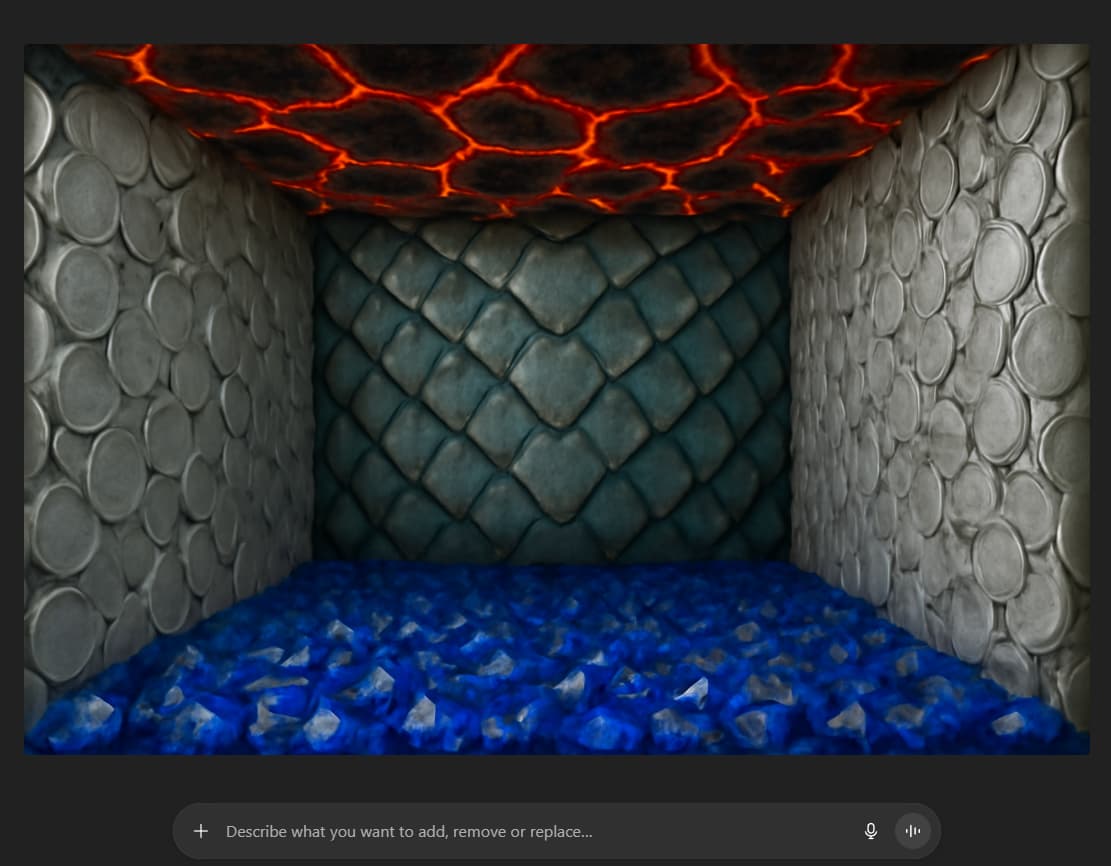
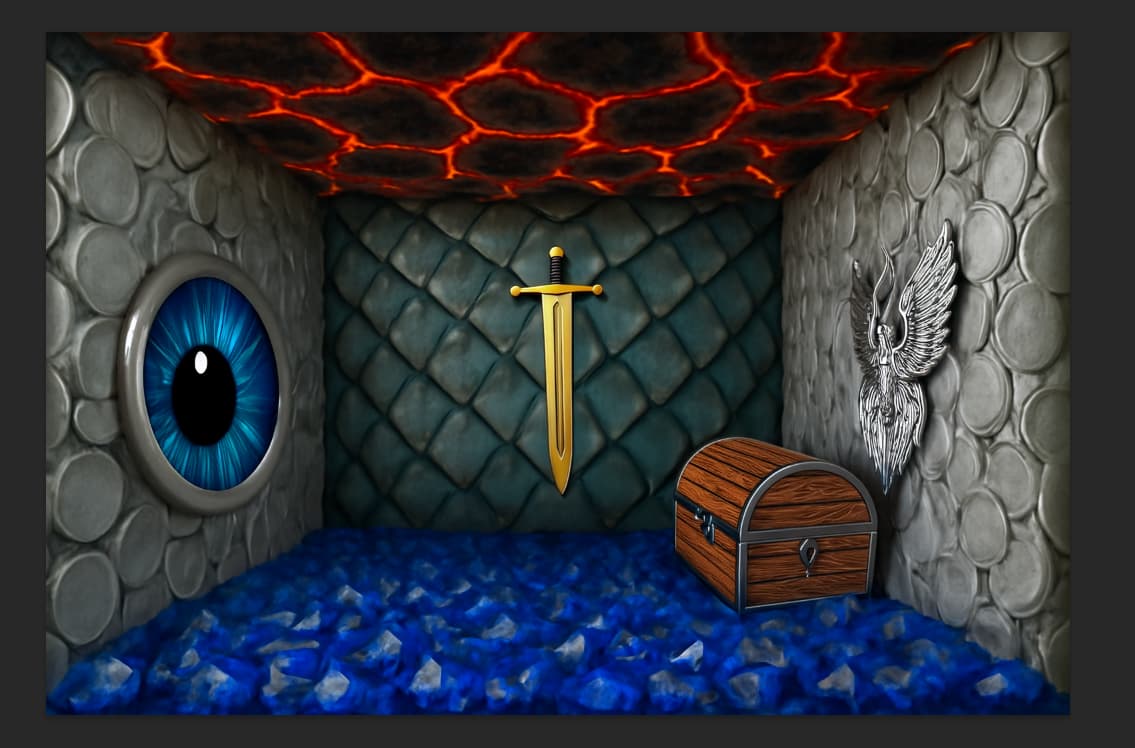
I started creating rooms for mental palaces using ChatGPT, with rather peculiar descriptions of the materials on the walls. Personally, I use a version of the Roman room, where there are always ten stations per room (four corners, four walls, the floor, and the ceiling). I’ve discovered that the peculiarity of the room is especially important for it to be memorable. A lot of help comes from the differences in colors and materials on the walls. Then, I added extraordinary objects to each of the places where the stations or loci are located. They also vary in color, material, etc.
The idea is for each room and each station to be as distinct as possible. The process involves using an image and transforming it (manually, as I don’t know any other way to do it, unfortunately) into a room and a 360 panorama, so it can be visualized in a way that closely resembles being in a real room. Now I’m considering buying a VR headset to experience it even more intensely.
Anyway, I created three rooms with these characteristics and wanted to share them, in case someone finds them useful, interesting, or especially if they have any feedback. I think it would be really interesting to hear your thoughts!
Thanks for answering. Maybe the colors seem similar because of the ceiling and the floor, because they don’t seem that similar to me (perhaps there are some repeating ones, though).
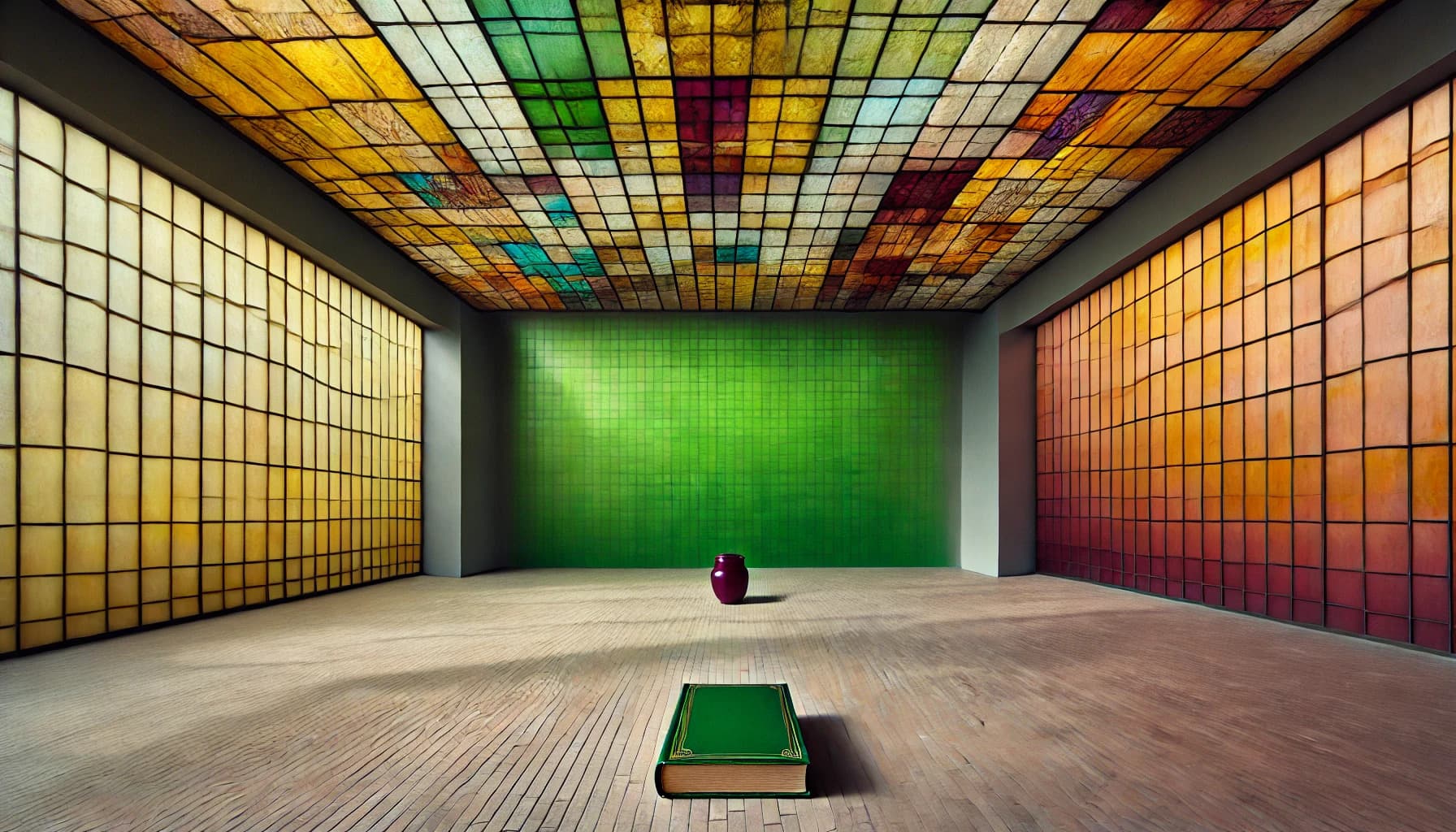
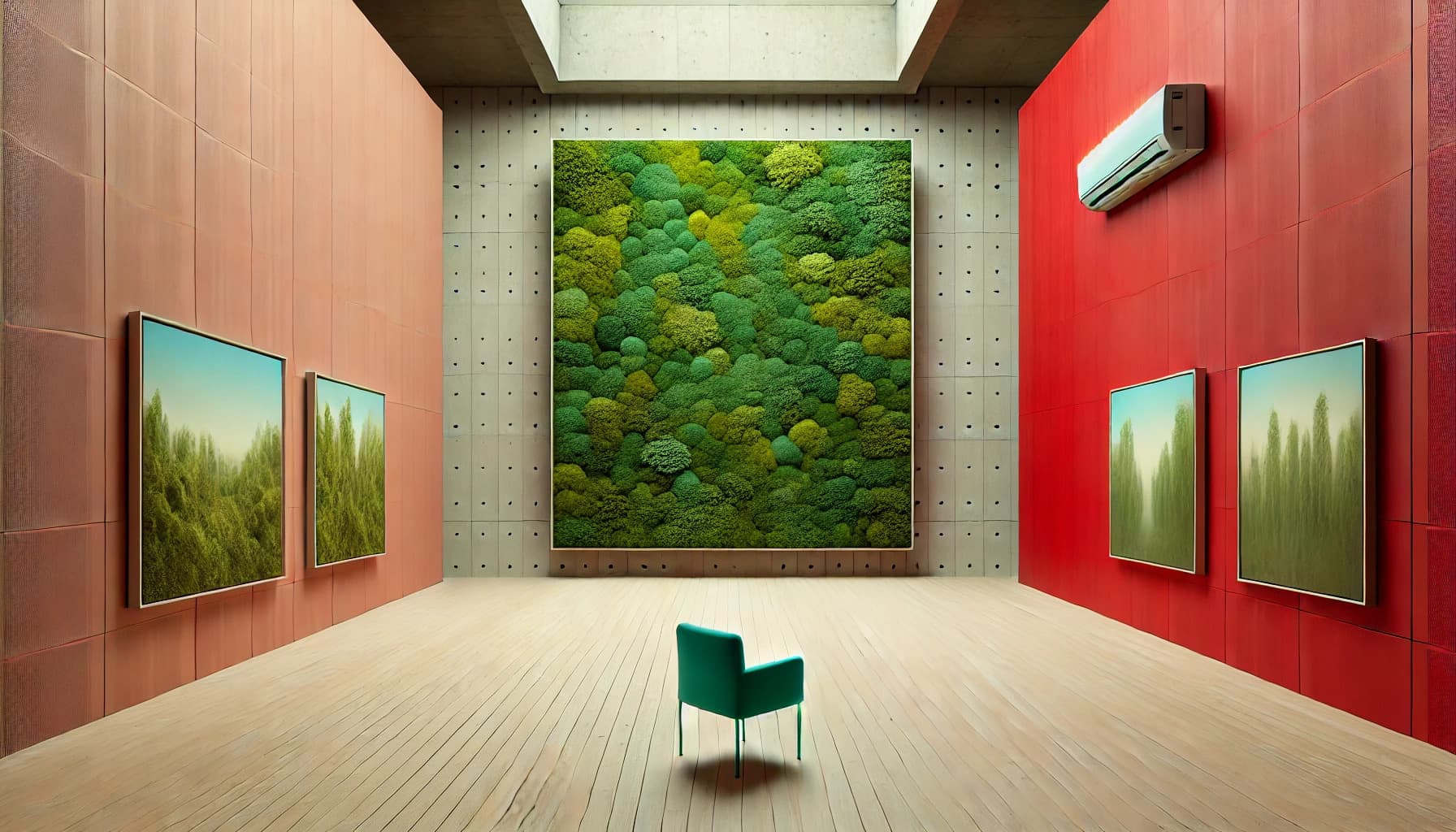
The idea of changing the floor material is very good, although a little difficult to achieve with current technology, maybe. I have other rooms that are a lot more distinct (that I haven’t work into “ideal” rooms yet), have a look:
I’m still learning to transform them into “ideal rooms”, so it takes me some time to do it, but is work that I really enjoy, feels more like play to me. (This ones are directly from ChatGPT)
I’m planning to do an experiment when I have some time, comparing the effectiveness between this kind of memory palace to physical memory palaces (stores, houses, etc.), that I’ve the opportunity to be in. I’ll try to report that when it happens. I thought maybe others will appreciate me sharing this ones and try them by themselves. Let me know if you give it a try at this.
Hi, James! Thanks for your answer and appreciation. I also have an intuition that this could be a breakthrough. I imagine something like a AI creator of rooms with this characteristics, that people can access in VR, would be amazing, I believe. Or, maybe, something like a library of pre-made rooms.
I’m curious to know, what makes you think this is a breakthrough?
Well, depends on what do you imagine will be the difficulty on scaling. Is precisely to avoid difficulty that the rooms try to be that different. If the difficulty lies on remembering which room have what content, I have found that having a character to symbolize each room works pretty good (literally, one character for room, the character also designed to be maximally memorable). A king of guardian of the room, if you will.
Organizing the rooms is relatively easy, when they are structured. For example, in a book with, say, 10 chapters, you can have a room for each chapter, and have the 10 guardians in a room for the hole book, etc.
I’ll gladly report later on. For now, using a few of this rooms have been useful and fun. A real experiment is needed, though.
Cheers and thanks for engaging, it seems you have a lot of experience and your input is very valuable to me.
Thanks for sharing this inventive idea and your implementation! I remember reading last year, and it was a source of inspiration for my attempts at using AI to illustrate my memory palaces.
My approach is different though: I take a real place and overlay the picture of a scene (or a lasagna of stripes taken from different scenes) on top of it. The emblems AI generates are evocative of the word I want to learn in my target languages (currently Sanskrit and Modern Greek). It’s low-tech in comparison with your design, as no 3D is on the roadmap, but the benefit is that the memorable images created by ChatGPT or Gemini encode information, instead of serving as the backdrop over which I’ll have to visualize something that my eye has not seen depicted anywhere.
You could even, as I’ve argued, use the best-in-class image-editing models and place in the photo of a station of your palace (i.e. one of your loci) the symbols / emblems that evoke the information to remember.
When I have some time I intend to explain how to use mask segmentation to produce depictions of scenes that can also be decomposed into individual, atomic images to load words in Anki. Again, thanks to Gemini. Google is going very strong in the AI race…
Am I right to guess that you don’t want to tie any specific information to the rooms you’ve shown because you intend to reuse for multiple memorization projects, or maybe competitions?
This is really beautiful, they look like representations of Robert Fludd’s theaters to a certain extent… as far as I’m concerned, I would use Photoshop AI to place objects or locations that serve as hooks… developing a theater of memory with this would be great, using 26 colors and different textures in each one.
The rooms could be themed, such as an airport, with an airplane in the middle, pilot suits, pilot helmets, etc., and so on, using the alphabet for places, with each object representing a character who serves as an actor. For example, to memorize the word “sanson” (doing nothing), he is doing nothing (representing the word ‘nothing’), and when he jumps to another room, he is hitting a tree (representing the word “hit”), and so on in many places, to represent complete sentences and passages… for words that do not represent images, a visual alphabet. And so on.
You could also use themes from movies, such as Game of Thrones, a room with representations of Thanos, Zeus, etc., which is why rooms like this are very good for memory.