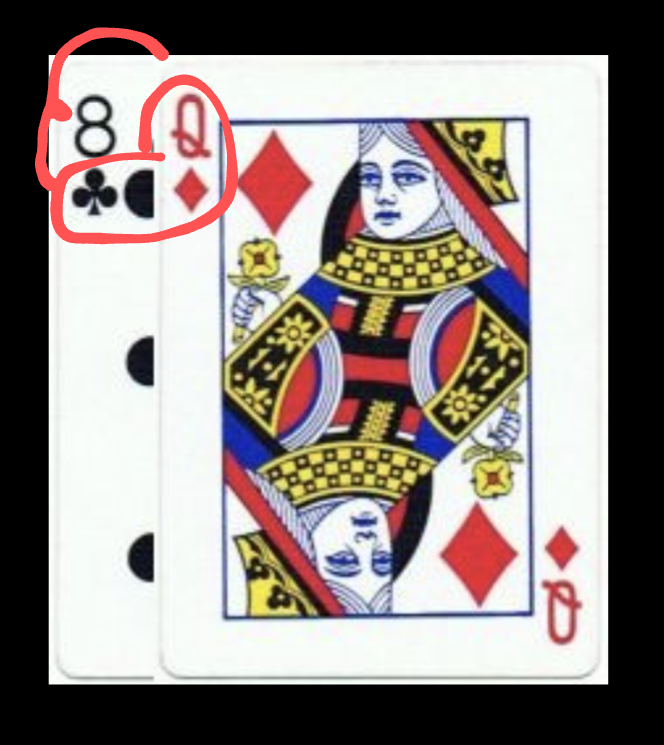
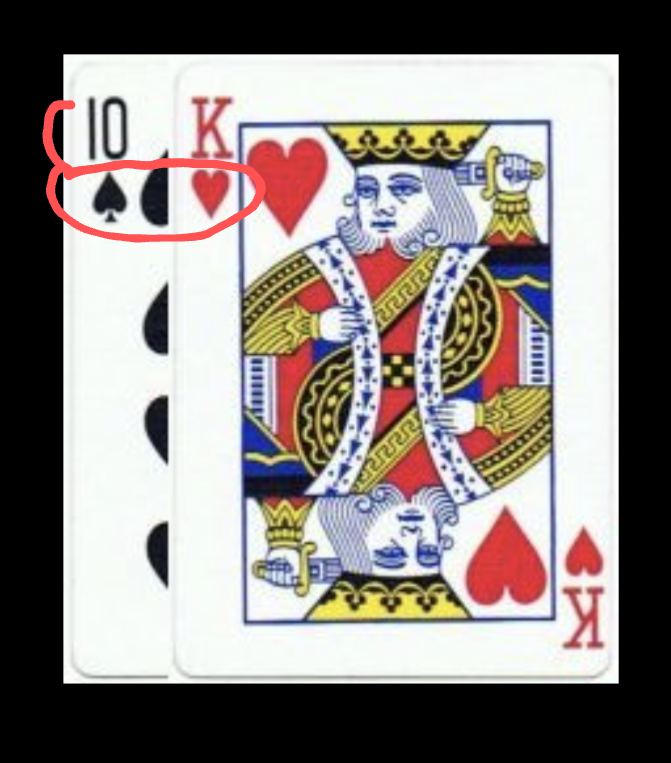
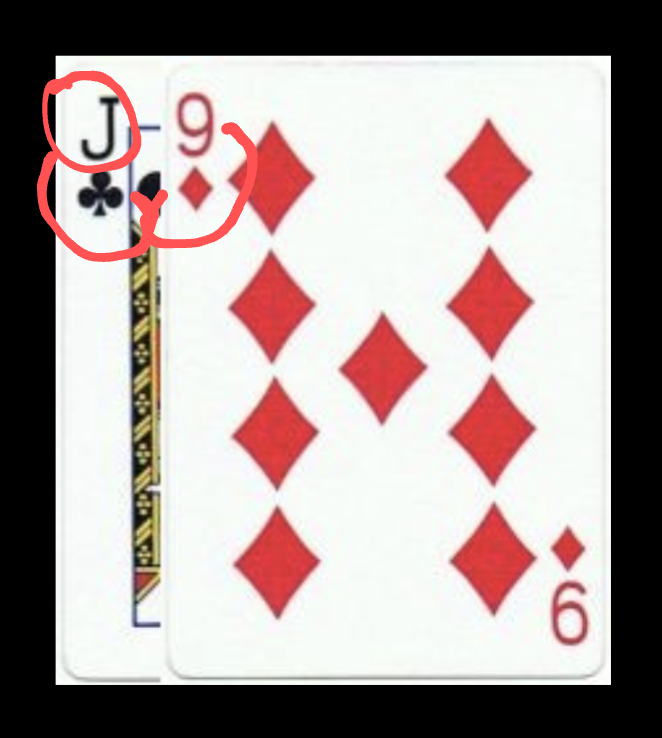
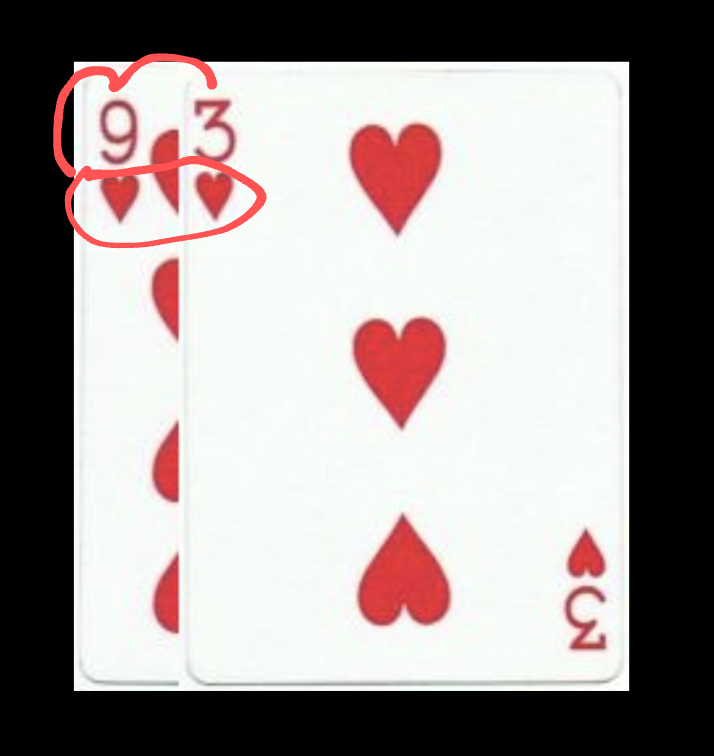
Efforts to learn the Shadow System and memorize a deck of cards in under one minute

1 MONTH IN: STATUS UPDATE

I’m encouraged by my progress with this project so far and am motivated to see it through! Occasionally I look at what is still left to do and still feel a bit intimidated, but I’m really trying to pace myself and remember that my timeline still has 11 months to go.

I’ve been curious to see how I retain associations once I start adding new suit combos, and so far I’m pretty happy that I seem to be able to differentiate the key starter sounds for the first 8 suit-pair combos I’ve worked in so far.

I know the phonetics structure changes when court cards are introduced, but I’m trying to not let myself worry about that until I get there.

My plan is still to learn all the “number/number” combos first, then try to add court card groups in a logical order that progresses in difficulty.

I haven’t been doing any actual memorizing practice yet (where I try to do variable loci stacking with actual shuffled pairs and try to recall them.) My main focus is on building fluency of associating images with their card pairs. I think in another week of running the 900’s (club/diamond - diamond/club number cards) I’ll start working that in. As that will give me all the Spade/Spade, Heart/Heart, Spade/Heart, Heart/Spade, Club/Club, Diamond/Diamond, Club/Diamond, and Diamond/Club number card combos needed to start working with the practice deck(s) that @LociInTheSky suggested way back when!

Another item on the to-do list for this project is to really lock in several memory palace routes to use with cards. They should all have 26 loci, for the (unlikely but possible) event that I hit 26 red-first pairs in a row. I already had an outline sketched out for 8 palaces of 18 loci each for when I was working with a PAO approach, but they aren’t strong and I need to expand them to accommodate Shadow.

So all in all, I’m happy with the first month, hope the positive results trend continues and I don’t lose steam or start to plateau. I don’t THINK I will, I’m usually pretty committed when I’m challenging myself with stuff. I also appreciate the encouragement and advice from everyone on here. Look forward to sharing my success with you all!

2 Likes

A few days left before I introduce the next set… Things are getting quicker and easier with the first 400, especially the earlest sets. Which, duh, I’ve been reviewing them the longest!

Today, I reviewed 191 scheduled cards in Anki in 17 minutes. That’s a rate of just over 5 seconds per card, which is definitely improving for me! Most of this review was done while playing tug of war with my dog, and I know that I there were many cards where I had the answer visualized and delayed pressing the answer button for a few seconds, so the true time was even quicker.

But anyway, at the 5ish seconds-per-card rate, to view and recognize 26 pairs needed for a deck I would finish memorizing in just over 2 minutes. That right there would blow my previous approximate best via PAO away.

I’m excited to get to the weekend and add a new set with an unambiguous starting consonant sound! I think those 3 sets (2xx, 3xx, 5xx) will lock in much quicker than the ones so far, although I know I have quite a few words that start with vowels mixed in those too, so we’ll see how that goes…

As far as changing the images after practicing them and performing “intuition checks,” I HAVE updated quite a few. I try not to change them on a whim, but really think about if the new candidate word is not only more intuitive to recall when reading the card-pair sounds, but also if it provides a better, more vivid mental image, and if it doesn’t conflict with anything else on the list. (For example, I had TeaPoT and CoFFeePot, which were very similar images and so I changed TeaPoT to DeBiT.)

Sadly, @BradenExplosion… I think I’m going to change DeaDPool to TaDPole! Deadpool is a great image, but I ALWAYS think tadpole first when I read the card and then immediately jump over to Deadpool. That’s a valuable half second that I shouldn’t waste, right?

2 Likes

Last day before I add the next set… I was planning on adding another number/number set, but I may actually start adding some court cards into the mix. Haven’t decided fully yet, but one way or another a new batch will get added tomorrow!

I think I’m gonna go for Court-First pairs that are Spade-Spade and Spade-Heart. Have to add those folks in eventually, now seems like a sensible time to do it. That’s 88 new cards, so a smaller total set, but I think it’s more complex than the one’s I’ve been adding so far. I’m only adding those two suit combos because I’m getting fast and accurate with their number-number sets, and this way the club-club / club/diamond sets get another week on their own before their courts join them in my increasingly full brain haha

This one may be slightly tricky, as it introduces many new phonetics structures based on position/identity of the court card and the suit combos of the pair. Court-Number pairs put the suit phonetics on the second consonant sound. The Court-Court pairs put it at the end.

At this point, out of the 400 images worked on so far, there is only longer hesitation in translating them for maybe a dozen or so. I’m pretty happy with that and with Anki’s scheduling, those tricky cards will get worked on each day until solid.

290 card pairs reviewed in 22 minutes tonight, 4.5 seconds per pair. That’s a 1:57 pace for a set of 26 card pairs needed for a deck. Pretty psyched at that progress.

At some point I’ll start reviewing to a metronome to push myself into reflex recall mode, but one thing at a time.

Crawl before stand.
Stand before walk.
Walk before run.

Also, I’ve got a family event most of the day tomorrow and then a Super Bowl party in the evening, so I think I’ll hold off until Monday on adding the new pairs. One more day of review will be good, especially for some of the pesky x6x and x8x sets.

2 Likes

I’m happy that the card pairs with a king in the second position generate only 2 consonant words. I’m using my already learned objects from my 2-digit major PAO list and it’s like I already know the pairs!

Ok, I added all card pairs that started with court cards, including Court-Court pairs. I haven’t started number-court pairs, those are the slightly more complex 4-sound S-blend words and will get added later on in the process.

Adding the Court-Court pairs gave me a taste of the remaining suit-pair sounds, so this is good… It will not only introduce the new court sounds but get me started on the other suit sounds too.

Initial impressions… these are really easy. We’ll see how many I retain tomorrow, but I’m liking the words I settled on and liking the imagery they conjure up. They’re also easy to just straight up read from the cards. I don’t anticipate changing many of these as most of my first instinct soundings were correct.

Phew!

BTW, pacing for today’s session was 710 cards in 68 minutes. 5.75 seconds per card and that’s with the majority of these reviews being the new court pairs. Nice.

The first few days, I was keeping the new court pairs separate from the other previously learned number-number pairs within Anki. This way I could focus on learning the new sound triggers when seeing courts in various combinations.

Yesterday, I folded them in to the primary review deck so they’d appear mixed in with all the rest. It wasn’t too bad on review. I’m still flipping the sounds sometimes for Jacks and Queens, but thats getting more locked in with each rep. The biggest challenge with getting court-number, court-court, number-number combos was the order of operations to “read” the cards. This isn’t THAT bad, but just something new that my brain had to get used to adjusting to on the fly. With the exceptions for the position of the Kings, and suit sounds appearing in different places depending on the two values, its a lot, but in actuality it took less time to adjust to than what I was expecting.

Sound Rules:
Number-Number: Suit sound - first number sound - second number sound
Court-Number: Court sound - suit sound - number sound
Court-Court: court1 sound - court2 sound - suit sound (exception for Kings in 2nd position)
Number-Court: haven’t attempted yet, new sounds for suits… this is the last hurdle for phonetic understanding.

so having to bounce between these phonetic rules depending on what comes up has slowed me down a little bit, and every so often I’ll flip-flop the rule and try to sound out the word in the wrong phonetic order, but thats getting easier each day. This morning I got through the 214 scheduled pairs in 20 minutes, just over 5.5 seconds per pair, which I’m very happy with considering a good portion of those were the new picture card pairs.

I’m glad I’m sticking with this and going for it despite the intimidating nature of all the rules and exceptions. Back last year when I was first starting to play around with memory techniques, I looked at how Shadow was laid out and was like “there is no way in I’m doing that.” The number of images and the multiple rules and exceptions for how to sound them out seemed impossible.

Now, after being very deliberate about how I structured the gradual progression of introducing new card groups, I’m pleasantly surprised at how its going. That’s not to say its easy, but its definitely possible. For anybody looking to attempt this from scratch or with limited experience with Major System, it can be done, but the expectations have to be realistic and you have to accept that it’s going to be a marathon not a sprint.

At this point I’m a little over 1/3 of the way through learning the image associations, with about 8 weeks of time invested. If I maintain that pace, I’ll get through all the images and be reasonably proficient with them after about 6 months.

I feel like I’m close to the sweet spot on pacing and adding new material to learn. I’m usually reviewing for about an hour total per day, once in the morning or at lunch break time, and once before bed. I’m trusting Anki to pace it and so far I’m glad I’m using that. If I wasn’t, I’d likely have been overwhelmed as I have now 992 card pairs that I’ve been exposed to. If I was back using cram with just mass groups of flashcards, I would burn out trying to review them all every day. I’m going to try to add a new set of pairs after this weekend and see if that’s too much and my progress on speeding recognition of what I’ve introduced this week suffers too much. If it doesn’t, I can accelerate the intake step.

So yeah, so far I’m still all-in on this effort and making steady progress!

1 Like

I wanted to project my progress for the rest of the year and see where I was at with the pace I’m adding new stuff. I wanted to see what kind of time crunch I’d be in when it came down to actually starting to memorize complete decks and whittle the time down to under a minute. Here’s my complete timeline plan for the rest of the project.

Feb.20
add Court-# for C/C(D/D) and C/D(D/C) (60)
add Court-Court for C/C(D/D) and C/D(D/C) (18)


Feb.27
add #-Courts for S/S(H/H) and S/H(H/S) (60)
add #-Courts for C/C(D/D) and C/D(D/C) (60)
*all card pairs for S/S(H/H), S/H(H/S), C/C(D/D), and C/D(D/C) will have been introduced.
*begin practicing deck memorizing with practice decks


Mar.6
add #-# for S/D(D/S) (100)


Mar.13
add court-# for S/D(D/S) (30)
add #-court for S/D(D/S) (30)
add court-court for S/D(D/S) (9)
*all card pairs for S/D(D/S) will have been introduced


Mar.20
add #-# for C/H(H/C) (100)


Mar.27
add court-# for C/H(H/C) (30)
add #-court for C/H(H/C) (30)
add court-court for C/H(H/C) (9)
*all card pairs for C/H(H/C) will have been introduced


Apr.3
add #-# for S/C(H/D) (100)


Apr.10
add court-# for S/C(H/D) (30)
add #-court for S/C(H/D) (30)
add court-court for S/C(H/D) (9)
*all card pairs for S/C(H/D) will have been introduced


Apr.17
add #-# for C/S(D/H) (100)


Apr.24
add court-# for C/S(D/H) (30)
add #-court for C/S(D/H) (30)
add court-court for C/S(D/H) (9)
*all 1352 card pair images will have been introduced!


May
review card pairs via anki and build speed
finalize 7 mem palaces w/ 26 loci per palace
practice memorizing actual decks
goal: > 4.5 minutes (10.3 seconds per pair)


June
review card pairs via anki and build speed
review mem palaces
practice memorizing actual decks
goal: > 4 minutes (9.2 seconds per pair)


July
review card pairs via anki and build speed
review mem palaces
practice memorizing actual decks
goal: > 3.5 minutes (8 seconds per pair)


August
review card pairs via anki and build speed
review mem palaces
practice memorizing actual decks
goal: > 3 minutes (6.9 seconds per pair)


September
review card pairs via anki and build speed
review mem palaces
practice memorizing actual decks
goal: > 2.5 minutes (5.7 seconds per pair)


October
review card pairs via anki and build speed
review mem palaces
practice memorizing actual decks
goal: > 2 minutes (4.6 seconds per pair)


November
review card pairs via anki and build speed
review mem palaces
practice memorizing actual decks
goal: > 1.5 minutes (3.4 seconds per pair)


December
review card pairs via anki and build speed
review mem palaces
practice memorizing actual decks
goal: > 1 minute (2.3 seconds per pair)


Here’s what I think is a pretty solid progression schedule for learning Shadow in one year, with the prerequisite of having experience with Major System (preferably having built and worked with a 2-digit Major list already.) The first two months are a little bit different than what I did, but I think the following would be ideal if I were to go back in time and start over. It would just lessen the initial workload and add new suits in a more logical order. I doubled up some sets of stuff at the beginning and picked new suits at random, and this way would have been a little bit better.

Shadow System In One Year - Schedule - Click To Expand

Week 1
start with #-# card pairs for the S/S(H/H) suit combo (100 words/images)


Week 2
add Court-# for S/S(H/H) (30)
add Court-Court for S/S(H/H) (9)


Week 3
add #-Courts for S/S(H/H) (30)
*all card pairs for S/S(H/H) have been introduced


Week 4
add #-# for S/H(H/S) (100)
*begin practicing variable image stacking


Week 5
add Court-# for S/H(H/S) (30)
add Court-Court for S/H(H/S) (9)


Week 6
add #-Courts for S/H(H/S) (30)
*all card pairs for S/H(H/S) have been introduced


Week 7
add #-# for C/C(D/D) (100)


Week 8
add Court-# for C/C(D/D) (30)
add Court-Court for C/C(D/D) (9)


Week 9
add #-Courts for C/C(D/D) (30)
*all card pairs for C/C(D/D) have been introduced


Week 10
add #-# for C/D(D/C) (100)


Week 11
add Court-# for C/D(D/C) (30)
add Court-Court for C/D(D/C) (9)


Week 12
add #-Courts for C/D(D/C) (30)
*all card pairs for C/D(D/C) have been introduced


Week 13
add #-# for S/D(D/S) (100)


Week 14
add court-# for S/D(D/S) (30)
add #-court for S/D(D/S) (30)
add court-court for S/D(D/S) (9)
*all card pairs for S/D(D/S) will have been introduced


Week 15
add #-# for C/H(H/C) (100)


Week 16
add court-# for C/H(H/C) (30)
add #-court for C/H(H/C) (30)
add court-court for C/H(H/C) (9)
*all card pairs for C/H(H/C) will have been introduced


Week 17
add #-# for S/C(H/D) (100)


Week 18
add court-# for S/C(H/D) (30)
add #-court for S/C(H/D) (30)
add court-court for S/C(H/D) (9)
*all card pairs for S/C(H/D) will have been introduced


Week 19
add #-# for C/S(D/H) (100)


Week 20
add court-# for C/S(D/H) (30)
add #-court for C/S(D/H) (30)
add court-court for C/S(D/H) (9)
*all 1352 card pair images will have been introduced!


Week 21-24
review card pairs via anki and build speed
review mem palaces
practice memorizing actual decks
goal: > 4.5 minutes (10.3 seconds per pair)


Week 25-28
review card pairs via anki and build speed
review mem palaces
practice memorizing actual decks
goal: > 4 minutes (9.2 seconds per pair)


Week 29-32
review card pairs via anki and build speed
review mem palaces
practice memorizing actual decks
goal: > 3.5 minutes (8 seconds per pair)


Week 33-36
review card pairs via anki and build speed
review mem palaces
practice memorizing actual decks
goal: > 3 minutes (6.9 seconds per pair)


Week 37-40
review card pairs via anki and build speed
review mem palaces
practice memorizing actual decks
goal: > 2.5 minutes (5.7 seconds per pair)


Week 41-44
review card pairs via anki and build speed
review mem palaces
practice memorizing actual decks
goal: > 2 minutes (4.6 seconds per pair)


Week 45-48
review card pairs via anki and build speed
review mem palaces
practice memorizing actual decks
goal: > 1.5 minutes (3.4 seconds per pair)


Week 49-52
review card pairs via anki and build speed
review mem palaces
practice memorizing actual decks
goal: > 1 minute (2.3 seconds per pair)

2 Likes

Added the next set(s) today. 78 new card pairs to learn this week. Now have seen 574 out of the 1352 card pairs, about 42% of the way there. Been working on this for just about 2 months. Not too shabby!

1 Like

7.4 seconds per card on review, including the brand new cards. The large majority of that average is skewed by the new court card pairs and taking that extra beat to process the order of phonetics that changes depending on their order. The Number-Number combos are getting really fast.

This feels very similar to learning to read music. At first you fall back on the “Every Good Boy Does Fine” mnemonic and then after a while something clicks and you just know the second treble line is G.

I wonder if this is how it works learning a symbol-based written language like japanese.

At this point I’m going to add a secondary task to each day. I need to strengthen the memory palaces I plan on using to memorize cards.

I’ve sketched out the basic outline of 8 palaces. Each day I want to just run through them vividly in my mind and prep them for use.

I’ve thought about prepping interactions with each loci as an “entrance animation” for the first card pair to arrive. So for example, the first loci is the flower bed at my parent’s house… So my predetermined “entrance animation” is “explosively erupting thru the dirt like a mole.” In practice, I’d take whatever the first card pairs image is and use that interaction to immediately fuse it to the loci. In theory, this would strengthen the recall of that first item, which would then interact with the next card pairs image at that loci. If it’s the only card pair at that loci, it would still be a strong image because of the vivid interaction with the loci itself. Does anyone else pre-build “entrances” for their loci? @BradenExplosion Any thoughts on this?

2 Likes

An interesting thing I’ve realized as I’ve added new imagery is the chain of mental connections to get from sounds to word to image and how the image that the sounds/word triggers doesn’t have to actually follow from them.

I kind of already knew this but putting into practice has reinforced the idea and it has been cool to see how the brain forms connections.

Here’s an example:
KingClub/9Clubs (or Kd/9d) gives the sounds H-K-P.
The word(s) I came up with was HaiKu Poet. One of my good friends is actually a published haiku Poet so the image I picked is him.

This is a new card this week, and my first instinct when I see that pair is to go H-K-P… HICCUP! but I don’t have any kind of images for hiccup so then I remember HAIKU POET and I see his face.

After these first two days of review, I’ve started skipping the in-between and have been easily jumping from Hiccup to my image of my friend. Now if I think of hiccup, I reflexively picture his face.

It’s fascinating because there was no inmate previous connection between him and hiccup, or hiccup and haiku poet, but my brain has adapted and now links those. After a while longer, I’m confident that I’ll just read H-K-P and not even subvocalize hiccup, it’ll just jump to his image, and further, I’ll start seeing KingClub/9Clubs and not have to sound it out anymore, it will just BE the word hiccup and eventually it will just BE my friend’s image.

This happened with my original single card category PAO system where, for example, I’d see the 5 of Hearts and it would instantly trigger an image of Ricky Gervais. Granted there were only 52 images to develop to that point, but I’m excited to see it get there with the 2704 pairs and their Shadow images.

Pretty cool.

2 Likes

6.4 seconds per card pair this morning. Court pairs getting faster.

1 Like

So… as of right now, I’ve only been learning the S/S, S/H, C/C, C/D pairs. These suit combos map to the 0, 1, 7, and 9 major sounds respectively.

The rest of the suit combos map to the other major sounds, BUT, unlike all other aspects of the Shadow System, I don’t see a rationale for which suits go where:

#:spades:#:spades: 0
#:spades:#:heart: 1
#:clubs:#:spades: 2
#:spades:#:diamonds: 3
#:clubs:#:heart: 5
#:spades:#:clubs: 6
#:clubs:#:clubs: 7
#:clubs:#:diamonds: 9

The way I’ve learned card magic, and previous single card system stuff, I always cycle through the suits in S/H/C/D order and associate them with 1,2,3,4. (Spade has 1 point, Heart has 2 curves, Club has 3 leaves, Diamond has 4 points.)

If I was mapping suit combos to Major sounds, I’d maybe do it this way just for ease of initial lift of memorizing the suit sounds:

#:spades:#:spades: 0
#:spades:#:heart: 1
#:spades:#:clubs: 2
#:spades:#:diamonds: 3
#:clubs:#:spades: 5
#:clubs:#:heart: 6
#:clubs:#:clubs: 7
#:clubs:#:diamonds: 9

Again, this is just what makes sense for my particular brain instincts. In my head, spades go first and the spade-x combo that comes first should be S/S, then S/H, etc… I suppose its a very minor gripe because as I add new suits I still have to learn them from basically scratch. The situation complicates when looking at the “alternate suits” because there’s no sensible pattern for the order of those in either layout…

Original alt suit order:

#:heart:#:heart: 0
#:heart:#:spades: 1
#:diamonds:#:heart: 2
#:diamonds:#:spades: 3
#:heart:#:clubs: 5
#:heart:#:diamonds: 6
#:diamonds:#:diamonds: 7
#:diamonds:#:clubs: 9

If we follow my S/H/C/D order for primary suits, the alt suits come out this way:

#:heart:#:heart: 0
#:heart:#:spades: 1
#:heart:#:diamonds: 2
#:diamonds:#:spades: 3
#:diamonds:#:heart: 5
#:heart:#:clubs: 6
#:diamonds:#:diamonds: 7
#:diamonds:#:clubs: 9

So maybe it doesn’t really matter. By pairing mirrored alternate suits together it looks like no matter how you structure the order, one side or the other will be unintuitive. In that case, might as well arbitrarily assign them since they’ll need to be basically rote learned anyway.

I was initially visualizing the system with the black-first pairs as the “primary” and the red-first pairs as the “secondary” but really as I’m going along here, that distinction is blurring. I think I went that way because thats they key color I’ve picked for when to end the image stacking on each loci. Red is secondary, so, see a red-first pair = end the stack and move to the next loci.


EDIT:
aaaaaand I just re-read Lance’s original post and discovered something I must have skimmed over initially (bolded here):

“The next four suit combinations, which are more difficult to fill out than the first four, are 200-299 (N), 500-599 (L), 600-699 (J,SH,CH) and 300-399 (M). These are to be assigned arbitrarily according to your taste. Mine are assigned based on the level of difficulty I had in filling them out, and the stage at which they would be added into my practice decks. Since (J,SH,CH) and (N) were the most difficult for me, they were assigned to the combinations that would show up only when all of the cards, A-10 of every suit, were put together.”

This rationale makes sense. Since I haven’t yet started learning any cards in the 2, 3, 5, or 6 sets, I wonder if it would be advantageous to re-map them to the suit order I laid out above. Other than replacing some cardpair images in Anki, it wouldn’t require any reassociating anything in my mind. Hmmm…


EDIT EDIT:
Nope. Leaving it as-is. If it ain’t broke don’t fix it.

2 Likes

Zita shaming Nelly’s cape. Daisy lashing Mooney’s pick. That’s how I’m going to remember the suit combos to their associated sounds.

#:spades:#:spades: 0
#:spades:#:hearts: 1
#:clubs:#:spades: 2
#:spades:#:diamonds: 3
#:clubs:#:hearts: 5
#:spades:#:clubs: 6
#:clubs:#:clubs: 7
#:clubs:#:diamonds: 9

I’m going to remember them not in that sequential 0,1,2,3,5,6,7,9 order as written above, but in my intuitive S/C/H/D order but still associate them with their original major sounds:

#:spades:#:spades: 0
#:spades:#:hearts: 1
#:spades:#:clubs: 6
#:spades:#:diamonds: 3
#:clubs:#:spades: 2
#:clubs:#:hearts: 5
#:clubs:#:clubs: 7
#:clubs:#:diamonds: 9

This works out to 0,1,6,3,2,5,7,9, or 01,63,25,79… which is ZiTa SHaMing NeLLy’s CaPe in my 2-digit major. That’s a really easy scene to picture and it locks in that suit pair order perfectly for me.

So, in practice:
I see Spades-Diamonds. Spades/Diamonds is my intuitive 4th suit, the 4th element in that scene is the M in SHaMing, so Spades/Diamonds gets the 3 sound.
I see Clubs/Hearts, thats my 6th suit pair, the 6th element is the L in NeLLy, so Clubs/Hearts gets the 5 sound.

As a bonus, I can also associate the Red-First pairs quickly with a second phrase. Original sequence:

#:hearts:#:hearts: 0
#:hearts:#:spades: 1
#:diamonds:#:hearts: 2
#:diamonds:#:spades: 3
#:hearts:#:clubs: 5
#:hearts:#:diamonds: 6
#:diamonds:#:diamonds: 7
#:diamonds:#:clubs: 9

My intuitive sequence with the second card following S/H/C/D order:

#:hearts:#:spades: 1
#:hearts:#:hearts: 0
#:hearts:#:clubs: 5
#:hearts:#:diamonds: 6
#:diamonds:#:spades: 3
#:diamonds:#:hearts: 2
#:diamonds:#:clubs: 9
#:diamonds:#:diamonds: 7

1,0,5,6,3,2,9,7… 10,56,32,97… DaiSy LaSHing MooNey’s PiCK.

So, Hearts/Clubs is my intuitive 3rd pair. The third element in this picture is the L in LaSHing, so Hearts/Clubs gets the 5 sound.

Boom. Nice!

It’s so wild how random the connections become but then also how quickly the brain processes them and spits out the right answer. After just a few reps of this technique this morning, I’m getting really fast at spitting out the sound for the suit combos. Even the ones I haven’t started learning yet.

1 Like

This week I was nearly bested by a bowl of fava beans.

Jc/Jd (Jd/Jc) has been giving me fits all week. The phonetics map to 8-8-9 and the image I came up with was a bowl of FaVa Beans.

All week, those pairs would come up in Anki and I’d sit there blankly staring at it, muttering to myself in a stupor.

“Fuh fuh puh… Vuh vuh puh… Vuh vuh buh… Fuh fuh buh… Vuh fuh puh… Fuh vuh puh… Vuh fuh buh… Fuh vuh buh…”

Even when I eventually sounded out the right phonetic combination, fuh vuh buh, my brain just wouldn’t make the connection that it meant FaVa Beans. I’d click the “show answer” button and the image of a bowl of fava beans would appear, silently mocking me in all its mushy, disgusting arrogance.

At one point last night I cursed aloud and cried “FAAAAVAAA BEAAAANS!!!” with my fist raised to the heavens in bitter rage and soul crushing despair.

My wife looked at me with a puzzled expression and expressed concern for my sanity.

I wondered if she was right.

This was driving me mad. The fava beans were getting the best of me. My brain was no match for their smug forgettableness.

Until today.

The dreaded JackClub-JackDiamond appeared and my brain instantly conjured up that once despised image. Fava beans. Same with JackDiamond-JackClub later on. Fava beans.

Ha!

F*** YOU, FAVA BEANS!

I AM YOUR MASTER NOW!

2 Likes

279 pair associations recalled in 19 minutes. 4.1 seconds per pair.

I think that’s a personal best for pair recall!

At that pace, a deck could be visualized in about 107 seconds. I realize that just visualizing each pair is easier and faster than visualizing + animating + interacting with loci, but I’m happy the process is working!

Something just kinda clicked this morning with court-first pairs and the phonetic sounds and order that was slowing me down earlier in the week. I was “reading” the card indexes much more easily than before.

Woo!

It reminds me of watching my kids learn to read and how there really was a “lightbulb moment” where they suddenly were recognizing words and flying through them.

I’ve been thinking about how the phonetics for major system work and how initially it was tough thinking that 9 could be the B or P sound, or the 6 could be J, Sh, Ch, Dg, etc… I was like how am I going to learn this? And then when I need to decipher a 3-digit number, how do I know which variation to use?

Just like in English a “gh” can make a F or a hard G sound or even be completely silent depending on the context, or a “c” can make a K or S sound, it all depends on practice and exposure.

I have no trouble subvocalizing the pronunciation of the word “cat” as “kat” and associating it with a furry feline. And I have no trouble subvocalizing “celery” as “sell-uh-ree” and instantly visualizing that bitter floss stick when I see the word even though there are multiple options with how to pronounce the C and the E’s in there.

This further increases my optimism that I’ll keep getting faster and faster with seeing the card indexes and associating the image. In the same way that I no longer have to take the word “cat” and muddle through “cuh-duh… suh-tuh… cuh tuh…” combos of all the phonetics options of each letter, I’m starting to recognize context and internalize the rules for this new “language.” It’s a little bit different obviously because vowels are completely optional and a word could be filled with hidden vowels, but just like the k and the gh in “knight,” with practice and context it starts to fall into place.

Today was the first time I really felt that I was “reading” most of the cards and not just “translating” them.

1 Like

379 card pair associations recognized in 23 minutes. 3.65 seconds per pair!

~95 second pace for scanning a deck.

1 Like

Started tackling Number-Court pairs today.

This is the last hurdle to get over in terms of phonetic structure construction with Shadow System. (I still need to learn the other half of the suit pair phonetics and their words, but now I can parse all four ways of pairing numbers and courts.) The idea of using alt-suit sounds with S+ blends was a little bit intimidating because I was so used to seeing the suits I’ve learned and reading their standard sounds. I wasn’t sure how difficult it would be to switch sound rules on the fly.

But…

It works and is pretty easy!

I’ve started thinking about the card indexes as almost like a U shaped, three-zone space, with Value1, Value2, SuitCombo as those zones. Depending on the presence and location of a court card, I rotate my vision through that space in a particular direction or pattern to quickly “read” the card.

Here’s what I mean. The circle is the starting point for my visual scan when that format shows up.


So for number-court (non-king) I see the court card first, which triggers the suit to be read as it’s alt S-blend phonetic, then my vision loops up to the first value phonetic and finishes on the court card phonetics, in this case the R sound of the Queen. This pair reads as SP-8-4, “SPiFFy Robe” for me!


For number-king combos, just start with the suit pair phonetic and hop up to the number value. Ignore the king. If you’ve already developed a 2-digit major system list, the number-king cards (and J/Q-K pairs too) all map to words from that list, which makes it pretty easy to transition to! This pair reads as 1-0, “DiCe.”


For the Court-Number pairs, the Court value is noticed first, providing the first phonetic, then the path drops down to read the suit sound for the second, and finishes on the number value. Almost a u-shaped visual path. Kings in the first position follow the same rule. This one reads as 8-9-9, “VaPe Pen.”


For number-number pairs, start with the suit and rotate up clockwise to the first number value, then the second. This pair reads as 0-9-3, “SuBMarine”


For Court-Court (non-king second), start with the first Court value, then rotate clockwise through the second Court value, and finish with the suit phonetic. This one is 8-4-0, “FeRRiS.”


Finally, for king-second Court-Court pairs, simply start at the first Court value and just drop down to the suit pair phonetic. Ignore the king. This one is 8-9, “FoB.” Another map to my pre-existing 2-digit list.

The more I practice it, the easier it is to switch reading patterns as they appear. Pretty neat.

Also, I’ve now seen half of the card pairs!

1 Like

After a couple days working with the number-court pairs, I’m finding them easier to recall the image associations than the other formats

I think it has to do with the fact that the S+ phonetic blends that start these words are consistent.

With the other pair formats, all of the phonetic sounds for the suits are in play, as are leading vowels, Y’s or W’s. So when sounding out a spade/heart sound, it could sound as T or D, or vowel-T or vowel-D, or W-vowel-T or… Etc.

When first learning those images, if I’m stuck on one, I try to run through various phonetic sounds, hoping one triggers a full word for me. With all of those possible starting sounds, it’s kind of a crapshoot whether I stumbled onto the correct one.

(This is why I’m waiting until last and dreading the Spade/Club combos that could start with any of the J, Sh, Ch, Dg, Zj sounds. There are so many starting possibilities.) I’ve tried to actively choose words that have a single opening sound for each set but when trying to fill in a complete 3-digit list, it’s just not very feasible.

With the number-court cards, the first sound of #sJh/#hJs or #sQh/#hQs is always ST. No leading vowels or ghost W’s. It makes it much easier to work through sounds in the early stage of building those associations.

So the format I was most concerned about complexity-wise is turning out to actually be the easiest to learn!