Efficient Memory Palace Management in Anki

:blush: Hi guys. I’m having trouble using the plataform “Anki” to effectively review my memory palaces.

Currently, I have a main memory palace divided into 9 areas: RAM, Everyday Life, Names and Addresses, Personal Items, Work, Passwords, Knowledge, Health and Well-being, Documents.

I’ve created 1 deck for each of these areas in Anki, totaling 9 decks. However, within each area, there are subareas that contain a lot of information. For example, within the “Knowledge” deck, there’s the “Books” area, which has its own memory palace with all the books I’ve read, and each book has its own mini-palace with the information from the book. It’s like a Big Mental Map, but made with mnemonics.

This makes the decks disorganized because within the “Knowledge” deck, I put ALL the knowledge I acquire: books, YouTube, podcasts, etc.

What if I want to review only books? Or only podcast information? Do I need a separate deck for each subcategory? Wouldn’t that create dozens and dozens of decks? How do you guys organize your memory palaces in Anki?

1 Like

Try looking into tagging. You can tag each note with as many tags as you want. This way you can create filtered decks for custom study sessions to just review notes tagged with “books,” or just review “books” that are also tagged as "astronomy, or “books” → “astronomy” → “mars.”

You can go as crazy as you want with organizing by tags. This gives you the advantage of not requiring you to keep notes in specific decks (or copies in multiple decks) in order to filter and review them.

Only thing is… You’ll have to go in and input the tags on every note. Depending on how extensive your collection is, this could take quite a while, but no getting around it really. You can multi-select and batch edit tags for groups of cards in the desktop program so that can make things a little easier.

Good luck!

1 Like

There is certainly no easy way.

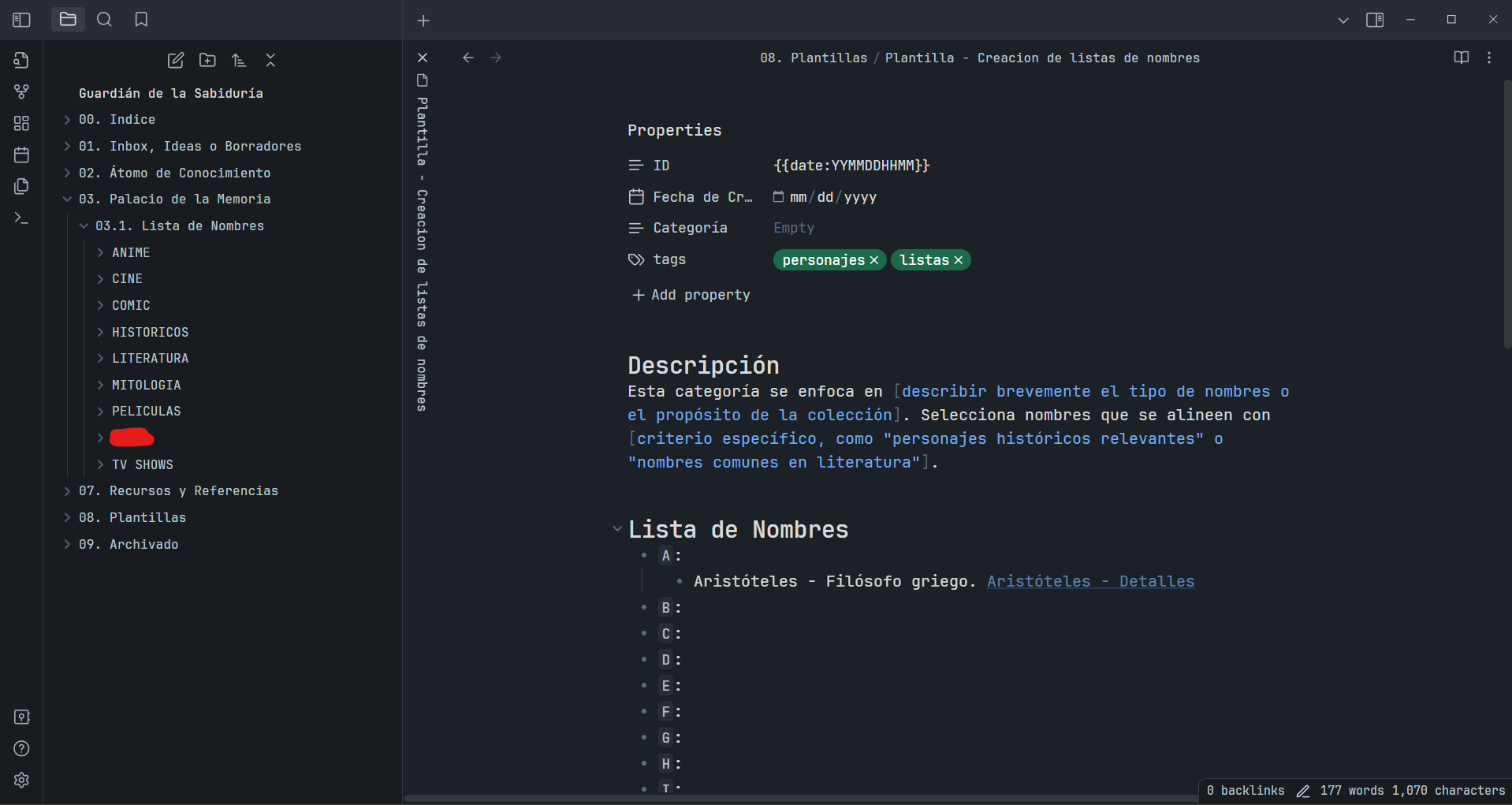
I have large lists of names and faces for these names categorized based on whether they are characters from actors, books, runway models, historical characters, anime, comics, animals, etc… These lists are too big and I never stop enlarging them, they are also organized in alphabetical and numerical order… I enlarge them gradually… Anki is an option, but it’s too uncomfortable to organize all this, so I use Obsidian/logseq and excel instead, even so it’s not easy to organize so much information by hand, no matter which platform it is, it won’t be easy because you will need an order which is necessary.

There is no easy way… Try to keep everything in order even if it takes you a good amount of time as this will save you headaches in the future.

  • Obsidian
1 Like

I don’t know if you already do this, but storing the info on an excel spreadsheet and then sending it to anki may be easier since Excel is more manageable. You can quickly convert spreadsheets into cards by saving them as .csv files and importing them on anki.

It would be probably easier to have a custom type of note for your memory palace cards with the specific entries that you need. For instance, you could have an entry named “Area,” which would contain something like “Names,” "Password, or “Knowledge.” In your case, I’d add an entry named “subarea” and another named “name” as well. This is like tagging, but with the difference that these entries will be automatically filled in when you import the .csv file. To review specific groups, use custom decks and change the options. Type:

“Name:Moonwalking with Einstein”

To review the flashcards of the knowledge area and the books subarea relating to the Moonwalking with Einstein book.

Type:

Area:Knowledge

To review all knowledge cards.

Type:

Subarea:Podcasts

To review all podcasts cards.

I would do that because I store all my palaces on an excel spreadsheet, which is much handier than having them on Anki only. Decks and subdecks gotta be created manually, so that is another disadvantage.

2 Likes

I have one deck only. I use light tagging to separate groups, but I think I’ve encountered a similar issue.

The challenge facing you is one libraries and archives have faced for hundreds of years:

How do we organize the large collection information so that someone can find what they want as efficiently and effectively as possible?

As our mental understandings of the knowledge grows, we’ll find more and more connections between the information stored, right? … which means more categories to search by, more concepts to group by, more keywords to query by…

So far, to solve this for myself:
I’ve binge read (with copious notes taken) Intro to Indexing and Abstracting (Cleveland), Organization of Information (Arlene G Taylor), Douglas Hoff’s systematic analysis on modern mnemonic systems (this guy​:point_right: @thinkaboutthebible , Hi Doug! :wave:).

Now I’m binge reading Giordano Bruno’s Song of Circe and On the Composition of Images (translated by Scott Gosnell).

Bruno, as far as I can tell, actually had a complete system (or close to it), or what I refer to as a Global Mnemonic System (because I’ve memorized a lot of programming documentation, so a global scope reference is in order for me).

Tips from the folks who design library systems (called Information Architects):

  1. Determine what all data you have to organize
  2. Determine what your system’s users (just you) would find most helpful and are most likely to want to find and how they’re most likely to intuitively search for it

and the third tip is a paraphrase of my own analysis up to this point:

  1. Determine what sorts of Indexing would help you most in finding what you need, then find ways to memorize the indexing systems you develop.

Hope something in this post was helpful or at least got you to say “No way on Earth am i doing that.”

There’s no perfect system.
Ask an “information architect”.
There is only: “What is an intuitive and helpful system based on what my users will seek.”

And in this case, according to the information sciences, you are your user. :stuck_out_tongue:

Regards,
Beau

p.s. I’m open-minded to disagreement! Please feel free to disagree and explain why!

4 Likes