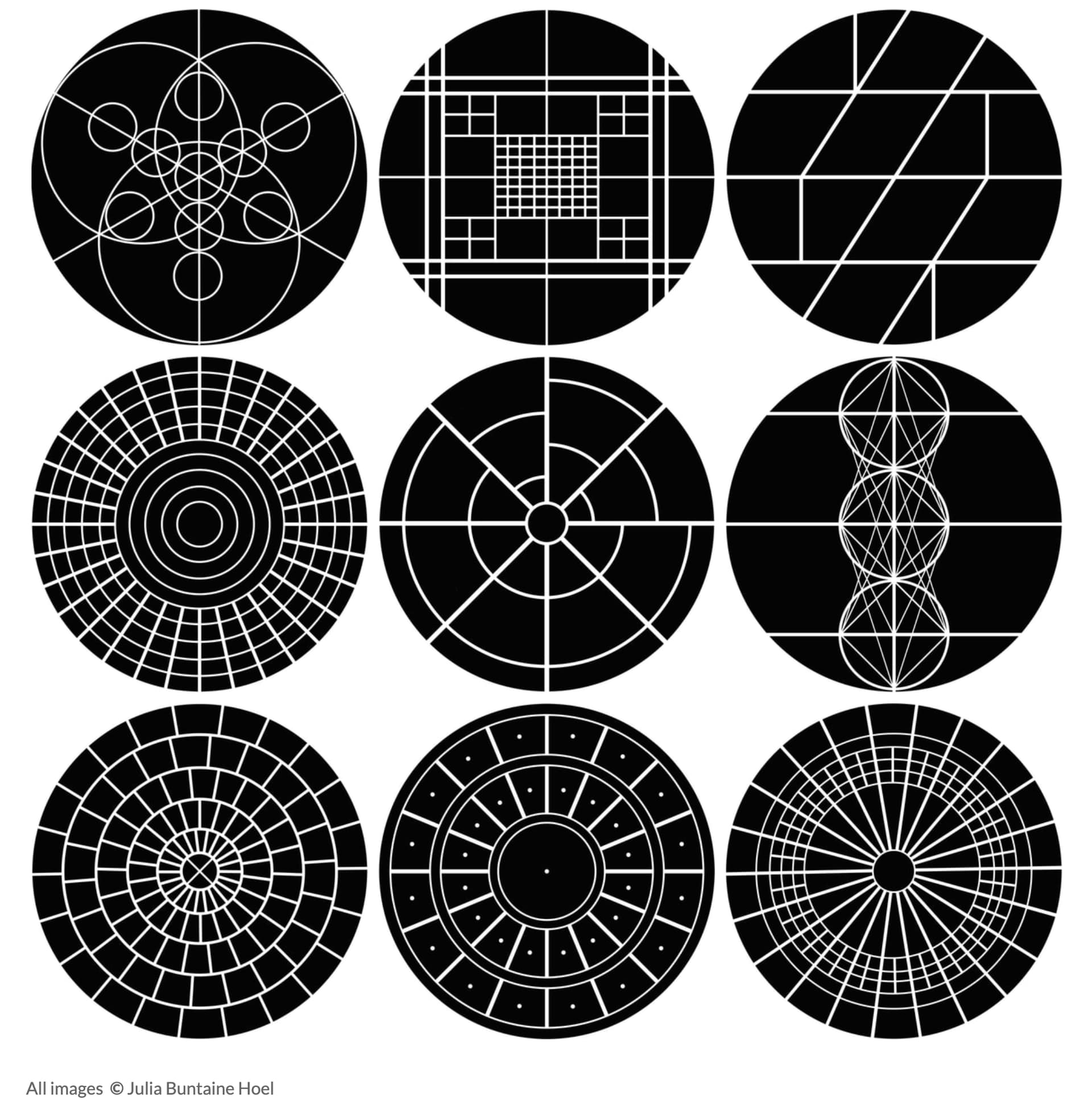
Such as these seals:
I can’t find out which book these seals appear in, or what they’re for.
Such as these seals:
I can’t find out which book these seals appear in, or what they’re for.
Hi,
Bruno’s memory seals were geometric patterns more than likely used in tandem with his memory art along with his cosmological views as well.
Not easy to learn my friend and lots of the European memory texts have never been translated yet!
Stefos
We don’t talk about Bruno.
Why not?
Because of his prophecies.
@because
He was a very strange person. He spent many years living between the walls of a house, apparently living among rats.
tsk, tsk…Ad Hominem
I think he was joking with this
edited: typo
Living between the walls? As in, there’s a house, with gaps between the walls just big enough to fit a person so they can secretly live in the house with nobody being aware as long as they can do everything standing up and all flattened like? 
From experience being stuck in a house does lead to one going a bit strange so I suppose I can see how that would happen. But please, don’t be mean to rats. I had one, I even taught it to take food when I offered it some. It was my fwiend! 
That video is oddly appropriate for this forum.
The best reference for this and a broad perspective of Bruno with respect to memory is Frances A. Yates’ The Art of Memory (University of Chicago, 1966). She covers Bruno and the seals fairly extensively in Chapter XI.
@metivier may be able to shed light on this? Anthony is a fairly outspoken fan of Bruno’s work last I checked.
I guess I have no more excuses. It’s time to try to conquer that big ole book. I already have a few journals that I can use too.
30 Seals and Seal of Seals are amongst Bruno’s easiest books.
@BradenExplosion is not wrong to say that I am a fan of Bruno, but I would modify this:
I am a fan of what is true in Bruno, which is called “science.” What I find best in Bruno is not his memory art, which builds upon what was already there, but his information science and his “proofs” for non-duality.
As with all things that are true, these too are not Bruno’s alone. They map very well onto other non-dual findings and hinge upon what logisticians these days call dialetheism. (Not a great choice of terms because there’s really nothing to believe about this “ism,” the consequences of which are merely paraconsistencies that require no belief or faith.)
To @chrisaldrich, I would humbly suggest deeper reading. Yates casts Bruno as a practitioner of hermeticism, which has been shown false by many leading scholars. It’s not even evident in a reading of Bruno himself, though we can be generous to Yates’ reading in a few areas. Her bold admission that she never used the memory techniques herself is perhaps partly to blame for her error in this regard, but some people suppose it might have been a means of her dealing with unconscious issues around her father. Jones’ biography of Yates is potentially illuminating for interested parties in this regard.
Long story short, Bruno himself would probably tell you that there is no Bruno. Never was. Never will be, except perhaps in the Eternal Now. Selah and happy memorizing!
The first seal has similarities with Euclid IV.16 which constructs equilateral, equiangular subdivisions of the circle. In this case you could use it as a reference frame for any subdivsion of the circle of a coprime product of 2,3,4,5,6 . In a special case you could use the first seal/figure to inscribe a regular 30-gon into the circle.
Not a reply about the original question. Just a mention of a book about a fictional take on Bruno’s downfall.
Just in case anyone is interested:
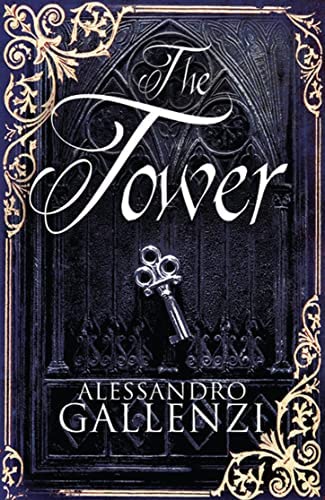
Couple of years ago I was on holiday in an Italian hotel - saw among the fiction books in reception a month called “The Tower” which… Funnily enough was about a modern day Digital Genesis Project based in Jordan (of all places) where they were digitising old manuscripts… The story flips back and forth between modern day Jordan and Venice at the time of Bruno’s detainment and subsequent extradition to Rome to face charges of heresy. Very little about Bruno’s Memory work but quite a lot about his logic and postulations on cosmology. The modern in Jordan parts were much better, conspiracy and threats against the project and this “unpublished original manuscript” of Bruno’s being sought by different factions.
Wish I could say it was well written. It wasn’t. But interesting. Yes.
Not sure it has been mentioned here.
To reiterate: Not high literature but interesting.
The Tower
Author is Alessandro Gallenzi
Here’s the Amazon blurb:
Amman, Jordan. As an ambitious digitization project gathers pace in a vast building outside Amman, some unpublished writings by Giordano Bruno flawed genius of the late Renaissance, renegade philosopher, occultist with a prodigious memory disappear together with the Jesuit priest sent by the Vatican to study them. When the priest is found dead and a series of mysterious threats ensues, it becomes clear that the stakes are high for all the parties openly or covertly involved. What dangerous ideas were contained in the stolen manuscript? What was the ultimate secret that Bruno tried to hide, even as he was persecuted, imprisoned and tortured by the Holy Inquisition?
I was curious about the artwork used as the logo for ArtOfMemory.com.
I found this article where an artist recreated Bruno’s memory seals based on text descriptions.
My limited reading suggests that it wasn’t shown how the memory seals worked other than serving as a memory palace.
Part I: Seals
Why is a specific memory seal used as AOM’s logo?
@Josh
I don’t know about the Seals but I do know about “Steal”
Steal
Steal from anywhere that resonates with inspiration or fuels your imagination.
Devour films, music, books, paintings, poems, photographs, conversations, dreams, trees, architecture, street signs, clouds, light and shadows.
Select only things to steal from that speak directly to your soul. If you do this, your work (and theft) will be authentic.
Authenticity is invaluable.
Originality is non-existent.
Don’t bother concealing your thievery - celebrate it if you feel like it.
Remember what Jean-Luc Godard said: “It’s not where you take things from - it’s where you take them to.”
I stole this from Jim Jarmusch