Greetings all. I remember writing a pretty scathing comment critiquing mental photography and subliminals not too long ago.
However, after some personal research, I found that masked stimuli do have an effect on the brain. Let me summarize some of what I’ve learned so far:
The brain is definitely reacting to subliminal stimuli, despite a person being unaware. But the idea that one can learn information flashed very quickly should be approached with skepticism.
I think after my terrible experience with zox pro, I threw out the whole thing as hocus-pocus. But it’s important to be able to differentiate between what is scientifically valid and what is not. Don’t throw the baby out with the bathwater.
That sounds reasonable given the links you have provided.
But the idea that one can learn information flashed very quickly should be approached with skepticism.
This part of the conclusion is not supported by anything you say in the summary above, so if that is your conclusion you still need to give us the reasoning/evidence supporting it.
The results were negative, with some of the participants doing only slightly better than chance on multiple-choice questions.
Other people have made such claims but they have not been tested under proper controlled conditions. For example, a Philopino woman who claims to be able to read 80 000 words per minute with 100% comprehension:
So I think fears and attitudes can be learned this way. Even increasing the probability of certain actions, via subconscious priming, provided that the subject is perfectly capable of doing them.
Just as a side note, and to get a little conspiratorial, I read some of Dr. Wilson Bryan Key’s books in which he demonstrated the use of certain techniques by the advertising industry. Of course, Dr. Key’s theories have been harshly criticized by his academic peers.
Now for the conspiratorial portion: Why would advertisers use these techniques if they do not work? Why go through all that trouble to craft and conceal these things? I know science is open-minded, and secrets in science do not stay secrets for long, but I still suspect that there might be some private research that the broader scientific community is unaware of. Just consider “MK Ultra”, for instance. It was totally illegal, and secret scientific research performed on private citizens without their informed consent.
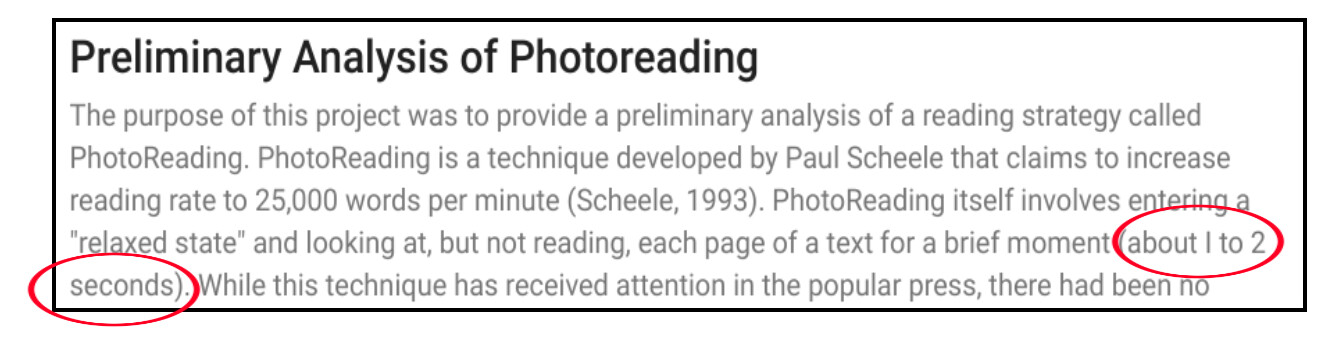
It looks like you are confusing different things that may be somewhat similar; in the link you provide there is mention of showing text at a rate of 1 or 2 seconds per page …
Subliminal messages are likely to be even shorter, although one has to consider that the flash anzan record holder’s (number) reading ability is likely much better than that of normal people.
Why would advertisers use these techniques if they do not work?
Your question suggest a lot but leaves me guessing about many things:
What work are they supposed to do (in advertising)?
Who is saying that “work” is not possible?
What does this have to do with memorizing (large amounts of) information with subliminal images?
I know science is open-minded, and secrets in science do not stay secrets for long.
I do not really see those two statements as self evident; feel free to change my mind.
You are quite correct in your first criticism regarding speed. The point I want to get across is that the point of these techniques is to bypass conscious perception (unlike Anzan).
In flash numbers, you have to consciously perceive the numbers to be able to perform calculations.
The techniques of photoreading emphasize not consciously seeing the words. For example, with Zox Pro, which I have personal experience with, you have to photograph a dictionary or book upside-down, and your gaze has to be focused a few millimeters beyond the book’s content. The book’s contents have to be blurred before you begin “photographing” or “photoreading.”
In essence, you cannot consciously see or perceive the contents of the book at all. The techniques require that you cannot make out what the words mean at a conscious level. And certainly taking in 25 000 words consciously in one go is not the same as seeing a number flashed on a screen.
The techniques developed date back to before most people had computers (see NASA study date). Hence, they had to rely on the mechanical turning of the pages. Of course, turning pages at the rate of 30 milliseconds per page can come with its physical challenges. So some of these courses allowed for the turning of pages at the rate of 1-2 seconds per page, which would be a long time for the unconscious mind to perceive.
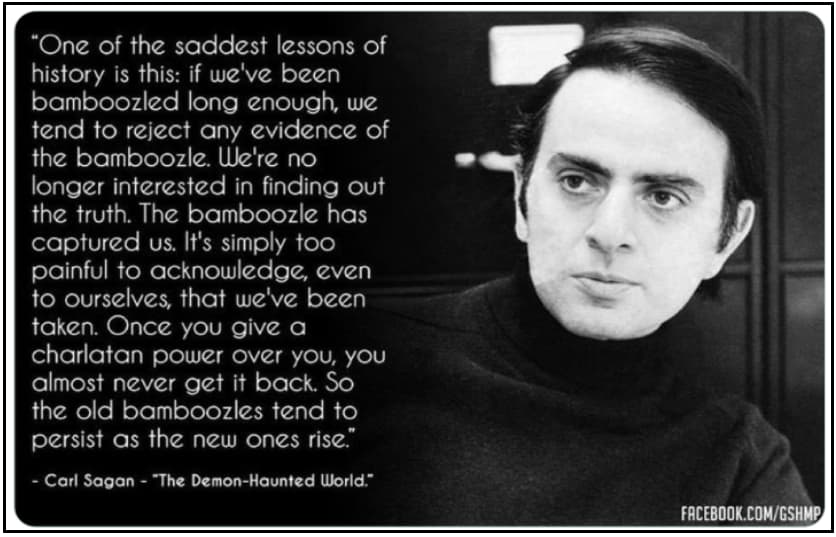
As for the “science is open-minded bit,” you are quite correct in criticizing me. I read that somewhere. I believe it was Carl Sagan’s book called “The Demon Haunted World,” although I cannot find the exact reference. Of course, since I cannot find the reference, it is better to just dismiss it as an unfounded opinion on my part. But if you are adamant, you may want to check out this reference (read the first few sentences): https://journals.sagepub.com/doi/abs/10.1177/016224398200700105?journalCode=sthd
I can’t find any evidence for your assumption that flash anzan at the highest level requires conscious perception of numbers to perform calculations.
If the above statement sounds like I am not being serious to you, please have a look at the experiment below that I have just performed.
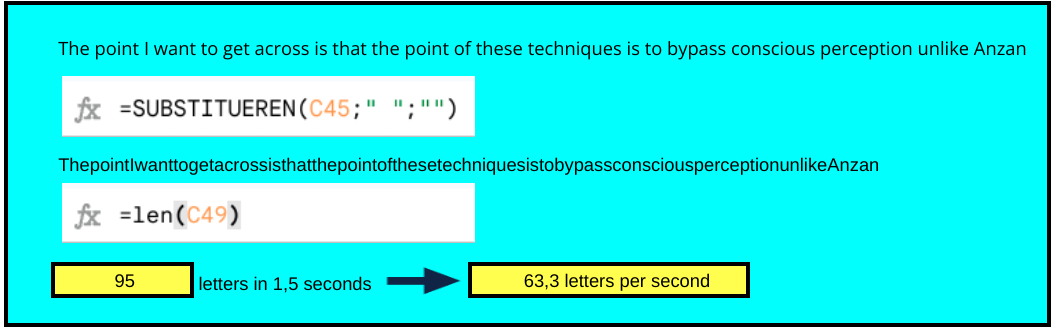
I measure how much time it takes me to read one of your sentences, so that I can reasonably understand what it’s about. I do this by tapping on my desk at the rhythm of 1 tap per second by looking at a stopwatch. After some seconds I can continue the tapping at the required pace (it’s not rocket science) without the help of the stopwatch.
I start reading at a random tap and find that somewhere between the 2nd and 3th tap I am done reading, so it only took me 1, 5 seconds to read your sentence. Now let’s see what that implies.
Was I aware of all the 95 letters or did my brain simply recognise patterns of letters? Missing a letter consciously or unconsciously would not make a difference in my case, but for flash anzan it would matter of course. Despite this therefore being somewhat of a apples and oranges comparison, I do believe I can use it to make a point; If my mind can translate letters in what appears to be an unconscious process (keeping my options open so to speak) at the speed shown in the experiment, than what makes you so sure that the flash anzan athlete can’t add 3 digit numbers unconsciously?
I read that somewhere. I believe it was Carl Sagan’s book called “The Demon Haunted World,” although I cannot find the exact reference.
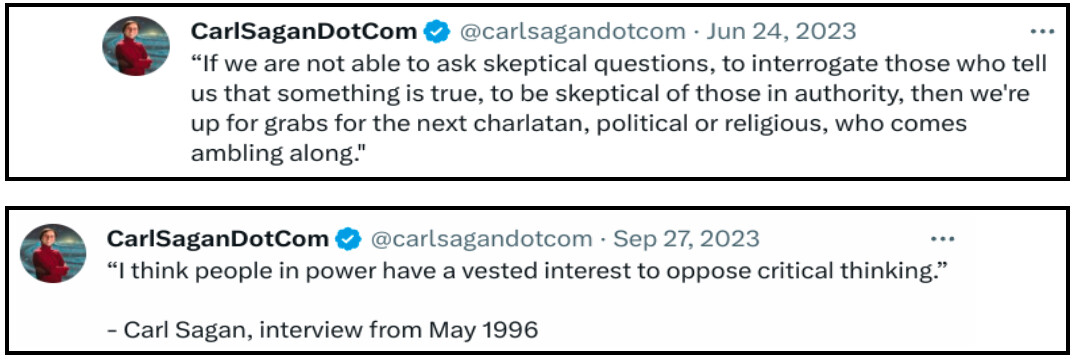
Here are some Carl Sagan quotes that appear to put him on my side of the argument.
You are quite correct. I cannot present evidence for this line of argument. Hence, it is likely that I am wrong. I merely assumed this to be the case for Anzan.
It works. It’s how you can get a song on the brain without noticing that it was playing in a car that passed you a few minutes ago. If you want to learn subliminally, you’ll have to give it more time to “bake”, so to speak. I seriously doubt that most people can ace a test through photoreading, for instance.
I’m sure most of you have skipped rapidly through a PDF, spending less than 200 milliseconds per page. I certainly have, and can attest that nothing went in.
There isn’t any mechanism by which it could plausibly happen, at least as far as I’m aware, but I’d be interested to hear if one has been proposed. The best explanation for reading processes I’ve read is Ronald Carver’s theories of reading, which separates skimming from reading and “rauding”. He experimentally established how much time was required for the different components of reading.
If there was a “subliminal speed” that overturned all of this, why hasn’t anyone else discovered and popularised it? Why are the people who claim to read at 80,000 wpm with 100% comprehension not out there curing cancer? Because they’re pulling a con.
I’d also disagree that science is not open-minded. We should be rightfully skeptical of ludicrous claims with no supporting evidence and no plausible underlying mechanism, but if there is a real effect then it can be tested. That’s the whole point of science: come up with a hypothesis, find a way to test it, accept/reject/revise the hypothesis.
Double negatives in sentences are always trickey; Are you stating that science is open-minded or that science is not open-mided? Could you give a substantiation for your claim?
Thanks for the clearification, it wasn’t clear to me who you were disagreeing with. For what it’s worth I never claimed that science was not open-minded. I merely said that it wasn’t selfevident in my view and I made the “change my mind meme” in way to opposse the two statements Zipho made to challenge him to give arguments so to speak.
I think the word science is an almost meaningless word in this context as it it can mean just about anything. Like are we supposed to compare the open-mindedness of scientist with “normal” people for example? And what about the small and big scale power structures that prevent the open-mindedness of science as a whole?
I think it doesn’t help to equate “open-mindedness of science” with “open-mindedness of scientists”. There are many, many scientists who I would not consider to be very open-minded – their judgement is often clouded by an assumption that they and their peers know best, which led to things like:
Ignaz Semmelweis being ridiculed for suggesting that surgeons should wash their hands between treating patients (after observing lots of patients dying from bacterial infections after surgery
Boltzmann’s theories about the structure of atoms being ignored for years
Alfred Wegener and his theory of continental drift being ridiculed for years (until it was confirmed several times)
However, in those situations I would say it was the sneering “closed ranks” of scientists that were not doing science right. The scientific method itself is predicated upon hypothesis and test, regardless of how seemingly ridiculous the theory might be (I mean it wasn’t so long ago that people believed diseases were caused by “miasma” or “bad air”… eventually someone had to propose an alternate theory and test it).
The fastest reliably documented human reading speeds with substantial comprehension are on the order of 1,000–2,000 wpm, with some contested or special-condition claims up to roughly 4,000 wpm.
Claims like 25,000 wpm (Howard Berg) or 80,000 wpm (Calderon) should be treated as unverified anecdotes or promotional claims, not established records.
In 1957 market researcher James Vicary demonstrated a use for the tachistoscope. It was studied for inserting words into movie trailers. “Hungry”, and “Eat popcorn” were flashed at 5 second intervals at messages 1/3000 of a second long without the audiences being aware. Studies showed a 60% increase in popcorn sales.
I average somewhere around 800-1200 most of the time, with focus and concentration i can comprehend in the low-mid 2000s for short amounts of time. i assume that higher than that is possible under certain conditions for the right individuals, even sustained, but i’m extremely skeptical of the experiments.
24 frames per second is film speed. 1/24 is MUUUCH slower than 1/3000 of a second. How did they flash them at a rate faster than the film could go through the projector?