Hello everyone,
after receiving my copy of Scott Gosnell’s translation of Giordano Bruno’s Thirty Seals a few days ago I thought it may be a worthwhile endeavor to try and decode some of the techniques Bruno tries to convey, as a community of mnemonists.
A few quick things before we get started:
- I will be using the Warburg Institute’s digital copy for cross-referencing with Gosnell’s Translation. The digital copy can be found here: https://resources.warburg.sas.ac.uk/mnemosyne/Bruno/pdf/180229040x.pdf
- The term ‘seal’ is applied rather loosely by Bruno. By it, he means not just a geometrical structure but memory techniques in general, such as a linked list (The Chain,Seal No. 3) or a PAO-like system of furniture and materials (a OM-System?) used to encode numbers (The Arithmetist, Seal No. 16).
- I am not a trained historian, least of all one specialised in hermetic philosophy, as may become painfully obvious during the course of this exercise. And while I do have some knowledge of latin, it is of a very rudimentary level.
- When reading Thirty Seals, there is one initial section on any given seal and a secondary section in the latter half of the same book explaining the seal in more detail, which is a somewhat confusing way of arranging any given book.
Now with that estabilshed, let us turn to the first seal, which is called The Field. In the first section on it, Bruno writes:
Campus est primus sigillus. Hic ex illis speciebus confletur oportet, quarum simulacra in phantasticae facultatis amplissimo sinu ideo continentur, ut iacta intentionum et phantasiabilium universorum semina in exoptatam messem promoveant. Hunc etiam, quo nobis maxime subsit officiosus, in eas distributum esse voluimus partes, quae sensibiles, mediocris dimensionis, non excellentis nec diminutae perspicuitatis, diversae, differentes, ordinatae, congruentibus sepositae seiunctaeque intervallis, ad humanorum brachiorum elevatorum altitudinem et extentorum amplitudinem, adiectivatae animataeve, exquisitarum formarum numero adcommodatae, iterum iterumque lustratae existant. Non vulgari tibi praesto erit emolumento, si affabre ipsum divisionum portionibus distributum concipias. Sic Thalmutista Solymam in quattuor latera orientis, aquilonis, austri et occidentis divisam, primo eiusdem laterum singula ad duodenarium multiplicanda numerum, in tres patriarcharum nominibus insignitas portas subdividit, moxque in atria duodecim, quorum singula domorum duodenarium complectuntur, quarum singulae quattuor constant ordinibus, quorum quique duodecim ad summum referunt cubilia, quae tandem vel quattuor angulos, vel etiam in quattuor mediantibus lateribus intersituata recipiant, certo ingressum facit ordine.
Now the first half seems to be giving general rules for the art of memory such as distances, images and places, with even the old ‘imagines agentes’ of pseudo-ciceronian fame making an appearance in the form of ’ adiectivatae animataeve’ (“adjectives” being what Bruno calls images). Now, the second half starts with ‘Sic Thalmutista Solymam… divisam’. Gosnell appears to translate ‘Thalmutista Solymam’ as referring to the philosopher Themistius of Jerusalem but considering the sentence structure I’m more inclined to read them as subject and object of the sentence, which would leave us with ‘As the Thalmutists (people of or adhering to the Talmud, ie Jews or Rabbis) divided (that place called) Solyma…’. Though of course whichever option you go with has no bearing on any given use of this seal.
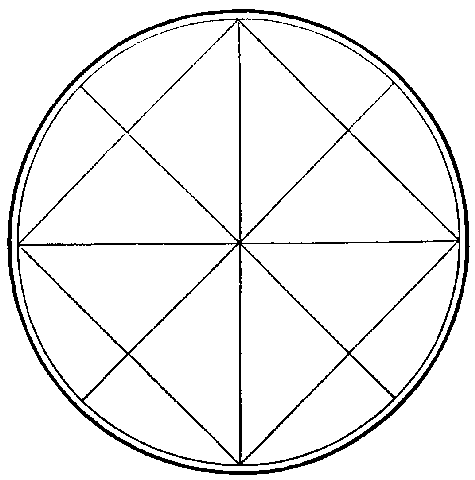
Bruno, using the example of the ‘Thalmutista’ to illustrate, then tells us to divide the ‘Field’ into four ‘lattera’ (sides) facing east, south, north and west. What shape the ‘Field’ is, whether it be a square, circle or some other shape, is never expressly stated, though given the division into four sectors the first two options appear the most likely. He then says to
primo eiusdem laterum singula ad duodenarium multiplicanda numerum, in tres partiarcharum nominibus insignitas portas subdividit
This could be read as either subdividing each side into twelve segments holding three gates (inscribed with the ‘symbols of the partriarchs’, which Gosnell notes to be the Hebrew Alphabet) each or as each side being subdivided into three segments with one gate per segment, resulting in 4x3 = 12 segments in our ‘field’. Whatever the segmentations may be, they are then further subdivided into twelve ‘atria’ (from ‘atrium’, referring to the central accessing space common to many roman-style villas) each containing twelve chambers ‘organized into four rows’, with some somewhat confusing (but largely irrelevant) subdivisions of the rooms following.
The ‘explanation’ section concerning this sign does little more than extol the method of loci, and note that people or animals placed within a locus may themselves be used as memory palaces by placing images on their body parts (similar to what Bruno would do with his Statues later on). He also mentions that this seal ‘must be prepared first of all the work’, suggesting a significant position within the system of the ‘seals’.
Now, on to the main question: What does it all mean? Is it just a general intorduction of the method of loci, using a city and its subdivisions as an example? Is the reader meant to use the city described here as a sort of virtual memory palace? Or might Gosnell be right about the unlabeled 22x22 square grid overlaid with the Hebrew Alphabet found in the graphical section of the book being The field? The numbers certainly don’t match up, but this book is no stranger to having conflicts between the printed ‘seals’ and their descriptions.
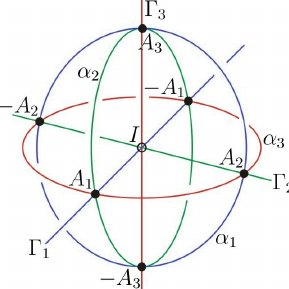
It could very well simply be a lesson about memory palaces and subdividing a given location in 2d space, as the second seal (The Sky) appears to do to a sphere (or any given object) in 3d space, effectively using different sections of the same object or space as loci.
What do you think? I’d be delighted to awaken some discourse on this seldom-discussed work of Bruno’s.
Best regards as always,
Turducken.