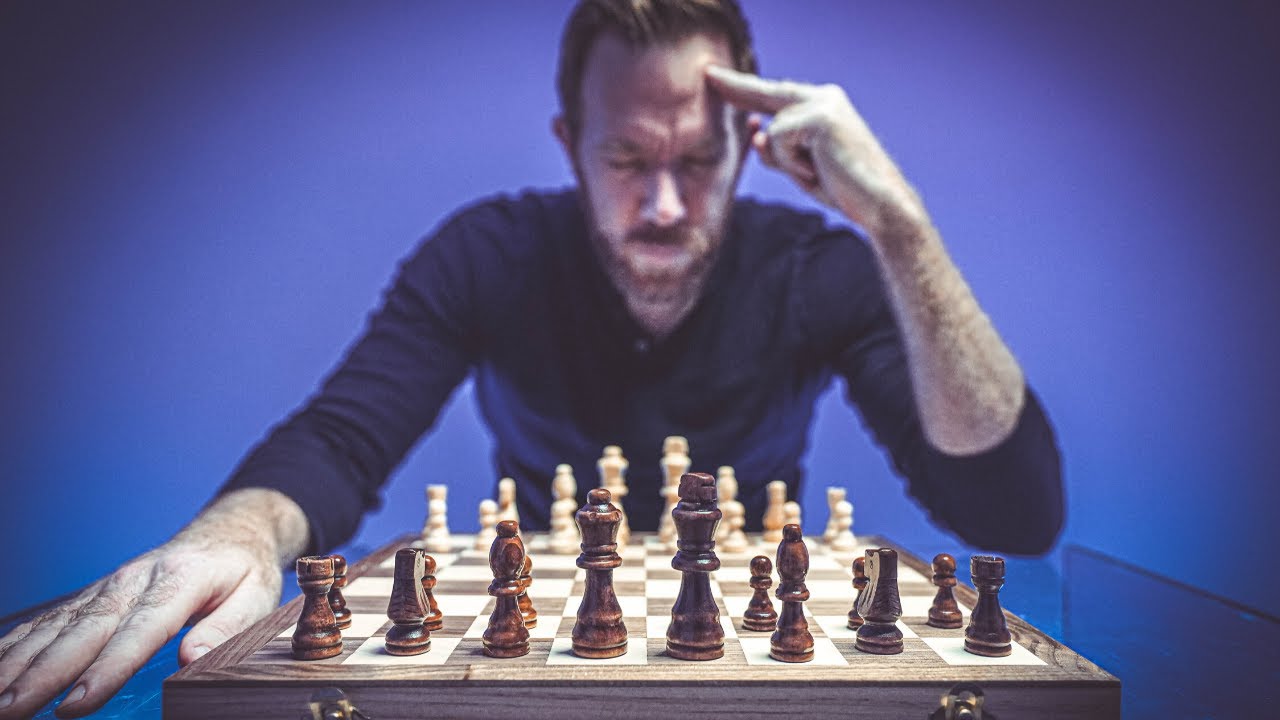
I want to share my experience using a chessboard to create a memory palace. This all started about a year ago because of a post on this site where someone wanted to be able to remember the colors of individual squares on the chessboard. I came up with the idea of associating a name with each square. This is made easy by the system of chess notation which labels the vertical columns as a through h, and the horizontal rows as 1 through 8, starting with square a1 at the bottom left, which is a black square, and ending with square h8 at the top right, which is also black. It is important to know that a chessboard is set up properly only when the bottom righthand corner square (h1) is white.
I then made a list of 64 people with initials that corresponded with the chess notation. For example, all the given names in columns a through h begin with initials A through H. All rows 1 through 8 begin with letters corresponding to the master list. I use the designations 1=T, 2=N, 3=M, 4=R, 5=L, 6=J, 7=K, and 8=F. So the person located at square a1 has the initials AT, square d4 has the initials DR, and so on.
The next problem was how to differentiate between black and white squares so that you can instantly recognize them as one or the other. I decided to put only men in black squares and only women in white squares. Then it was just a matter of creating a list of names to fit the pattern established by the chess notation and then memorizing it. For those of you who have used names to create a master list, you know that this is relatively easy for all the obvious reasons.
This all happened about a year ago. Recently, I was wondering whether I could use this grid populated with people as a memory palace. Also recently I stumbled upon a deck of so-called oracle cards. Each card has a picture and a title. There are 52 cards in this particular deck, so I associated one with each of 52 squares. This was also relatively easy because now I had all these locations already associated with individual people. So then I decided to test the process further. I got hold of another oracle deck, this time with 78 cards, completely different from the first deck in illustrations and subject matter. So now when I think of any square or the individual in one of the squares, it immediately brings to mind the associated cards. They all trigger the intended associations.
It all works beautifully. I only wish I could have thought of a really useful application rather than mere oracle cards. I suspect I can continue layering new accumulations. All in all, this is a great memory palace for large projects that can be boiled down to simple image and word identifiers.