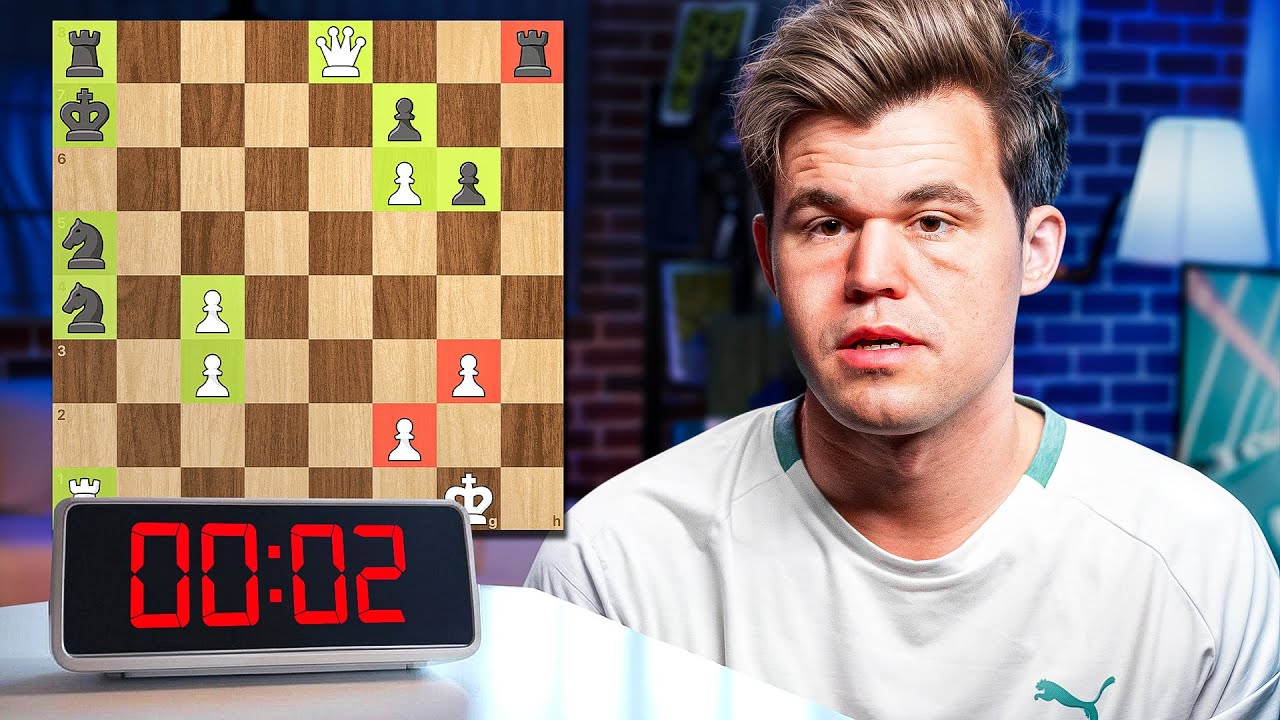
I was watching this:
It had me thinking that there must sure exist a good system for remembering chess positions.
However, would this be any use for improving your chess game? If there is any use what are the limitations? Would we find ourselves in a similar position to language learning where its questionable to useless to be able to just memorize words?
I’m already a good chess player. I think remembering positions could be useful but its rather complex as perhaps more important than positions are patterns. These patterns may not directly relate to a position they could be to do with tempo and so on. Knowing lots and lots of positions IF you are at a very high level is very useful. At lower levels much less so.
Anyways, maybe you find this video interesting.
2 Likes
GMs like Magnus mostly remember complete games associating them to the players who played it and the opening (pawn structure) and sometimes the specific tournament. Magnus is also known as the best at this particular skill.
As far as mnemonics applied to chess I think it is best practice to place 2 images on each loci, one for friendly move one for enemy move. Even very basic chess skill should mostly be enough to choose which piece is moving to the destination square.
Anyone with a 00-99 PAO is already equipped to memorize chess games. a1-a8 use your images from 11-18, b1-b8 21-28 etc.
Do PAO journeys and use a new unique person for each game. If the game starts e4 e5 this is like 54 55 so place your object for 54 and action for 55 at the first loci. Continue in this fashion with friendly move object and enemy move action. If the game continues Nf3 Nc6 this is like 63 36 so put your object for 63 and action for 36 at the 2nd loci.
If you want to branch for opening preparation have the person who is going through each loci split into 2 people. I also use related people to help track the branching better so I will have Homer Simpson split into his entire family and other simpsons characters if I want to track a lot of branching lines.
One other note is mnemonics for chess isn’t really efficient. You will remember tons of these moves without any images at all so I think its best to learn as much as you can with some initial Chessable (anki of chess) and then do mnemonics passes later with some spot images in problem areas.
I have taken a break from mnemonics but I am coming back now. Here is another cool use case for mnemonics in chess.
Using the method I outlined above you can take mental notation of your games while playing blindfold. This won’t actually help you play blindfold you still need separate raw blindfold skill for that.
What it will help with though is replaying the game from move 1 whenever you lose the position and with enough practice it could enable large blindfold simuls where you take mental notation of each game in a separate palace or with a couple people per palace.
Mnemonics for chess are mostly unnecessary. Best way to remember positions is to solve chess puzzles, slowly and deliberately analyze chess games (repeat them too), read books on pawn-structures and typical strategic plans and motifs (books by Andrew Soltis etc.). It is preferable if the analyzed games have Grandmaster annotations.
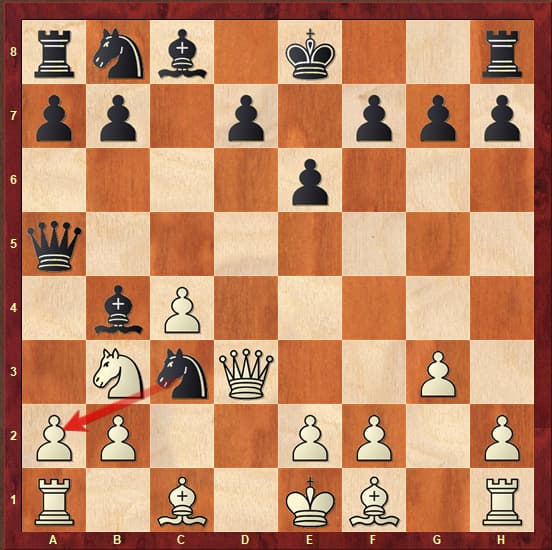
Mnemonics for chess would probably be useful for very sharp positions. For example, I’m learning a variation of the Nimzo-Indian defence, and I have to memorise why Bd2 is the better option for White instead of taking Black’s queen. It’s one of those sharp lines you have to remember; otherwise, you could lose immediately:
If you study openings in depth, you would probably be aware of typical plans and games that have arisen from such openings and how certain players handled them.
As for general opening study, I found that using Anki is probably the most effective and efficient way to learn openings. An example flashcard (the back) is as follows:
1 Like
Are you aware of any good source discussing chess and blindfold play COMBINED with memory techniques. FYI I am a musician but play a bit of chess, and more recently, my rating (and for the last twenty years) is around 1850 (blitz 5m and 3+2) and 1600 on a good day at bullet, OTB not rated these days but highest was 1950 in UK. I can’t play blindfold at all well, but would like to hear a method developed by memory athletes.
Any links? Books? Thoughts?
1 Like