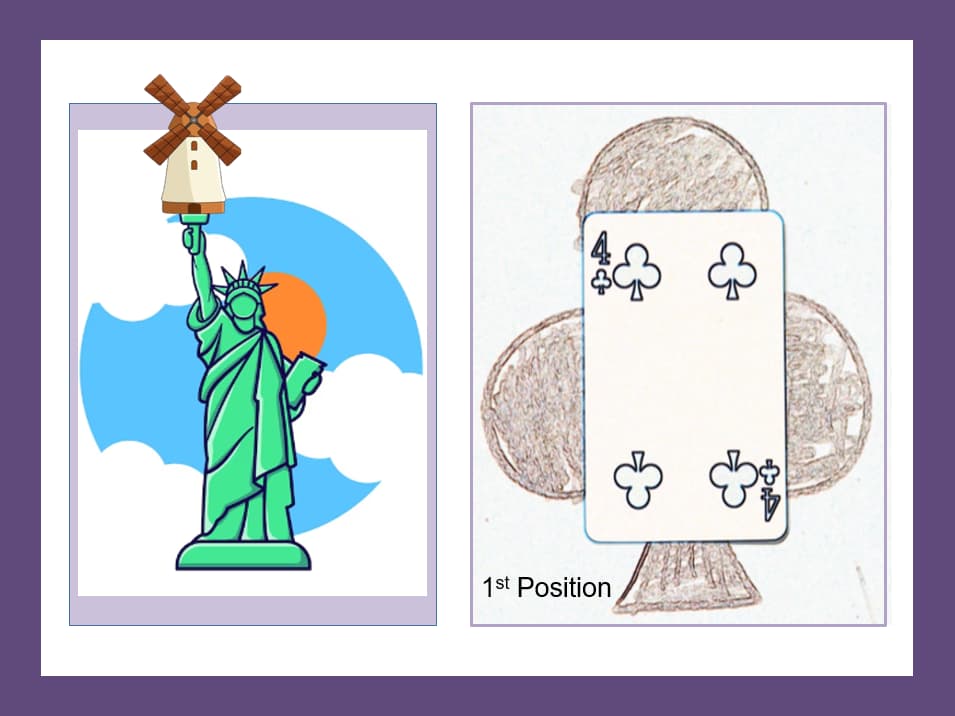
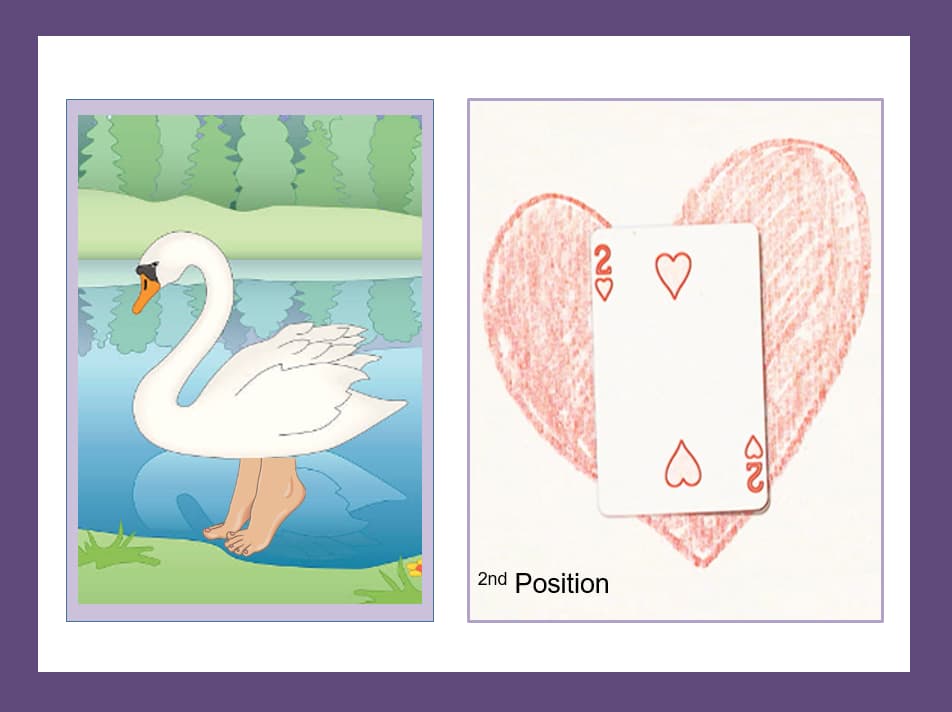
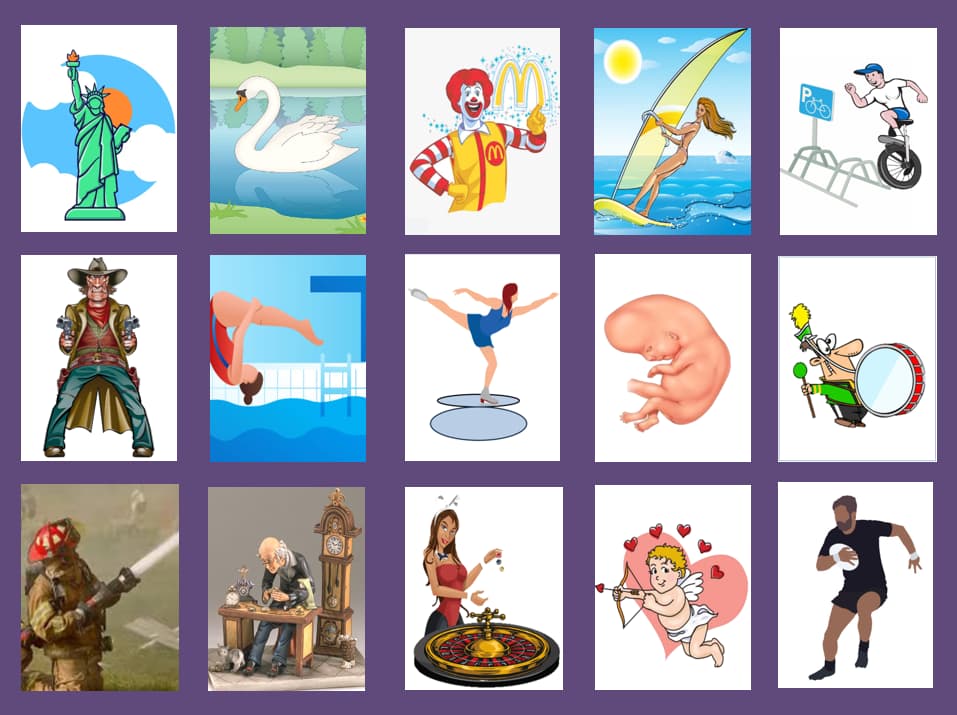
I think this is more in line with the method we’re looking at, number shape triggering the association.
Its tricky because I always try to limit the number of conversion steps whenever possible to make learning the associations smoother. I don’t know if there’s a way to improve that if using this method for cards. You still have to convert suit to category, then number to object, then object to category. Its not too bad, but not as simple as major system to just read the element directly from the card. (As always, with the caveat of “the system is just the tool to get you to instant fluency. One the fluency is there, the system you’ve used to get there doesn’t matter anymore.”)
Maybe the suit icons could inform those categories better based on inherent associations… Spades looks like a spearpoint, so maybe Spades is War or Weaponry, or Violence. Heart is a heart, a body part so maybe Anatomy. Diamond is a diamond, Richness, Extravagance, Luxury. Club looks like a tree, so Nature, Animals, Outdoor Activity? These categories are different enough that it should be clear what goes where.
I don’t think this approach really lends itself to a PAO format… in fact, it looks like it would be easiest with just a list of objects, with on-the-fly interaction creation to use it, but would still be a great starting point for someone with cards. You could fairly easily connect two or three objects to form a scene, and you’d need 18 to 26 scenes to encode a full deck. Very doable using a solid memory palace.
Lets see if I can knock out some basic images:
Spades: (war, weapons, violence)
A - missile warhead
2 - scythe/sickle
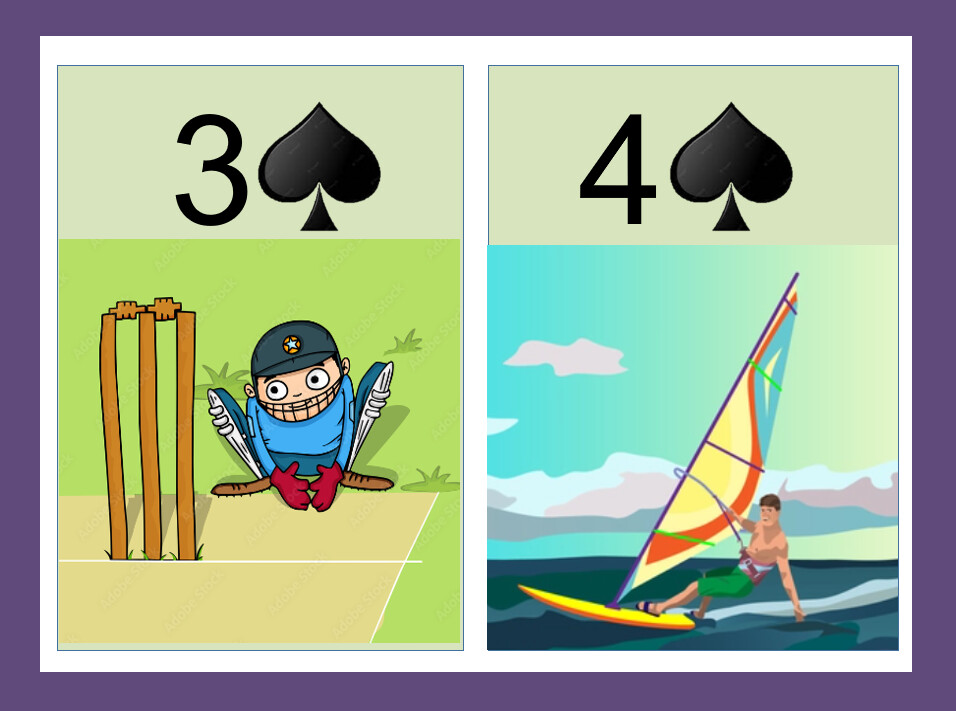
3 - crossbow
4 - combat knife or interrogation chair (depending on “4” shape)
5 - big wheel cannon or tommy gun
6 - submarine with periscope
7 - nun-chucks
8 - brass knuckles
9 - flail
10 - grenade (just the 0 is needed to identify it)
J - musket
Q - bomb with fuse
K - siege tower or 50 cal. rifle on stand (turned sideways)
Clubs: (Nature, outdoors)
A - camping tent
2 - cobra
3 - flying bird
4 - windmill blade
5 - seahorse
6 - snail shell
7 - canyon ledge
8 - balanced stones
9 - elephant
10 - boulder
J - caterpillar / inchworm hanging from branch
Q - turtle
K - picnic table on its side
Hearts: (Anatomy)
A - legs apart
2 - lower leg / foot
3 - butt
4 - arm bent at elbow
5 - potbelly
6 - hand giving thumbs up
7 - knee
8 - narrow waist
9 - ear
10 - eye
J - femur bone
Q - belly button
K - open mouth
Diamonds: (Wealth, Extravagance, Luxury)
A - private jet
2 - swan boat
3 - lips that had lip injections
4 - sailboat or golden toilet (depending on 4 shape)
5 - segway scooter
6 - shrimp cocktail
7 - jetski
8 - ring with huge diamond on top
9 - golf club
10 - gold coin
J - fancy tobacco pipe
Q - necklace
K - crown (sideways)
What I’m really liking about this is that it is not dependent on using a specific language or reading ability. It would be a great way to show kids how to start using the technique, and you could also teach it across a language barrier since it’s purely visual. Because there are no specific people involved in the list, and the objects are fairly universally recognizable, someone could use this exact list without having to “personalize it.”
That is always one of the big challenges in using someone else’s list… that there are going to be many entries that don’t resonate or are irrelevant either culturally or due to individual experience or relationship. Many people on my lists are personal friends and relatives, so I couldn’t really teach that exact list to someone else, they would have to swap images out. Same thing for pop-culture or age-relevant imagery. My wheelhouse is mid-late 90’s pop culture. Too much before that or too recently doesn’t resonate as strongly. If the person I’m trying to share my list with doesn’t have a similar era of associations, my images won’t resonate or make as much sense for them to use as ones pulled from their strong perspectives. With this list though, a windmill blade or an elephant are fairly universal visuals, so you could easily teach it as is to almost anyone.
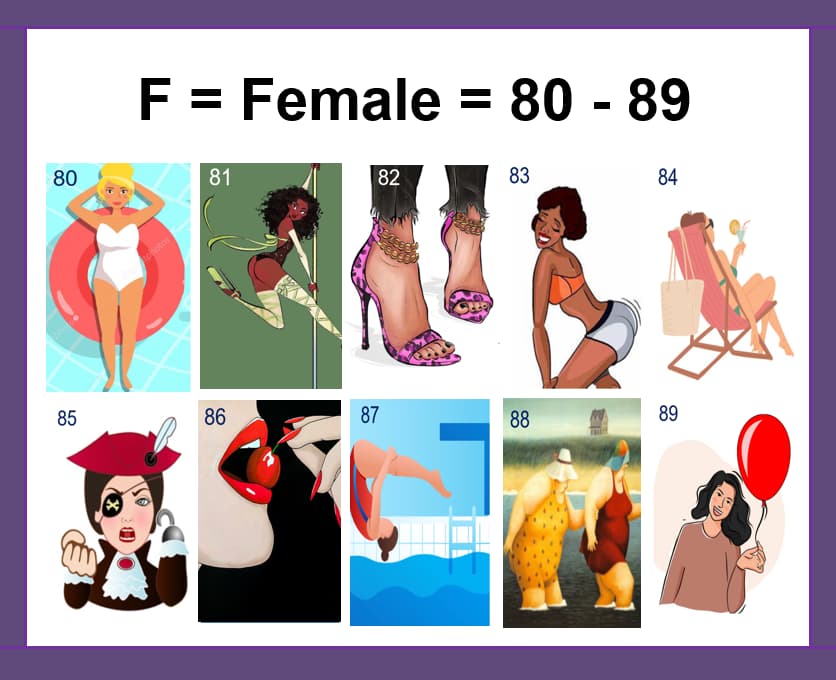
 would give the following: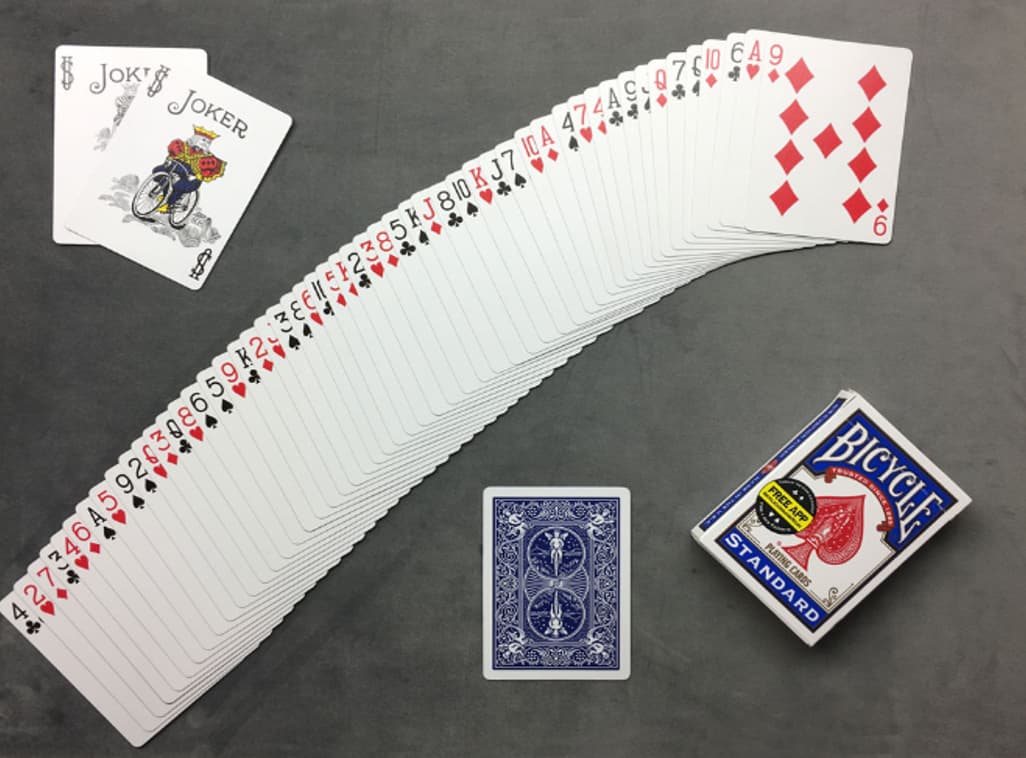
 he saw as a tommy gun. 10
  was a swimming pool. J
  so that you could recall which card was at which position instantly.