Hello everyone. Can you suggest me 10 adjectives? Do you think it works?
I already have a pa list of 100 people. I tried hard to increase this list to 1000 people, but it didn’t work. I’m thinking of adding 10 adjectives to my list, inspired by @TheHumanTim and Nelson Dellis. I thank them for inspiring me. Again I want to use the Dominic alphabet.
For example, 15=Albert Einstein 115=Angry Albert Einstein, 215=Bald Albert Einstein, 315=Coward …
Very cool! You’ll have to experiment and see how this works visually for you! I’d be interested to hear how you like adding adjectives to your images and if it gets tricky at all with repeated adjectives, so like if you get a bunch of 200’s numbers, they’re all showing up as bald… Will this cause any interference issues? Or if your person is already bald, would this make it difficult to add additional “baldness” to them?
Thank you for sharing. If it passes the test process, I will share it here. I don’t know how useful it will be because it is in Turkish, but maybe it can give an idea. I don’t think there will be any confusion. This list will be like 10 different versions of 100 different people. For example, in Tekken, Yoshimutsu has different outfits. In this list, I think that the characters will also change shape and dress with certain adjectives. The adjective ‘bald’ was just an example. It cannot be applied to a bald person, as you said. I will use this list to memorize vocabulary, history…
I don’t think it will be a problem. Because David Niven getting angry will not be the same as Joker getting angry. One may be red with rage, while the other starts kicking when they see Batman fall to the ground. I think it will be different when you imagine it.
I’m a Dominic System user too. I think I however would be first to concede that the Major System (at least in English) lends itself better to devising adjectives than the Dominic System does. To my mind, this is indeed a limitation that the Dominic System has. But Systems were built to be ‘fit-for-purpose’ and the Dominic System works just fine at remembering large tracks of numbers, binary numbers and playing cards. Good if you can adapt the Dominic System to you specific purpose but if not, I suggest you develop your own system that can handle what it is you are trying to commit to memory.
I tried the Ben system, Major system. It’s really hard to expand the list to 1000 people. Adapting it to Turkish is even more difficult. I hope the adjectives help here. I created 1000 objects with the major. I can try adjectives with major too. Dominic system can be limiting as you say. 10 adjectives with major. I will try. Thank you
If you have 1000 objects can you not ‘associate’ the most obvious person to each of your objects? For example: If #55 = LiLy, I would associate the group scaffold to it (Their hit song was: “Lily the Pink” but in the 1960’s). So my person for #55 would be: Mike Mc Gear (Lead singer of Scaffold and incidentally younger brother of Paul McCartney). So your 1000 list wouldn’t be a PAO one but rather a OPA (Object, Person, Action) one. So #55 = OPA - (Object: LiLy - Person: Mike McGear - Action: Smelling (the LiLy).
I know it’s a bit complicated, I can have a little difficulty in explaining in English. Sorry for that. Imagining on people feels more comfortable than on objects. I see objects as an aid in memorizing words.
For example;
Adjective=0 Original, Person=00 Özgür Ozan, Verb=00 to be afraid (Ozgur Ozan is very afraid of his wife). Object=000 corresponds to sausage.
I want to use this combination by modifying it while memorizing words. If the word is a verb, I use this verb, if it is a noun, I use this noun. That is, I may not use the objects or actions in the list. Or I can use.
For example, when studying the word ‘Vertigo’
Keyword Method: Vertigo=(I don’t know where to go) Think of someone who is confused and dizzy because he doesn’t know where to go.
0-00-00-000 (Adj-Person-Action-Object)
Original-Özgür Ozan-to be afraid-Sausage
The original Özgür Ozan could not find the special sausage his wife wanted in the market. He doesn’t know where to go and his head is spinning.
This is exactly what i’m trying to do. I need 1000 people, 1000 objects and 100 verbs.
I have a sismilar system but of 135 characters, in the manner of Giordano Bruno, placed on concentric wheels, in the same way I have 135 actions / objects / adjectives / circumstances, for each one. You could also use this type of images, although I personally do not use them, I plan to do it in the future, eg: On the first face of Aries appears a black man, of gigantic stature, with burning eyes and severe face, who is standing and is girded with a white mantle.
The problem is that the bases are in the last book, there are the bases, I also studied the logic of ramon llull and the operation of the wheels, although Giordano Bruno uses them differently, the two systems have served me.
With the 30 atriums I have 810 three-dimensional images, the images are clear, and they combine into a whole, which gives me a large number of combinations.
This link will take you to a previous post where I elaborated upon the PAOQ system. I think having Quotes for each character will be superior to the adjectives 0 - 9 that you were suggesting?
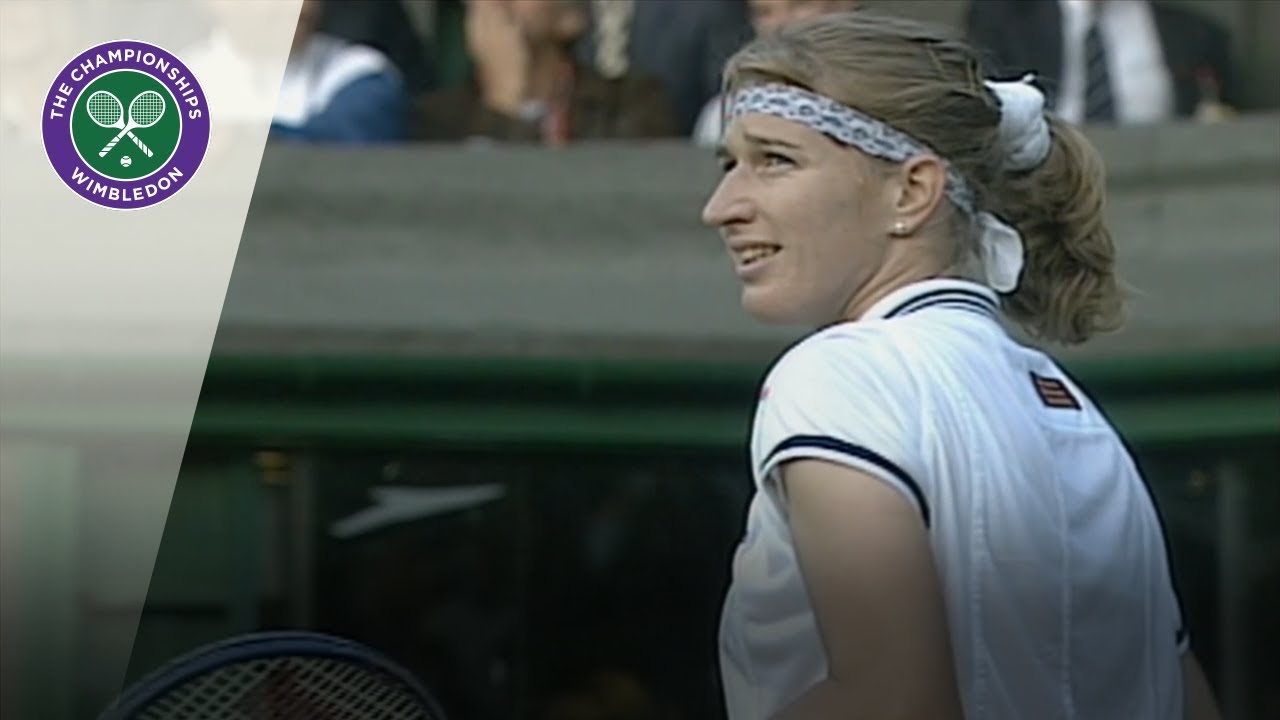
I think you may find it a lot easier to embellish your PAO system by including a Quote for each of your characters. For example, using Dominic, I have Steffi Graf as my #67. Now watch following video clip to appreciate what I’m going to explain to you:
Quote: “How much money do you have?”
The spectator was proposing to Steffi Graf at a Wimbledon Match to which Steffi Graf replies: “How much money do you have?”. So my PAOQ for #67 = Person - Steffi Graf; Action - Smashing; Object - Tennis Racket; Quote - “How much money do you have?”.
Find suitable quotes for all your cast of 100 characters (00 - 99) and you can effectively place an 8-digit number at each loci or if using a three digit binary code (a 24 digit binary number) at each loci. This exercise is a lot easier than you think as long as what your character is going to say, “sticks” as the first thing in your mind that the character would have (or could have) said.
It works irrespective factually of whether the character actually said the quote or not. Another example, I have for #89 = Horatio Nelson in my Dominic System is: “I’ll turn a blind-eye!” = (meaning - I will pretend I did not notice!)
Turning a blind eye is an idiom meaning that someone is overlooking or ignoring something. For the history-buffs, this expression is believed to have come from the siege of Copenhagen (1801), in which Lord Horatio Nelson, second in command of the English fleet, was ordered to withdraw but pretended not to see the flagship’s signals to do so, by putting his telescope to his eye that had been blinded in an earlier battle. His disregard of the ‘order’ led ultimately to a British attack and a major victory at sea.
Please correct me if I misunderstood. Are quotes better than adjectives at presenting us with stories? Is it true?
But at this point I have a question for you. I have a 100 people list. Can these quotes make my list 1000 people? I guess not. It’s sure to make my list stronger though. Thank you.
What I want is for each word to match a different character while learning vocabulary. Let’s say I study 100 words a day. There are a total of 100 locations in my memory palace. There is one person at each location. Associating each word with a single person may seem ideal for daily work, but I think it will become more difficult as the number of words increases. I will have to memorize 10 different words with the same people. Instead, I have a 1000-people list, and my day ends with only 10 locations per day. I want to do the second 10 locations work the next day. So that I can repeat the words of the first day in the evening. That’s why I wanted to form adjectives. 1 person 10 different personalities. Stories will be possible with combinations as in the previous post.
An example for my vocabulary study:
Day 1: original list. each different person. And there will be different stories.
00-Özgür Ozan - (Target word:abandon)
01-Ömer Baba - (Target word:abate)
…
Day 2: list of angry people. Everyone on my original list will be angry. There will be different stories.
100-angry Özgür Ozan (Target word:calamity)
101-angry Ömer Baba (Target word: devastation)
…
…
Day 10: list of nudes people. Everyone on the list will be naked. There will be different stories.
900-naked Özgür Ozan (Target word:zeal)
901-naked Ömer Baba (Target word:zip)
I have a list of 10000 frequently used words. I want to memorize each of them. I would like to know at least the first common meanings. I want to practice reading and listening after daily memorization and learn the words I memorized with spaced repetitions.
I was amazed by the examples you gave and the system. Thank you for patiently answering my questions.
OK, I see what you’re getting at here. No, in short the quotes that I have given each character won’t change a 100 Person Peg list into a 1000 Person Peg List system. The point I was making is all about making or adapting (as you are doing) a “System” so that it is “fit-for-use” for the purpose you want to use it for. If your ultimate goal is to learn a vocabulary of 10 000 English words then according to information I found from the Optilingo site, that would promote you to the status of an English native speaker. To quote the site: " People who know 250 to 500 words are beginners. Those who know 1,000 to 3,000 words can carry on everyday conversations. Knowing 4,000 to 10,000 words makes people advanced language users while knowing more than 10,000 words puts them at the fluent or native-speaker levels". From the types of words you have demonstrated in the examples given, I am assuming your overall objective is to become a fluent native English speaker but correct me if I’m wrong? My experience with the English language is that I often find people using it to ‘impress’ others of their supposed ‘superior intellect’.
Personally, I would much rather like to be able to speak as many languages as possible even within a 1000 - 3000 vocabulary range than be able to speak the proverbial “Queen’s English”. In fact, as strange as this may sound upon a trip I undertook to the USA, travelling down from Washington to California, I found that there are many differences (or quirks as I call them) between how Americans speak English and how South Africans speak English. One of the most bizarre words of all is the word “Route” (which a South African English speaker would pronounced as “Root”. It took some adjustment to understand that Americans refer to “Routes” as “Routs”. Added to the nuances of “sidewalks” for “pavements” etc. etc. it made for an interesting visit. I know I have digressed from your original topic so to bring things back to your ‘goals and objectives’, I think the suggested 10 adjective sets would serve that purpose but if anything further springs to mind and I have a “flash-bulb experience” of a better way of doing it, I will let you know. Incidentally there is nothing wrong with your English in your communications with me. Language is really all about the transferring of ideas. One wouldn’t speak to a four-year old the same way that one would speak to an adult. We change the level of our words used to communicate effectively with our target audiences whomever they may be. If that is done effectively the way I understand things (at least?) then you have “mastered” a language. Incidentally I’m bilingual (English - Afrikaans)
I think that I can easily express myself in English in education, business or social life. But my main problem is not the language itself, but the unnecessarily difficult questions in the exams. Language exams must have a criterion. It needs to measure the four skills separately. The name of the exam held in our country is YDS (foreign language exam). And it is used when applying for a job. There is no alternative test.
I watched a video about YDS. 4 native English speakers take this exam online and discuss whether the exam can measure language proficiency. In summary, the results are; There are unnecessarily difficult words, it’s just a test that measures a single skill on reading and comprehension. So those 10000 words will be learned whether I want it or not. I’m not learning a foreign language just for the exam. Learning a language takes you to different countries, just as you can get away from your place while reading a book. How would you feel if a stranger asked for an address and you understood and answered? I’m pretty sure my brain is releasing the hormone dopamine.
I had no idea that there was a whole industry around the testing of the proficiency of the English language in Turkey called YDS. I did some ‘googling’ and can better understand that YDS is used in job selection testing in Turkey as you have stated. Good luck in what you’re setting out to achieve. A man’s livelihood is important to support his family so your project is not a ‘hobby’ but a ‘necessity’!
The memory loves varied and unusual things, the common ignores it, it is convenient that you use varied memory objects, you could also create logically numbered places, for those characters, in which you have objects of different shapes, so that you add variety, Figure number one, Albert Einstein is dressed in a red suit and has a happy expression.