After a friend introduced me to the Memory Palace Technique i became very interested in memorization and how it can be applied in a hobby of mine: Speedcubing. In speedcubing, we have what we call Algs or Algorithms. An algorithm is a memorized sequence of moves that achieves something on the cube and that has to be done quickly. There are many sets of these algorithms, called algsets that can usually contain from 10 to about 500 algs. One of the larger ones is called ZBLL and has 493 algorithms each being about 15 moves long. Its notoriously hard to memorize with not many people that fully know it. I was thinking if i could apply some memorization technique to help me with learning any of these huge algsets.
When we learn algs we basically associate the state of the cube with a specific hand movement so its not memorizing letters or numbers.
The technique has to have extremely fast recall and also great reliability to be of any use.
Does a technique like this exist? How fast is memorization?
Here we have a subtopic called technique and inside it there are speedcubers and blindfold cubers sharing their techniques.
i learnt about rubiks like 3 years ago and yes it’s fun. But Im basic learner in this, . How is ur lvl, did u remembered PPL, OLL, and F2L? or u mainly focus on ZBLL.
Hi @Abendregen, this is an interesting question. For speedcubing, the ultimate recall of memorization isn’t the recitation of the alg, but the execution. For these alg subsets, they are most easily chunked into the triggers, such as sexy, sledgehammer, etc. If you’re learning ZBLL, I’m sure you already know this. So to put this all in a memory palace, you could, for example, have a room for each OLL shape (Pi shape, eg.) and each location match a pattern (opposite headlights, eg.) with a “chunked” execution. My sense is that it would be more beneficial to drill the algs into muscle memory in smaller sets rather than to encode them all into a palace.
So my question for you would be–how did you memorize your PLL algs? The ultimate goal would be to see a pattern, recognize it, and execute by muscle memory. I’m not on the ZBLL track, and I believe that most high-level solvers would only benefit from a portion of the subset. The additional split-second it would take to recall and execute an alg would often offset a faster TPS execution of a 2-look OLL/PLL. This is also a great question for r/Cubers on Reddit and their Discord server. You may find a few unicorns there who know ZBLL and can offer first hand knowledge.
Personally, I feel Yo notation will be super helpful to learn algorithms which do not have any form of well know triggers, for example, f’ E’ R E’ R’ E2 F2 R’ S R F’ which solves UF-RU-RB-BL-DL is tough to memorise at first glance.
One might try f’ (E’ R E’ R’ E2) F2 R’ S R F’, but thats just one trigger that you have in the alg, and that too it is not that familiar to many speedcubers.
The idea is to make the alg into Yo notation, and it becomes, wtqj qkrx ksjw , from which we can form 3 images, watery megaminx (wtqj) yuck roux solve (qkrx) kiss jaws (ksjw), and trying to make a sentence out of it we have, watery megaminx leads to a bad roux solve, and I react by pouting my face showing the jawline.
More details about the Yo notation (document in progress) in this doc I have been making since 2018, Yo_Notation - Google Docs
Blindfolded speedcubing memory techniques are quite different from alg memorising techniques.
In blindsolving we use letter pairs to store the sticker targets we trace, and we use intuitive commutators to solve them,
whereas in alg learning for speedsolving, (not blindsolving), we try to break down the algs into triggers and drill it until it becomes muscle memory. There is no such memory technique that is popularly used for memorising speed optimized algorithms.
I am thinking to make a YouTube video about this but I am little nervous because I never made any YouTube video before.
It looks weird.
I watched many videos on how to memorize oll cases and all of them is only mentioning to learn triggers and finger tricks and showing how to do it.
So I think it’s new to memorize oll cases.
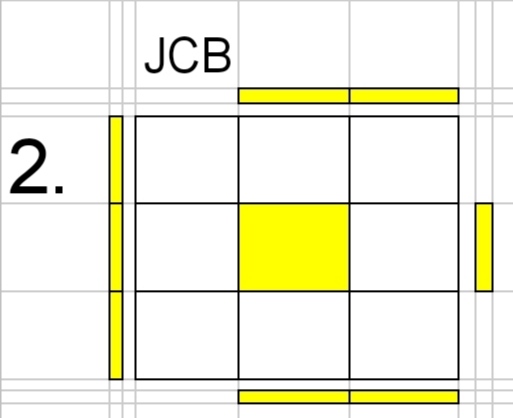
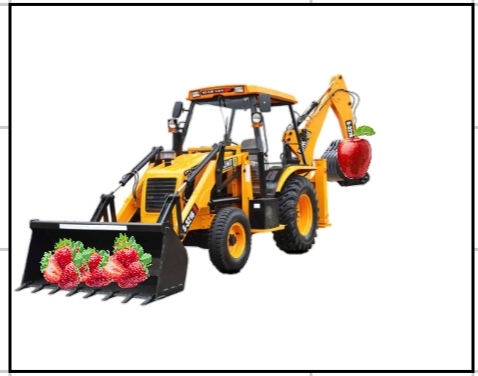
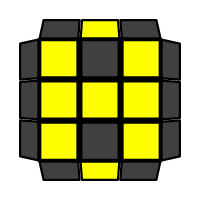
And I like your title , I think I have to name this method Imagery method
This is my some more words -
And the most useful formula RUR’U’ is same named sexy.
M’URU’r’ - murgi - मुर्गी (hen)
Let’s combining these words to memorize new oll case.
 . How is ur lvl, did u remembered PPL, OLL, and F2L? or u mainly focus on ZBLL.