50 persons sequence in memory palace and 2 digit actions for max 100 digits memorization

Notice

This method can also be used for cards by using a 52 persons sequence and 52 single card actions.*

Dream team

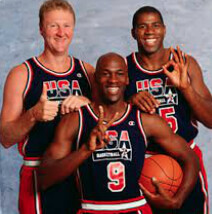
In the world of athletes and superheroes the idea of a dream team has always been something that has sparked the imagination.

image

image

The dream team idea has given me the motivation to create a system that takes the best half of a 2 digit number PAO (person action object) or PA (person action) persons list and use that for a system that is very simple.

The persons list

The purpose of this system is to memorize a 100 number sequence very fast and nothing beyond that. You therefore select the best 50 persons (2 digits actions will be connected to each person) of your current system and putting them in a logical/memorable order in the (abstract; see link below) memory palace.

How it works

The system is very simple. You imagine the first person from your dream team sequence in the memory palace performing the action determined by the 1st 2 digit number and so on. After 100 digits you try to recall what all 50 persons did.

What is the potential advantage over PAO or PA systems?

Four possible advantages of this system are:

  • no need to connect anything other than persons with actions.

  • only one kind of translation; card/(2 digit number) to action.

  • the average quality of 50 selected persons is self evidently higher than the average quality of 100 selected persons.

  • your brain is already preparing the image of person (x + 1) when imagining person x, so the creation of the image of a person is likely going to be faster than in a PAO or PO system.
2 Likes

Would a similar idea not just be to have 1 - 52 meaningful actions for each card position 1 - 52?

I’m all for speed (if its achievable) for a single deck in this way? I guess you could have actions 1 - 52 simply following a traditional Major System coding system. So the ACTIONS are each unique to a number between 1 - 52.

Perhaps an example would illustrate? Assuming I have the following cards in 11th, 12th, 13th, and 14th positions in a randomly shuffled deck of cards:

11th - 6 of Diamonds = JD = James Dean
12th - King of Clubs = Tiger Woods* (see below)
13th - Ace of Spades = TS = Tom Selleck
14th - 10 of Hearts = SH = Stephen Hawkins
My number value cards all follow Major System (where 10 = 0). My Jacks, Queens and Kings cards, have unique characters as follows:

Jack of Hearts = Justin Bieber
Jack of Clubs = Boris Becker (the 17 year-old Wimbledon winner)
Jack of Diamonds = Prince Harry
Jack of Spades = Jack the Ripper

Queen of Hearts = Marilyn Monroe
Queen of Clubs = Serena Williams (arguably the Sports Woman of the Millennium)
Queen of Diamonds = Queen Elizabeth II
Queen of Spades = Countess Elizabeth Báthory

King of Hearts = Elvis Presley
King of Clubs = Tiger Woods
King of Diamonds = King Charles III
King of Spades = Adolf Hitler

(Heart Royal cards represent “Heart-throbs”)
(Club Royal cards represent “Sporting characters”)
(Spade Royal cards represent “Evil characters”)
(Diamond Royal cards represent “Wealthy characters”)

I would firstly need Actions for 11th, 12th, 13th and 14th positions that follow the Major System coding and which are easy to visualize, unique and memorable. Lets assume I have the following FIXED POSITIONAL ACTION PEG WORDS:

11th - TaTTooing (I see the action of someone being tattooed)
12th - TaNNing (I see the action of someone tanning in one of those sun-tanning contraption sunbeds.
13th - TaMing (I see a dominatrix-type image with someone yielding a huge whip that they are about to crack)
14th - TaRRing (I see someone riding a steamroller tarring the road)

The order of position of cards above yields:
11th - James Dean = (6 of Diamonds) being TaTTooed
12th - Tiger Woods = (King of Clubs) TaNNing on Sunbed
13th - Tom Selleck = (Ace of Spades) TaMing (or cracking whip)
14th - Stephen Hawkins (10 of Hearts) TaRRing road (I see Stephen Hawkins’ wheel chair adapted with a big metal roller in front of it!

Whether learning 52 CODED ACTIONS as the POSITIONAL PEG WORDS would make one go any faster in memorizing a single deck of cards, I can’t say? I haven’t tried it but I think it sounds feasible?

If this differs from your system I don’t know? Suffice to say what you had written toke my down this particular thought processes. Perhaps @TheHumanTim can give us the ACTION WORDS needed for all 1 - 52 POSITIONAL ACTION PEGS, if indeed there is any merit in the system I am suggesting or you have suggested??

1 Like

In my system you also only need 52 actions for cards and 100 actions for 2 digit numbers, just to be clear. So in your system instead of persons the actions are predetermined.

11th - 6 of Diamonds = JD = James Dean
12th - King of Clubs = Tiger Woods* (see below)
13th - Ace of Spades = TS = Tom Selleck
14th - 10 of Hearts = SH = Stephen Hawkins

I am not a big fan of this Joshua Foer method of translating; first letter of first name and first letter of last name method, for two reasons:

  • reading 2 digit numbers or playing cards as 1 syllable words is much faster in my experience.
  • those 1 syllable words allow for much better selection of actions/persons because you can chose just about any action/person for any of those words.

If this differs from your system I don’t know?

I don’t see the logic of your system. Why do you have to translate the position of a card using the Major system? Are you counting in your head instead of having a fully memorized sequence of actions or persons in or outside the memory palace?

Your method, if I understand it correctly, is very much like the number based peg list I learned from a book decades ago: one = gun, two = shoe, three = knee, four = more and so on. Even though it is easy to learn at first, you kind of need to keep counting in your head and this takes away mental focus from simply connecting the actions to the persons.

Even if with some practice you can visualize the positions without much effort like tattooed, tanning, taming and so on I feel that creating the image of a person in your mind is harder than that of an action (if this not the case for you please let me know) so it makes sense to have the persons as a sequence (the person images are already prepared so to speak) and not the actions.

I’ve thought of something not entirely the same but adjacent to the idea before (using Pokémon by their set order) - that said I think the use of people is a lot easier to work with.

In another interpretation of what you’ve created, your “dream team” is effectively the memory palace in it of itself, as they’re the loci you attribute the digits and playing cards to. I can definitely see the speed advantage in the translation of 2-digits and single cards by having a person as the point of reference rather than a physical location.

I think this could be expanded upon by having 52 translations for objects too; it ultimately comes down to personal preference of how much you want to encode per spot, and how deep you want to go with the card system.

Personally, as a beginner, I think it’s worth a go for me to experiment with something like this - I’ll likely make a 52-long list of wrestlers, split between women and men’s divisions and in alphabetical order, and use that as the base for card memorisation. Will be interesting to see how it goes!

1 Like

It is peg list (some people on this forum care very much about this distinction) that with the help of the memory palace allows to be faster imagined and with more pegs at the same time.

Personally, as a beginner, I think it’s worth a go for me to experiment with something like this - I’ll likely make a 52-long list of wrestlers, split between women and men’s divisions and in alphabetical order, and use that as the base for card memorisation.

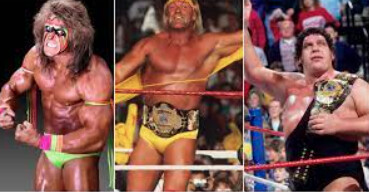
Variation is very important, so having 52 wrestlers (I imagine you are talking about sport and not Hulk Hogan like show wrestling) might not work so well.

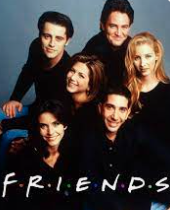
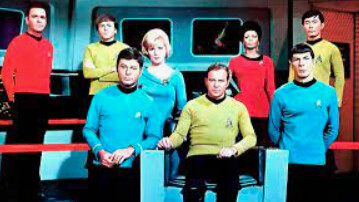
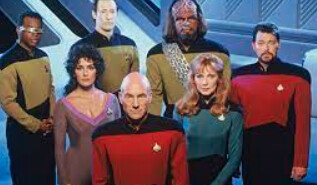
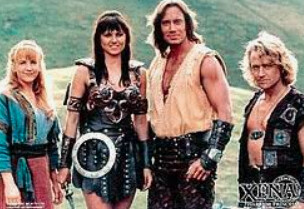
I think that using different looking persons from TV shows/movies might be better, like


1 Like

Actually it is show wrestling haha - variation definitely is key, and considering a lot of wrestlers are incredibly colourful and distinct, I don’t think I’ll confuse many with each other, but I’ll keep it in mind!

That might work out better, however the only female “wrestler” I know is Rhonda Rousey. When I was young …
image
… female show wrestling wasn’t a thing.

1 Like

I think this is a workable method. It’s basically Katie’s method for words applied to cards. For words she uses people that inhabit each loci to personify abstract concept words, adjectives, or verbs which can be difficult to visualize on their own. This idea is kind of that, just without specific loci, a more true person peg list.

I would use objects to represent the cards, but actions could also work.

If you can get fast at both your person sequence and your card-to-action (or card-to-object) recognition then I think a deck time under one minute would be possible using this technique. Just a bit over one second per person’s scene.

I think there is probably a stricter lower limit for fastest possible time using this versus a technique where you see and process multiple cards at once, probably somewhere in the range of 26 seconds or so. With 52 individual elements to encode, that’d be a half second per element, including recognition and scene construction. Human reaction time is about 1/4 of a second, so in theory the fastest possible time would be around 13 seconds, but realistically it would be slower than that.

The challenge for onboarding this system would probably be as always, learning to associate the abstract card information with the action or object. So, you’d still likely want a way to assign that, whether via major system or some category or shape-based system. You’d need to practice recognizing and associating cards to images to the point where you can do that in a second or two, but with only 52 associations to learn, that could happen in just a couple weeks of reasonable practice each day, say half an hour. The sequence of people doesn’t change, so if an additional 10-15 minutes per day was dedicated to making that sequence reflexive, the whole thing could come together pretty easily.

@fred2 I’ve posted my major system pao list and card mapping here. Actions included:

Just cards here:

1 Like

When you don’t have an object list to make or worry about, you can have actions that are more about objects than the action itself like playing (the) saxophone/trumpet/piano/tennis/snooker and so on. I actually have no action that is done without any object.

If you can get fast at both your person sequence and your card-to-action (or card-to-object) recognition then I think a deck time under one minute would be possible using this technique. Just a bit over one second per person’s scene.

In my previous PA system I was much faster translating numbers to actions than to persons, even though I started with a list of persons. Alternating between person and action translations as you are supposed to do in a PA system was really negatively affecting my translation speed. I am hoping that because you only have to do one kind (the easy one that is) of translation, namely number to action, you might be able to get to a level at which you can sort of see multiple actions at the same time.

Human reaction time is about 1/4 of a second, so in theory the fastest possible time would be around 13 seconds, but realistically it would be slower than that.

You are assuming that everything is done in sequence like: look at 2 digit number → reaction time 0,25 seconds, translate → another 0,25 seconds, image creation → another 0,25 seconds; but the better you get at this the more you can already look ahead so when translating one 2 digit number your brain has already seen the next one. I mean, I can read your post at a rate of about 1,5 seconds per horizontal line. That wouldn’t be possible if if have to wait 0,25 seconds for every word to be processed by my brain.

The challenge for onboarding this system would probably be, as always, learning to associate the abstract card information with the action or object. So, you’d still likely want a way to assign that, whether via major system or some category or shape-based system.

With only a couple of days of training I can already translate 3 “2 digit” numbers (I can read cards as 2 digit numbers) per second. To give you an idea of why this is the easy part for me, here are some translations of 2 digit numbers:

02 = on (sitting on a chair)

12 = in (kicking a football in the goal)

23 = nam (nam is dutch for took as in he took a hurdle with grace)

27 = nat (nat is dutch for wet as in wet from taking a shower)

32 = man (he-man → lifting a sword above your head)

50 = so (so you think you can dance?)

The action list may be new, but the 2 digit words and the possible meaning of those words I have been using for almost a decade.

1 Like

In the sameway Luke is covering all 52 cards or 52 big peg list with wrestlers I am trying to cover 52 cards using dart players only. Similar to wrestlers dart player can be very destinctive. I think I will be able to find 52 dart players that I can picture vividly enough to not have a sameness issue.
Each dart player has his own walk-on song and walk-on routine for when they play stage events. Further, they nearly all has nicknames. Maybe I can make a PAO list where the action is the walk-on (song and routine) and the object something from the players nickname. This will be my week-end project for the next few weeks. If I get it going, I will post again on it.
First card would dtermine the dart player and he would then preform the walk-on of the dart player determined by the second card, bringing object with him determined by the nickname of the darts player from third card.

Michael van Gerwen will walk-on as if he was Peter Wright bringing with him a ferret (Johnny Clayton’s nickname is the Ferret).

I am looking for a way to memorize cards played during a hand of Bridge. Since I will be playing myself I will be able to slow things down to give myself time to generate the scene needed to memorize the cards played.

Each trick concist of 4 cards being played. If I use the PAO for the cards played by the other 3 players I can add image for the card I am playing as a second person to the scene or something else. I am still figuring it out. You see your 13 cards from the moment you pick them up after they have been delt, thus you have a little extra time to prepare the images you are going to use.

I will start new threat if it seems do-able and interesting enough.

2 Likes

Here are three famous Dutch dart players just in case you don’t have enough.

Good luck with the project.

Hi, I don’t just use it for words, I use it for everything (numbers, cards etc.)

1 Like

Hi,

Welcome to this post.

My goal is to have a sequence of 50 persons that I can visualize at very high speed so that the bottleneck of the system is going to be how fast I can translate the actions and connect them to the persons.

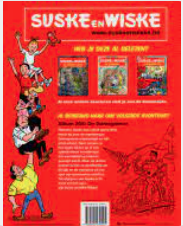
I have a question related to that for you Katiek. Can you visualize these persons faster when you see them in a memory palace or by simply seeing them as a string of persons. My experiments so far show that using a (in my case abstract) memory palace is very good to start with (I learned my sequence in about 5 minutes this way and still remember them the next day), but it looks like if I focus on seeing just the string of persons I can go faster. One method I use is the so-called Suske en Wiske method (named after a Belgium comic book); I create chunks of persons in a memorable way.
image

Apologies if you’ve explained this elsewhere, but do you also have people as part of your cards and numbers system, like as representing pairs or numbers? If so, how does that work when putting them in a loci with your “loci people”?

If loci 1’s person is your friend and the card image is Queen Elizabeth, what do you visualize in that scenario?

I haven’t tried without the memory palace, mainly because the memory palace helps me remember the order of the people (and the people help me remember the memory palace). So it’s hard to imagine one without the other. But I would say that I don’t visualise the locations clearly anyway, so it’s quite fast.

1 Like

It’s not a problem at all - I’d just imagine my friend meeting Queen Elizabeth. However, I don’t like to use people as the “images” too often anyway, because they can be mixed up too easily. That applies whether or not there is a fixed person in the locus.

2 Likes