5 pegs "super" objects in memory palace for easy to use peg list

The original post of this idea was not very clear so below is a better explanation.

Summary

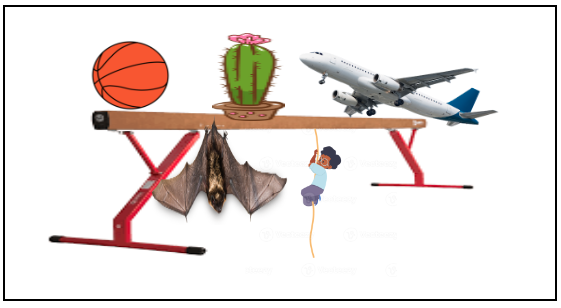
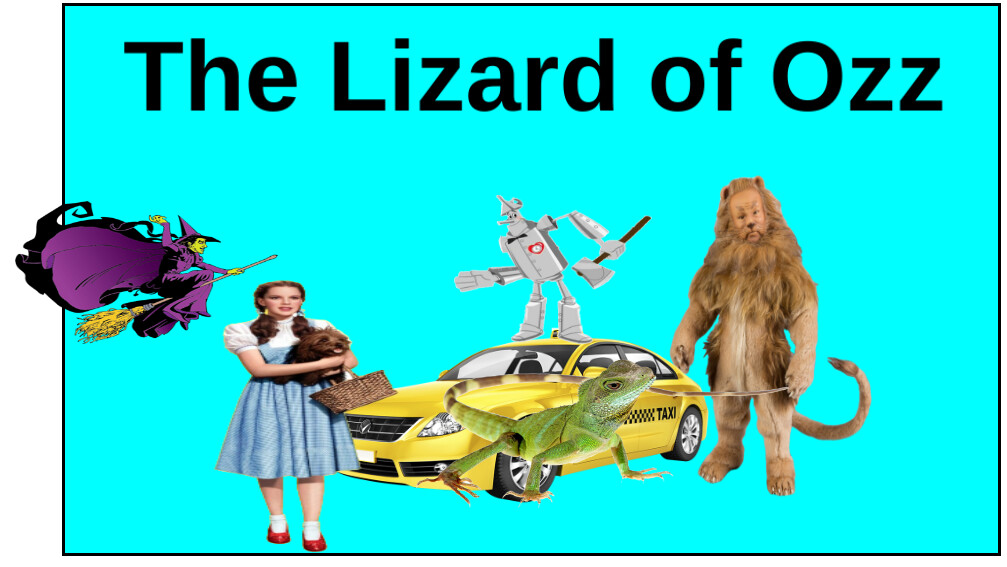
By connecting 5 objects to one “super” object, and then placing those “super” objects in a memory palace you can have an orderly and efficient peg list that is nicely divided in chunks of 5 pegs.


image

Why not just use a number based peg list?

Anyone with a memory system for numbers also has a peg list (100 pegs for a 2 digit number system for example). However when you for example try to memorize a list of random words quickly (by connecting them to the pegs) in order to impress friends and family members, a number based peg list kind of requires that you keep counting in your head and this makes using those pegs more difficult.

Why not use a memory palace?

The memory palace you need for this system doesn’t have to be as good as one you would want to use for memorizing numbers or paying cards. You could place 20 “super” objects (and thus have a 100 pegs list) in a single room even if that room is somewhat boring and of not much use for normal memory palace functions. There is no time restriction regarding placing those “super” objects. Put in another way: the memory palaces that are really good can be used for other things.

1 Like

To be honest, I feel like those images are too crowded.

Btw, what would be the benefit of it? To decrease the number of loci?

1 Like

For what reason would they be too crowded and why?

Btw, what would be the benefit of it? To decrease the number of loci?

Having a peg list is like having a super fast notebook. Depending on the kind of information it may be more or less useful than a memory palace. I was more thinking of the memory palace as a way to store multiple peg lists than using the peg list as a way to expand the memory palace. I used to be relatively good at memorizing random words with a number based peg list, a skill I showed off during birthday parties and other social occasions decades ago. However, the problem with a number based peg list is that you sort of need to count during the memorization to know what the next peg is, so this 5 objects peg list method would be much easier.

Many images very close to each other, which makes the image harder to recall completely correct. It’s easy to miss one or two elements. Just my feeling, though.

Ok, I got the problem you’re trying to address, but I don’t get how this method would solve it. Are you saying that the information would be further associated to one of those five pegs? Or are you saying that all those five objects make one unified peg? If the former, that sounds to me like a mini memory palace, so it’d be better to use a real one. If the second, then I don’t see how it would decrease the need for counting.

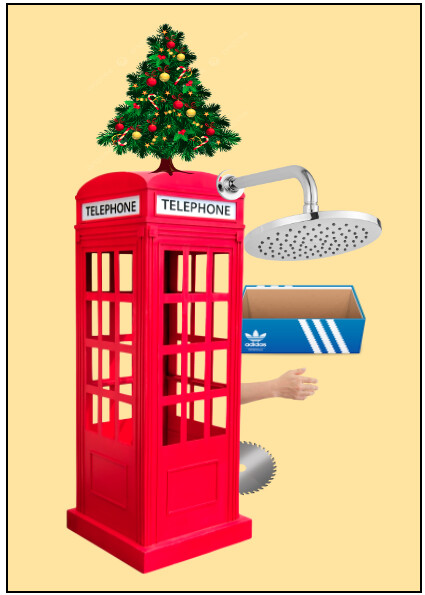
I have a feeling the majority of the objections you have to this system is perhaps based on your misunderstanding of what a peg list is. I am not trying to remember the sequence of a circle saw, a hand, etcetera at high speed by connecting them to the image of a telephone booth. That would indeed be using that image as a memory palace in a way that would not work at all. Instead, if you want to make a comparison between this method and a memory palace, the five objects once learned by means of spaced repetition form 5 locations/pegs. The memory palace helps with learning the order of the different 5 objects/pegs combined images.

With a small amount of training you can visualize all 5 pegs in the correct order (or even together in a single view) in less than 1 second. I think it would be more difficult to do that when your 5 images are distributed over 5 locations in your memory palace. There is an optimum for the amount of pegs per “super” object (like the telephone booth) and that is in accordance with the idea of chunking, like you would represent a telephone number as 0900 55 22 303 and not as 09005522303 and also not as 0 9 0 0 5 5 2 2 3 0 3.

Please also keep in mind that the pictures I made are also made for artistic purposes, so for example the phonebooth example might work better with two objects on the left, one on top and two on the right.

1 Like

You could also use the human structure to create this type of images, where the head, neck, right and left arm, etc. would go.

That is not the case since in memory palaces for words it is very common to pile up images in composition.

The only thing is that they should not be so large as to obstruct the internal view, but rather the size of a person in sight.

Stacking images vertically is a good practice to have several images in a scene since it would be a total waste to use one image of an item.

It is also obvious that it would not be a good idea to use about 100 objects in a scene of a single place unless you expand the place using the story method, which is possible with semantic memory and the story should be organized in a logical and visual way. which will not be very fast.

Do you mean using body parts as pegs or connecting pegs to body parts?

It would be easier for me to understand what you are saying if you used a quote. What is not the case? I don’t know if you referring to the memorization of random words as a party trick (like I used to do decades ago) or memorization of words like Metivier does for long term use (building up your vocabulary collection).

Stacking images vertically is a good practice to have several images in a scene since it would be a total waste to use one image of an item.

I have the same problem (in understanding it) as above; are you talking about images as pegs or images that are supposed to be connected to pegs and for what purpose (competition vs vocabulary building) would your statement apply?

Use the structure of the body to create images for example: 1-blender=head, 2-spoon=neck, 3-apple=chest, 4-almond=stomach, etc… The memory will look for the order you want to make, itself . It will zoom in and find the proportion of the images to create a body based on images.

Although you could also use a blank mannequin and create the character based on objects such as the blender glass on the head, the spoon can come out through the eyes, the apple is held in the mouth, etc… This without having to use a particular character it is just a mannequin.

This is something I learned from Robert Fludd.

I have the same problem with understanding you as in your previous reply. Why would you have to create images if those bodyparts are already usefull as pegs? Is the blender the 1st image you want to remember and thus connected to the head as a peg or is the blender the peg that is going to be used for new information?

The memory will look for the order you want to make, itself . It will zoom in and find the proportion of the images to create a body based on images.

I am truly sorry, but I have no idea what you are trying to say.

Aren’t most objects ‘super objects’?

A car has almost as many ‘objects’ (and ‘super objects’) as one cares to take notice of.

As another example, a door can have carvings, an elaborate knocker (itself can be a ‘super object’), and an elaborate handle (itself can be another ‘super object’), an attached bell as in old store doors, etc.

In short, I don’t think there are ‘super objects’ as distinct from just objects.

Interesting that you think it would be difficult to come up with 20 compound objects that can have multiple pegs. In my door example, I was picturing an old classic door with 6 carved panels and a lions head door knocker and an elegant handle. That’s at minimum 16 pegs: 7 for the door, 7 for the door knocker, and at minimum 2 for the handle. Of course each of the six carved scenes could have several.

“reduce my standards of what a useful peg might be”

I have no idea what your standards might be, and that would be peculiar to you.

Below is a list of 30 compound objects off the top of my head, many of which could have dozens of pegs. But that depends on how many pegs one actually wants.

For me, I don’t think that having to construct an unusual compound object is preferable to having compound objects that already come with enough structure for many pegs, or I can select just 5 if I wanted to.

A short list of 30 compound objects thought of in very little time, although there are many more:
Car, Bus, Truck, Passenger Airplane, Fighter Jet, Float plane, Cruise Ship, 4-Person Speedboat, Submarine, Rickshaw, Roller skates, Bicycle, Tricycle, Motorcycle, Snowmobile, Compound Microscope, Astronomical Telescope, Fridge, Range, Furnace, Plate of Sushi, Filing cabinet, Tank, Backhoe, Minora, Blender, Analog alarm clock, Grandfather clock, Lawn mower, Sewing machine.

Ultimately this seems to still boil down to finding X number of loci or pegs that can be used in order via sequential association.

I don’t really see how this is functionally any different than creating a memory palace with X number of rooms and designating 5 loci for each room. In this “super object” approach, those “loci” are random objects instead of things that would logically be found in that type of room.

The big question, and I think what Celtic was getting at, would be: is there a solid advantage to creating “super objects” with 5 “sub-objects” that are unrelated to the “anchor object” versus using a familiar object with 5 distinct details?

The answer will vary person to person (as is almost always the case with anything related to memory techniques.)

For me, it would take a lot of effort get the “telephone booth with the christmas tree, showerhead, shoebox, hand, and buzzsaw attached” to a point of practical usability as compared to something like a “car with headlight, door handle, steering wheel, seat, and cupholder.”

It would be more effort for me to construct the super-object with its random attachments, and then place it at a locus where it doesn’t really have a logical connection, and then drill it so that I could instinctively navigate it… than it would be to just use “a car” as the “anchor object” with its logical components as the “sub-objects.”

I’d be much less prone to forget the “sub-objects” of the car and it would be much easier to learn them initially as well because there is a sensible connection between the anchor object and each one of the sub-objects.

I like being imaginative and absurdist when figuring out interactions between my representational imagery and my anchor points, but I think it would be a hindrance to me if all of those anchor points were also like that. I want to navigate to a space, have that space clue me into the loci / anchor object / peg, then have that provide a clear connection to clue me to the representational imagery I want to recall and decode. If I place the telephone booth chimera in my garage, there is nothing about the garage itself that points me to it. But if I have the car in the garage, thats an effortless connection and all my effort can be on making my representational scene memorable.

If you like dealing in the abstract and absurd though, this might be worth playing around with.

1 Like

I agree.

Perhaps it makes sense to say a couple of things before reacting to the rest of your statements. I usually make a post if I have an idea that pops in my mind even if it isn’t the most groundbreaking new thing in the world of mnemonics. I am always hoping for other forum members to play with the ideas I am suggesting and come up with something similar but better, but that doesn’t happen all that often.

Anything that you can do with a peglist can also be done with a memory palace (probably better at most cases), but since I don’t have a large memory palace, I thought of how to create a peg list of reasonable size that would also be structured so that you can more or less keep track of how many pegs you have used at any point of the list. So I thought of physically chunking 5 objects together in a hopefully memorable way.

The initial responses in this thread appear to be in the category of “either they don’t understand what my idea is and/or I don’t understand what they are trying to say”. The last responder is in my humble opinion deliberately misreading what I have said and making absolutely pointless rhetorical remarks about the existence of super objects (it’s just a word that seemed appropriate for the imaginary image collections I created). So that is why I said:

I am ending this topic at least as far as my contribution is concerned.

The Human Tim:

I don’t really see how this is functionally any different than creating a memory palace with X number of rooms and designating 5 loci for each room. In this “super object” approach, those “loci” are random objects instead of things that would logically be found in that type of room.

I agree.

The big question, and I think what Celtic was getting at, would be: is there a solid advantage to creating “super objects” with 5 “sub-objects” that are unrelated to the “anchor object” versus using a familiar object with 5 distinct details?

I think that you are giving Celtic too much credit. For starters, he implies that most objects are super objects:

Aren’t most objects ‘super objects’?

… and in order to prove this he gives an example of one object with 5 pegs and one with 4.

He ends his first response with a sentence that is just rhetorical nonsense:

I don’t think there are ‘super objects’ as distinct from just objects

I am aware that you can use a car for example as a peglist with 5 (or more) pegs; I probably have mentioned in some post that I have used my car at the parking place at work for 10 loci as part of my memory palace. The big question is “can you make a 100 pegs long list with 20 5 pegs natural super objects?”. The answer is going to be very subjective based on what you consider to be a good peg and how easy you can visualize certain complex objects. Just like you said:

The answer will vary person to person (as is almost always the case with anything related to memory techniques.)

The Human Tim:

For me, it would take a lot of effort get the “telephone booth with the christmas tree, showerhead, shoebox, hand, and buzzsaw attached” to a point of practical usability as compared to something like a “car with headlight, door handle, steering wheel, seat, and cup holder.”

The objects that I chose are not random, but it is not easy to explain my personal logic for why I chose this sequence. I agree that even with this logic the car with multiple pegs may still be easier to work with.

I was kind of hoping that other forum members would make an attempt at making their own innovative image collections. Like this whole topic was nothing more than a “here is an idea that might be worth exploring, let’s find out how far we can take it”. Instead it has become a pointless discussion.

At the risk of offending just about everyone in this thread, let me just say that you are pretty much the only responder that is both constructive and capable of communicating in a way that I can fully understand :grin:.

image

1 Like

Hi Eric, your idea of a super object is amazing, I love it so much. I use it in my palaces in rooms of hallways that are nondescript and yet I want to store several things to make it more compact. I was hoping you could tell me how you made your images? I could really use it.Thanks in advance!

1 Like

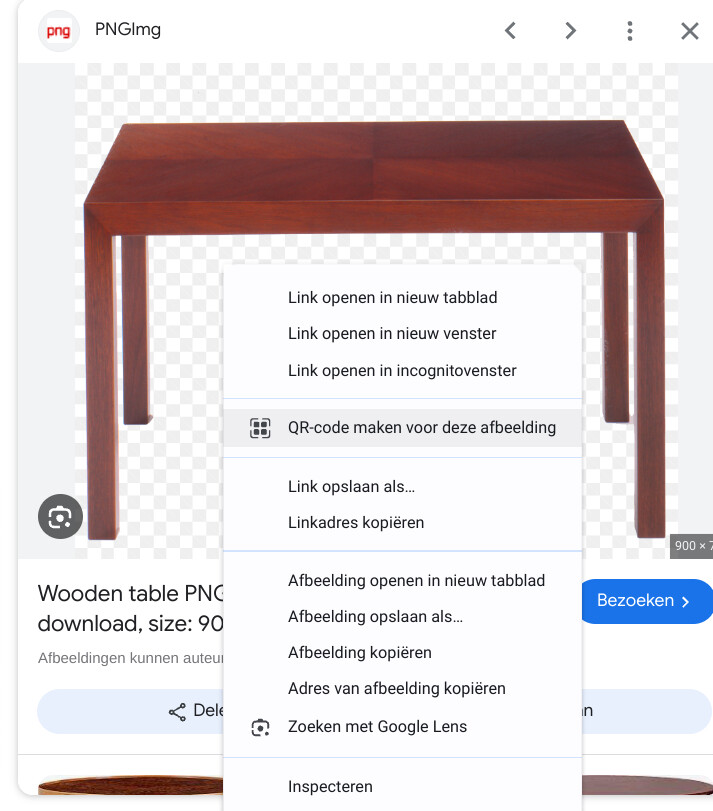
I go to Google images and start with something that I believe can form the basis for 5 pegs, for example a table. PNG images (no background) are the best images to use for this. So …

image

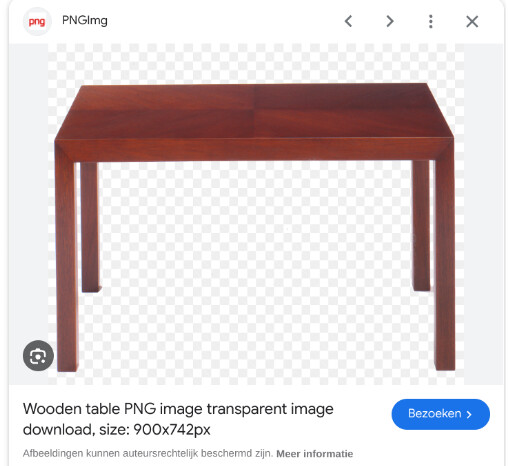
I click on the image I want to use.

A pop-up screen appears. If there are tiny squares in the background, you know you have an actual png image.

I click on “copying image”.

I paste the image in a spreadsheet.

I continue by adding more png images.

1 Like

Thank you so much Erik, this super object concept is so helpful, I can’t understand why there was so much negative feedback, obviously they didn’t “get it”, because it is brilliant.

2 Likes

Let’s pretend that we want to create a peg list with 100 pegs. That means we have to use a memory palace route with 20 locations and place a super object in each location. I find it more efficient to come up with the 20 super objects (without the pegs) first and place them in the memory palace route. The first day I will only repeat the 20 locations with the super objects a couple of times. When you go to sleep your subconscious mind will already work on finding appropriate pegs. The next day I will create these pegs.

Let’s reverse engineer the …

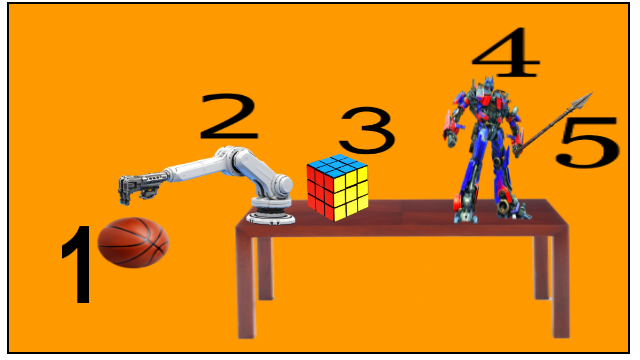
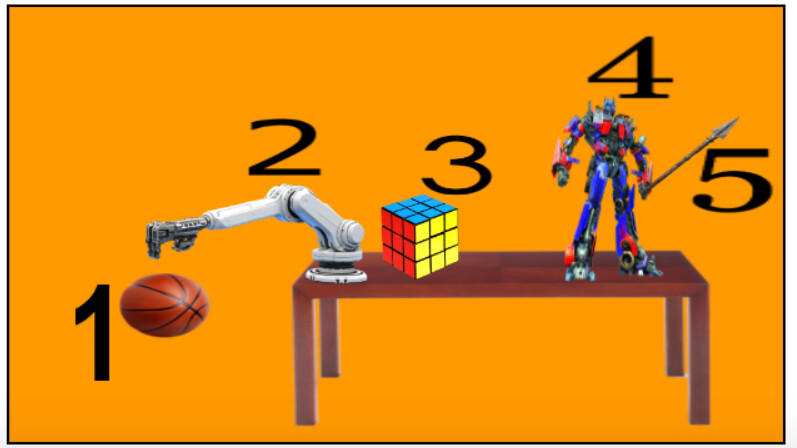
The table could be at the front door of your house (logical first location of a memory palace route). A robot arm is the first thing that comes to mind as a peg for the table for me because it is a very powerful peg that you can connect to the table in a memorable way. The robot arm on the table has the perfect height for bouncing a basketball, so that makes two pegs. The robot arm can only do one thing at the time, but we can imagine what else it could do. Robot arms are operated by computers, so it could also solve a Rubik’s cube, so that is our third peg. Transformers are created by the “All Spark” cube, so that is peg number four. In one of the transformer movies the transformers first made contact with humans in the King Arthur era, so they would know how to handle a spear really well, so that’s peg number five.

Or do you build the memory palace directly within a spreadsheet by pasting PNGs?

I don’t use a spreadsheet or png’s for myself, only for demonstrating the method in this forum thread; If you do things the correct order, you can memorise things as you create them. If the images don’t stick in your head they were probably not very good to begin with.

I have another question: How do you choose which objects to use?

For the super objects I choose objects that allow for other objects to be attached to them. The pegs come naturally to me.

Is it entirely random, or do you follow a mental framework where only specific genres of objects pair with certain super objects?

I think that variation is more important than using genres, but sometimes using genres is a good thing.


1 Like