The basis of this system is a 2 digit number to letter/sound translation system. The first digit is translated as a consonant and the second digit as a vowel (based on Dutch language, the system however can be used with any consonant + vowel translation system).
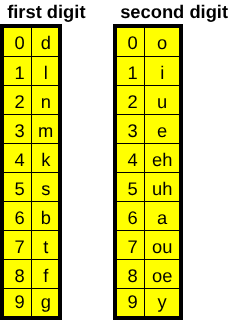
Twin numbers like 00, 11, 22 and so on are translated simply as the vowel sound associated with the second digit; so 99 for example is translated as y.
Let’s have a look at the below images
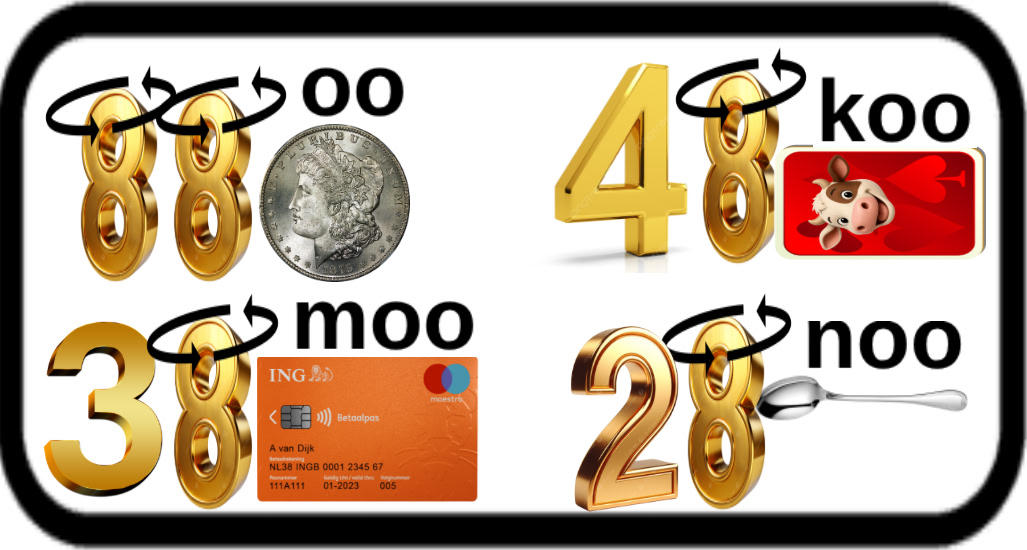
The Dutch “oe” sound is similar to the English “oo” sound in words such as book and look.
In this system every second digit is visually translated as something that …
-
has more mnemonic potential than the original number;
-
is however still identifiable as that number.
So for the number 8 I chose the idea of spinning. Notice that I have also chosen to translate the first digit of the twin number 88 the same way as the second digit. This seemed like a logical choice to me; The spinning motion is connected to the vowel sound “oo” and the twin number 88 is pronounced as only that sound.
I made an attempt to connect all the images representing the 2 digit numbers ending with 8 in a very similar way; the images are always a small object that is pushed against or moved close to the spinning number 8.
There is no relation between the 1 syllable words and the images, however I don’t think that is a big problem for this system. It would be a much bigger problem if it was a 3 digit system.
With a little bit of creativity you can link most of these words with the image. For example 38 is moo which is the sound a cow makes; you can buy a cow with that credit card. Even if you can’t think of anything connecting a word to an image (some words don’t really have any meaning, which is a problem for other language based systems also) it is however (in my experience) not that difficult to connect a word to an image simply by means of spaced repetition.