Hi Lynne, to subscribe, under your initial thread comment there is an option ‘Subscribe to: This Thread’. Go through that option and you should receive updates when new comments are made in the thread.
Just finished The Memory Arts in Renaissance England: A Critical Anthology. The book is both great and overly broad in it’s interpretation of what constitutes relevance to the art of memory. My interest in it was from the perspective of mnemonic techniques throughout history but the book includes a very broad selection of writing making an argument about how deeply memory arts was integrated into medieval society.
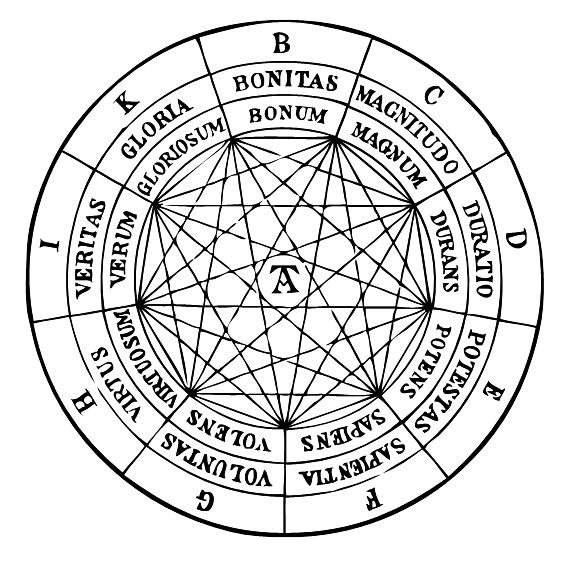
This image of a Lullian wheel I posted in another thread (now posted here) has a complete set of connecting lines between the letters B through K. Mnemonic imagery and information could be stored at each point of intersection between the lines. This creates a sense of place which strikes me as very similar to how each shell or bead on the lukasa creates a sense of place for mnemonic storage. What I don’t currently understand is how the combinatory aspect of Lullian wheels are supposed to work.
What do you think? Could you see a similarity in the underlying principles? The biggest difference to my mind is the tactile sensation of the lukasa would not be present in a Lullian wheel and in a sense (PUN!) the lukasa would actually be better for recall purposes.
3 Likes