Hi Boulder great to hear your update.
Not so great to hear of your problems.
This is so valuable your account of the effort and work you have put in. Valuable to me anyway. I’ve read your post three times with my concentration on full-bung as your experience (accounted brilliantly with lots of honest detail and feedback) with this type of Experimental Memory Palace using an extension of a permanent character in each location extended to one character for ten loci in a row - hasn’t to my knowledge anyway been detailed before. That’s why it is valuable - again to me.
You wrote
The reviews, interesting take on that. reviewing is of course not an art or a science but a practice… and you seem to have put a lot of effort in.
That’s interesting. I’ll come back to this. But just a wee question:
Have you considered - really considered - what this history palace is for? Is it to help you remember in general terms until you have it in context or permanently?
I have found that there is a huge difference between the type of memory a person wants to recall - one of the many parameters being HOW LONG DO I WANT TO REMEMBER THIS? Permanently? Like data. Is it for a couple of weeks until I have it off pat (like a poem or music) - these types of memories become procedural - which funnily enough seems the most difficult for me personally to encode - the information keeps swirling around like leaves in a wind vortex. Then there is the type of memory for competition - to remember for a few minutes - that is amazing and there are loads of experts on the forum for that sort of thing.
Okay, let me say a couple of things:
The experiment has been worth it - so well done,. But laps do not seem to be working and having one character covering ten loci does not appear to have worked. So yes you should (if it cannot be fixed) ditch it. learn from it and move on or modify.
This is only an opinion - but I do think that maybe teh type of palace you are trying to construct is not suitable to the method you are using - and rooms in houses - I am not sure that is er, best.
There are people (serious memorisers on this forum) who doubt that the Penrose Stair -type idea can give you infinite locations (one is Cal bjoern.gumboldt who for some reason has memorised Pi to a couple of thousand digits - or at least done work on that using the Streets of Paris Profile - bjoern.gumboldt - Art of Memory Forum). I read his poo-pooing of the idea of infinite loci using Penrose stairs idea (I think the Penrose Stair name is wrong for me - while I did call it that to get the idea across I also think of it as “laps” like in Formula One or a road race for cyclists and I ALWAYS use streets, not rooms. Streets are big long things - But I agree with the comment. Infinite is not impossible.
What is possible and has been done by many of us is to have a structure of memorising specific amounts of abstract information permanently using the lap and permanent character method. I’ve used it for the piano keyboard and PAO’s of two digits 00-99 and Alphabet Combinations (Z-A and combined numbers - to have a method for memorising number plates - do not ask why…) But that’s 88, 100 and 26+100 - all in long streets. Streets have nooks and crannees and lots of shops or offices and car parking bays and you can turn around and look all sorts of ways. I know some people use Google Earth with VR glasses and that might helps too.
I hope you don;t mind me reminding you the system - twelve laps
Here’s an example from another route - Wellington Street - this was used for a talk
As you will see it is a huge street…
And the images are - enormous and exagerated:
This one was to help people remember to weigh themselves… reminded every time they “walked” past that corner up Wellington Street in their mind’s eye.
Your description here (which is brilliant incidentally! With the use of sound, action etc.)
This is a very vivid image, and in a location (closet entrance) I am pretty sure I will remember this for a while and I could make it permanent…
But you say
“The retrieval is not great”
“The extra effort is unfortunate”
That’s the justification right there, there is something wrong if this is not working - too many characters in the same locis - Annie or Olive? That’s not good and a reason to ditch it.
As I tried to get across - I have one loci “Queen Street” in eight different laps representing digit pairs: zero nine, two one, three three, four six. five seven, six nine, eight one, and nine three.
zero nine on red lap, two one on orange lap, three three on yellow lap, four six on blue lap. five seven on purple lap, six nine on pink lap, eight one on white lap, and nine three on bronze lap.
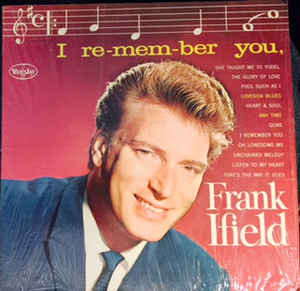
These virtual locations might all be ‘the same’ but they do not confuse me as to get to six-nine ( Frank Ifield the yodelling singer who sang “I Remember You” - British Singer you probably never heard of)
I have to go around red, orange yellow green blue and purple laps and finally get to yodelling Frank Ifield
And becasue the street is so long - I caa have him represent loci 69-1 69-2 etc…
I could NEVER think of that permanent character being anywhere but on that lap. So … I don;t think there is a solution unless it is to switch to streets instead of small rooms.
But really if I were you with the results you are getting - I’d ditch it. And face up to the alternatives.
Hope that helps a bit - and clarifies that laps still might work for some type of palace for you, but not for the one you are using to memorise your US History.
K