Learning the etymology might help. “ilo” is a suffix that means “tool” in Esperanto. Komputilo is computer (computing tool). Kalkulilo is calculator (calculating tool). If you have to say “tool”, “machine”, “device”, or “computer” in Toki Pona, there is probably only one possible word out of the 123 that would fit. 
If you needed a quick mnemonic image for “ilo”, “eel” might work. All nouns in Esperanto end with the letter o, so “eel” has to be followed by the letter o, because all tools are nouns.
Some ideas:
| word | image | English word | image |
|---|---|---|---|
| seme | semi (truck) | what | Thai temple (wat) or light bulb (watt) |
| ni | knee | this/that | point to knee and say “this” |
| anu | a gnu | or | oar |
Memory palace placement (or just associations without locations):
- a semi (seme) crashes into a giant lightbulb (what)
- point to knee (ni) and say “this” (this/that)
- a gnu (anu) is swinging an oar (or)
It’s a real language, but it’s just constructed for a specific purpose. There are many active conlangs like Toki Pona, Esperanto, Interlingua, and Lojban. You can meet people by speaking them.
For example, people can learn Esperanto in as little as a few weeks to a few months. If you don’t have a common language with someone, you could both quickly learn Esperanto and communicate easily without spending years learning each other’s native language.
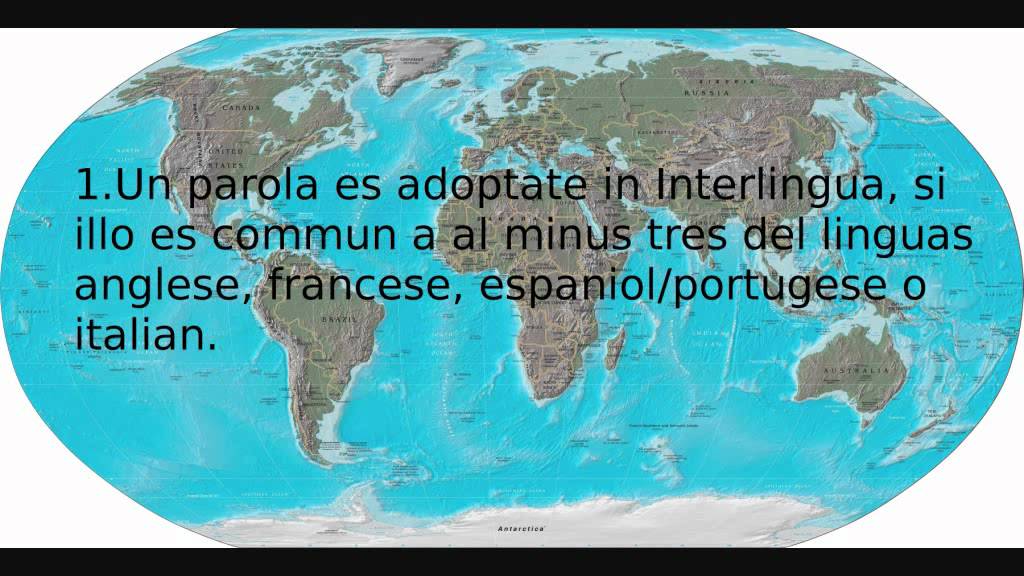
Interlingua is another conlang that was created so that people who were familiar with a Romance language could easily communicate with each other. Here’s an example of Interlingua that might be understandable if you’re familiar with a Romance language:
I learned the vocabulary of Toki Pona but never used it and don’t remember it. I haven’t been able to convince anyone else that I know to learn it, so there weren’t many opportunities to practice.
Related threads: