Digital books and physical books react in different ways to coffee.

4 Likes
Sorry for the late reply. I think there is something in what you say. I think the brain places a lot of weight on permanence. I read a study that in trying to distinguish reality from dream or other hallucinations, the brain chooses the one that is most permanent and consistent. This is the idea behind brain washing. If you construct all the trappings of an alternate reality and force them on someone long enough, he will come to accept that as the true reality.
But I think this is just one element of what I think of as a web of attachments that hold a memory in place. The more it connects with other experience, supporting sensory information, emotions, other people involved and perhaps consequences, which might be no more than telling the story over to someone else, like you did here. I think you will remember that you told me about the birds nests and that will be one more attachment for that memory.
1 Like
As a software developer I have to buy and read a number of large, expensive books every year. For a couple of years, I tried Safari Online which gives one access to a vast library of tech books they publish. On the face of it a good deal in light of the cost of books. I might do it again because of the economy but I really don’t like reading material that way.
One can’t read a tech book like a novel, in linear fashion. At least I can’t. One has to keep jumping back and forth between chapters, sometimes comparing two different pages together. I can do this easily with a physical book. It is awkward with Safari and Kindle. My train of thought is interrupted and I have trouble keeping track of the structure of the information.
There’s a big disparity in taste here and it seems to be a generational thing.
4 Likes
I grew up in the 70s and 80s and prefer paper books too.
2 Likes
I was born in 1996 and strongly prefer paper books wherever possible.
4 Likes
I read both physical and ebooks but my preference depends on what I’m reading. Is it fiction or non-fiction? Is it long or short? Is it reference or just a one-time read?
With fiction I never take notes and I never need the search function so a physical book is ideal for this. It allows me to read quickly.
A short non-fiction book about say intermittent fasting, I just want to crush it quickly and get the juice. So I prefer an ebook where can highlight and search.
However, there are some reference non-fiction books that require jumping back and forth between pages and that is best with a physical book.
When it comes to remembering, I’m not so sure there is much of a problem. I read lots of news etc on the internet and don’t have a problem remembering it. If I really wanted to remember it then I have to work with the information to get repetition. In that case being able to copy and paste is much more efficient than typing or scanning a physical book. And of course I can always print out the parts I need to remember.
3 Likes
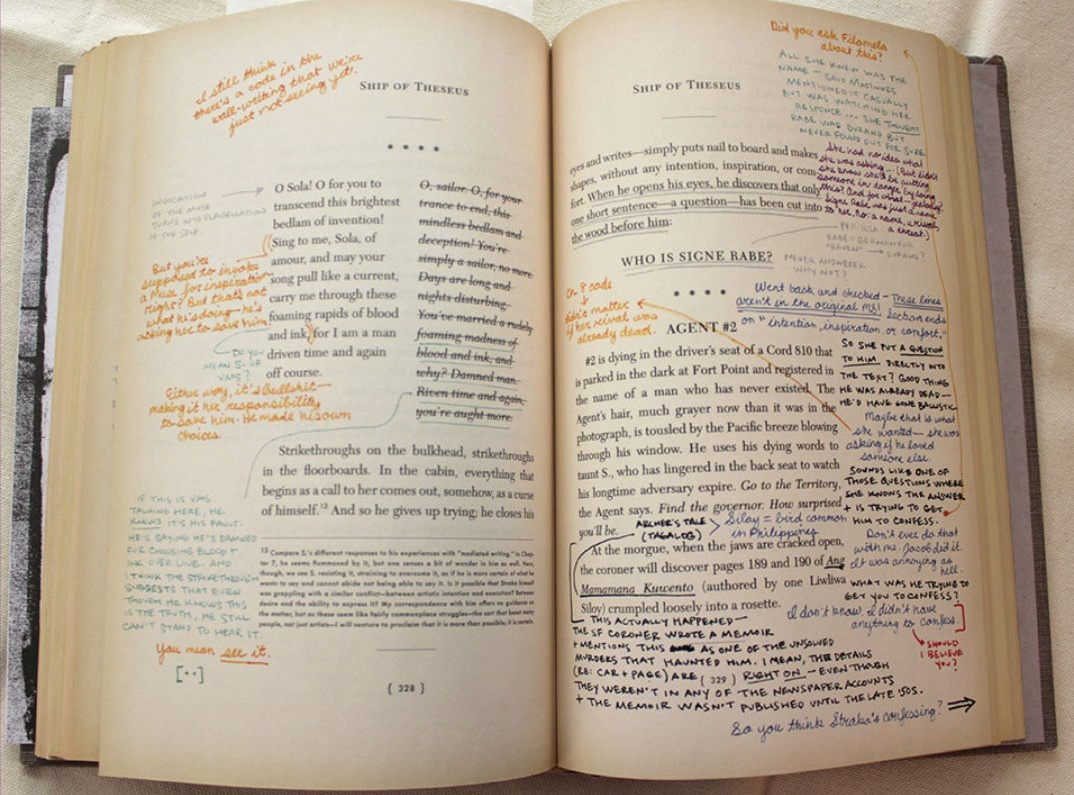
Image of the work “S” by J J Abrahams (the movie director and producer) mentioned before. This is the way it comes out of the box. I leave the image in the original size to be able to notice the details. Different “people” write in different colours. We are invited to track the plot and the story of those persons. I do not know when technology will be able to smoothly allow this kind of interaction.
4 Likes
If you’re interested in fasting, there are some threads here:
- Water Fasting, Calorie Restriction, FMD, and High-nutrient Diets
- The effect on health of alternate day calorie restriction
I’ve been experimenting with it for a few years.
1 Like
Hi, Zvuv. Thank you for your reply.
I like your use of the word “permanence”. That makes sense - the mind would try to figure out what is most important to know and would filter out, or ignore, what isn’t important. A lot of this goes on on an unconscious level.
I read about a study of violin students. Students who said, in answer to a survey, that they only expected to play the instrument for a short time, just didn’t make as much progress as students with a long-term commitment. This was independent of hours spent practicing. Isn’t that interesting?
With locations though, I feel there is more at work than mere permanence.
Locations are a framework of reference points.
In order to make sense of our environment we need them.
I may notice a particularly fine bedspread and admire its texture and colors. But the bed it’s on is essential - I can’t even interpret what it is without that.
Thank you for your thoughts. This is interesting.
2 Likes
How about a game or a puzzle to solve that requires knowledge of the material? Something the kids themselves might have fun dreaming up. Gaming is big time as you know.
1 Like
Thanks for the reply.
I mostly teach people over 20, not children.
When I use loci or other methods, they have the feeling that it is a game. Some students do not connect with the method because they might think that serious works require serious methods, not playing, even if later they would spend endless hours at the console.
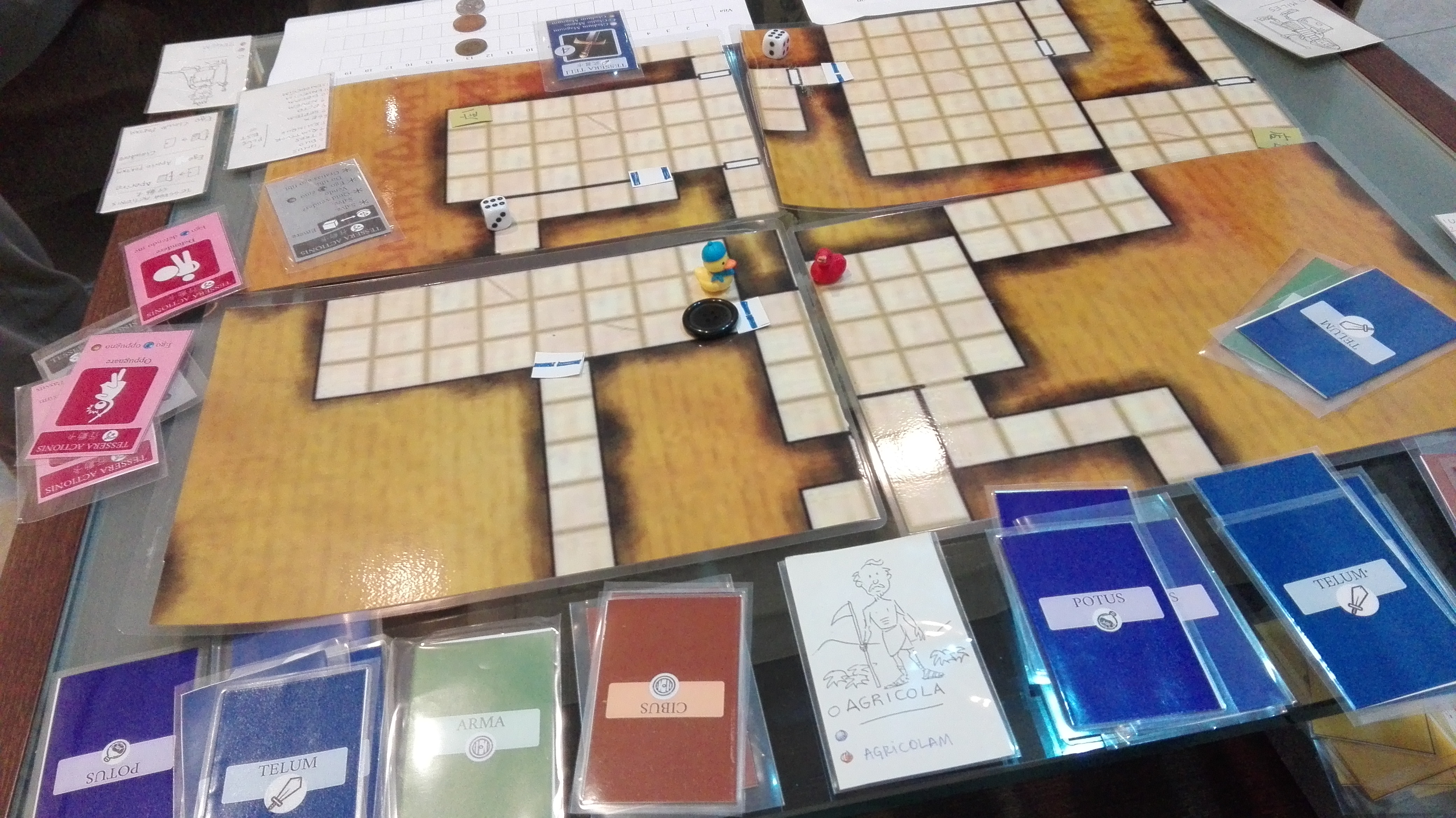
For one of the couses I’m teaching I designed a board game. It is still in the making, but I think it works. It can be used with few students at a time. I have been using it for an informal course, but in the future I want to use it for a curricular program. The problem is the same: for some, both staff and students, studying is studying, playing is playing, and mixing them is suspicious.
2 Likes
But often I teach quite abstract things that cannot be taught with board games.
Taking handwritten notes on a digital system.
From what I have read in many places and experienced many times, writing with the hand facilitates memorization. I have been experimenting with the digital pen. I find it very very useful to take notes. I can write, draw, change colours, etc. Let’s see if it is good in the long term.
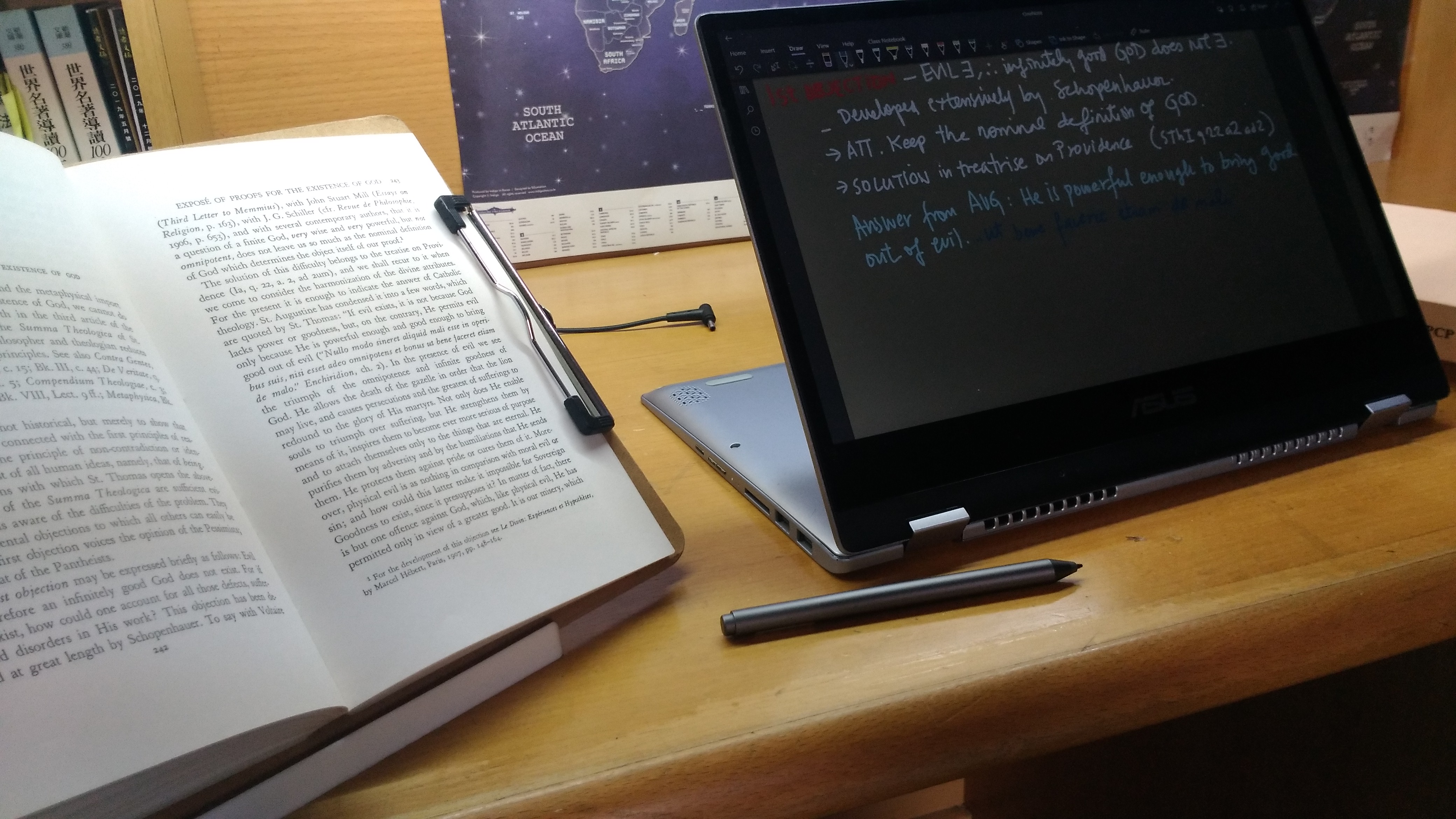
I use this 3 columns layout, because that is what I usually do on paper. The narrow column facilitates also reading on the phone. The page can be printed on pdf if needed. I zoom in to write, with the laptop sitting on my lap, not on the desk.The layout uses warm grey, but in the picture it appears as cold grey. I still would like to have a slightly rough texture, like that of paper.
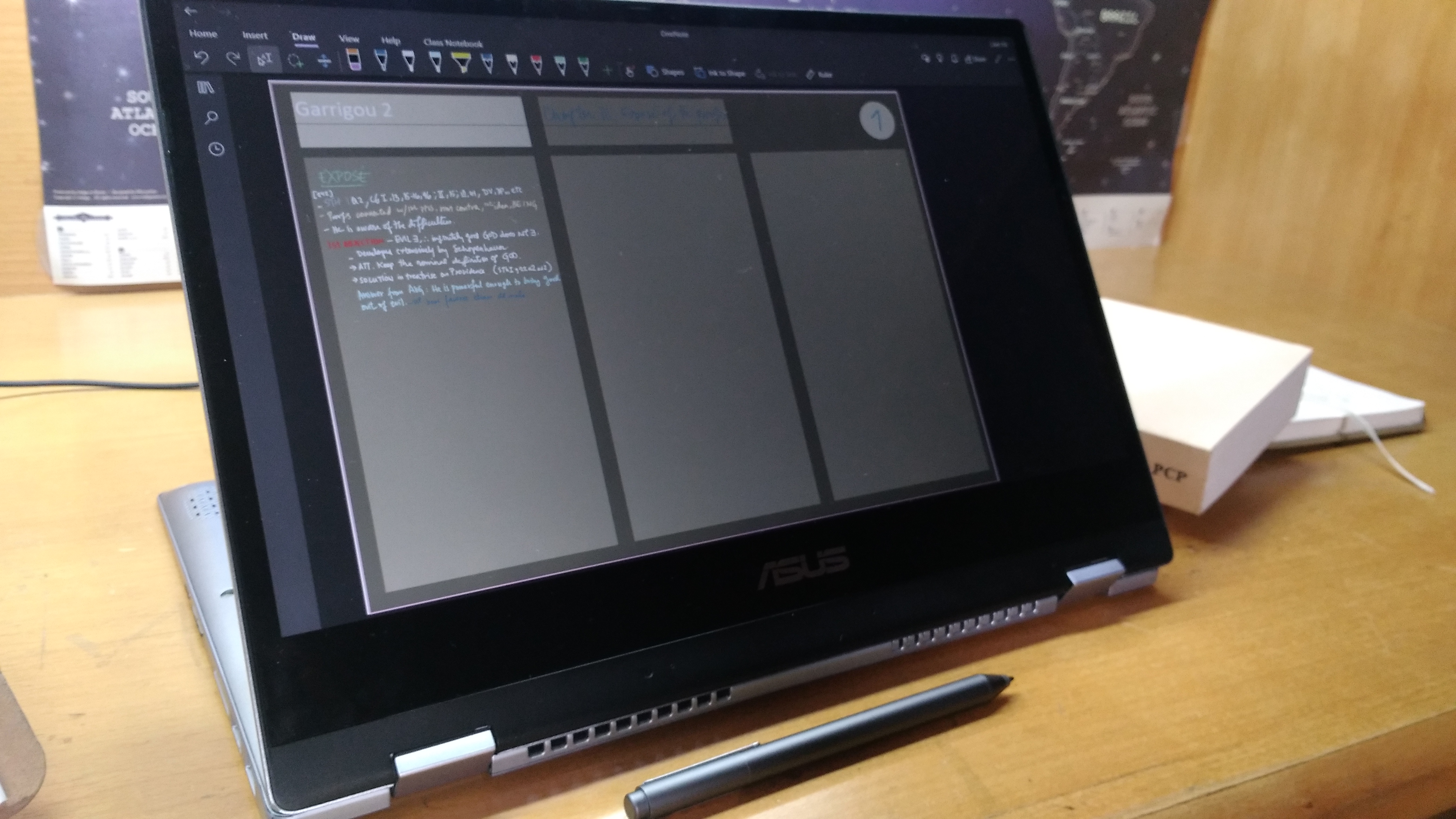
I use Onenote to take notes, both on the computer and on the phone. Any computer or tablet with touch screen that supports pen can be used.
Onenote can transform handwritten text into “printed text” (font), and make it readable. I prefer to keep it this way, even if it is not searchable. I just type some keywords at the top on the page for searching purposes. I know some apps make the handwritten text searchable. Onenote does not. I use Evernote extensively, but for this I find Onenote more flexible and easy to adapt to what I want.
I created the layout using Inkscape.
Digital pens are a bit expensive, I bought a cheaper one from Amazon.
I do not know if mentioning brands goes against the policies of this forum.
As I mentioned somewhere else, if I have a long text, I print a PDF in the same format (landscape, columns) with wide margins and double lines, and I add annotations, highlight, draw, etc.
In any case, I still need a paper notebook to organize my existence, and I find the Bullet Journal very useful, even if the ideas behind it are very simple and almost obvious for me.
1 Like
I’m very glad to see this conversation. It needs a lot more attention. I’m a tech fan. I love it. But I think it melts my brain. I think my mind just thinks things like:
“Oh, I don’t have to remember that because the computer will remember it for me”
and
“What’s on screen is not important because it’s so transient. It’s only going to change soon anyway.”
and
“Linear order is not important. Things are interconnected.”
This seems relevant from Luune:
It says that the medium in which you communicate is part of the message. The brain processes things that way.
This is meta. It affects everything. If you write something by hand you’re more likely to remember it.
Sometimes I use an Alphasmart to write. I find that can be a good compromise.
This is my nemesis. I work in Hong Kong as a teacher. I’m tech mad. But parents aren’t. Pretty much they hate it. Education is pretty serious here. Competes with Singapore for most spent on education here.
All these tech leaders in California getting yankie schools onto ipads… yet they never read Luune and don’t listen to teachers.
The smartest kids have played with tech, I’ve seen that. But there’s also a trade off. This compromise isn’t necessary and this thread is the closest I’ve seen to getting at that.
1 Like
Thinking again about this topic: “Memorable Digital Books”.
Recently I have spend much time listening e-books during travelling and commuting. I realized that when I listen again to a certain part of a book, the place (physical location) I was when I listened that part comes to my mind, even if I was not particularly conscious about the location the first time I listened to it. Also, I strongly link music to the place or period in my life in which I listened to them. How can I use these things to make the book more memorable.
I just began to read a long e-book (non fiction and quite deep), sometimes reading, sometimes listening. How can I make it more memorable?
I copied the table of content of the book, 36 chapters, in a piece of paper. I would like to “assign” something to each chapter, as to make it more memorable. What should it be? An image, a sound, a piece of music?
And image is difficult, since I cannot imagine something while I am immersed in deep reading. Unless each time I begin to read I imagine or watch that image. But I do not think I will create any connection.
Perhaps a piece of music. While reading this kind of works I can only listen baroque music or some specific pieces of more classical periods. Will it work if I assign 36 different pieces to each chapter?
I am not talking now about studying, taking notes, or similar actions. For now I just want to read. So, I do not want to be converting the content into images to put in loci or similar activities. In addition to that, the text-to-speech function of the kindle app is poor among the poorest, so to stop to make notes or to think is really difficult.
Still thinking about this.
1 Like
I’m not sure, but it’s an interesting idea. I wonder if listening to music while reviewing the material would help. You could come up with 36 chords, cadences, or progressions and link each one with a chapter. That would be short enough to review regularly. It might trigger the memories when you hear the sounds in other songs.
I’m thinking about experimenting with something like that but in the opposite direction – learn chords by ear based on associations. Maybe the sound could trigger a specific image or feeling that would help identify the chord.
1 Like
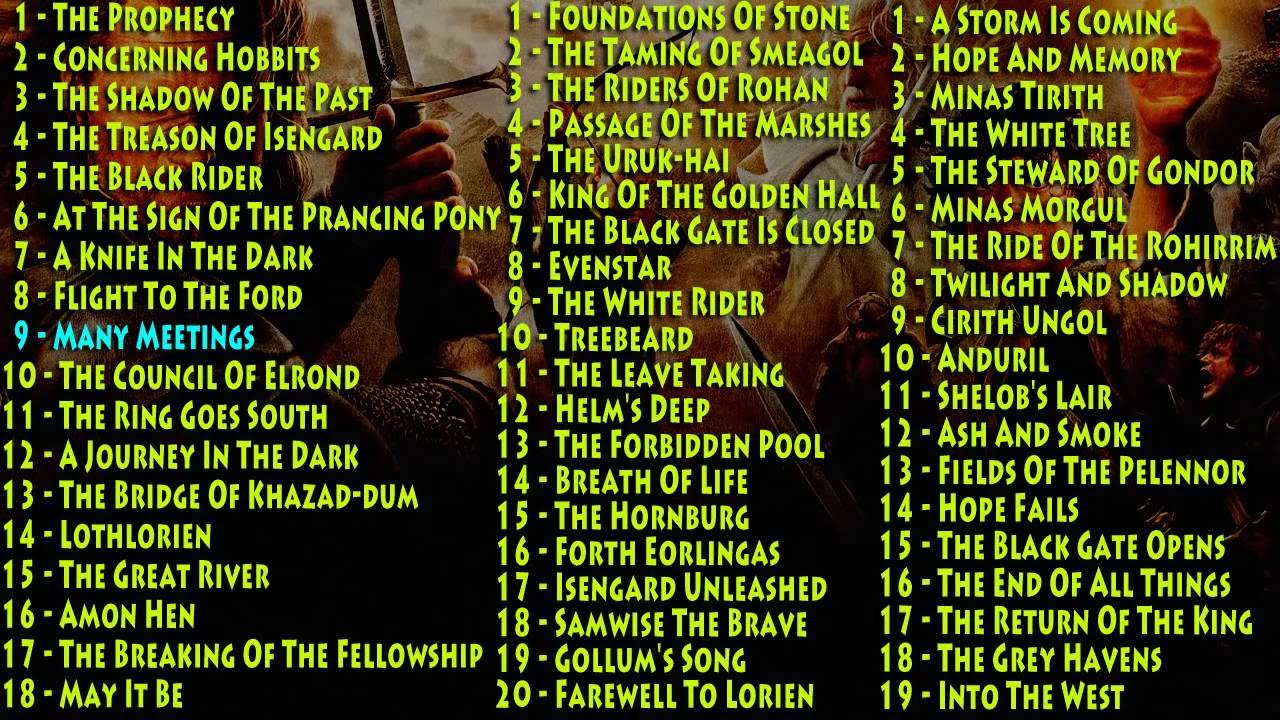
Good idea. Like the Lord of the Rings films, in which each character has a certain music, that even in few seconds transmit the feeling.
57 pieces here:
1 Like
Nice, maybe we are looking for mnemonic leitmotifs.
I wonder what mental effect it would have to associate one scale/mode or chord progression with a group of ideas. Examples: biology could be associated with invented melodies or progressions in natural minor, philosophy with melodies or progressions based on phrygian (or whatever). Hearing those sounds while listening to other music might trigger involuntary memory for the memorized information, because each scale/mode has a different quality. Or the melodies could be hummed while walking through the memory palace, using songs like Lynne Kelly mentions.
My limitation with songs is that I can’t sing, but maybe instruments would be an alternative for me. I’m playing a little guitar again in quarantine, so I might experiment with it.
1 Like