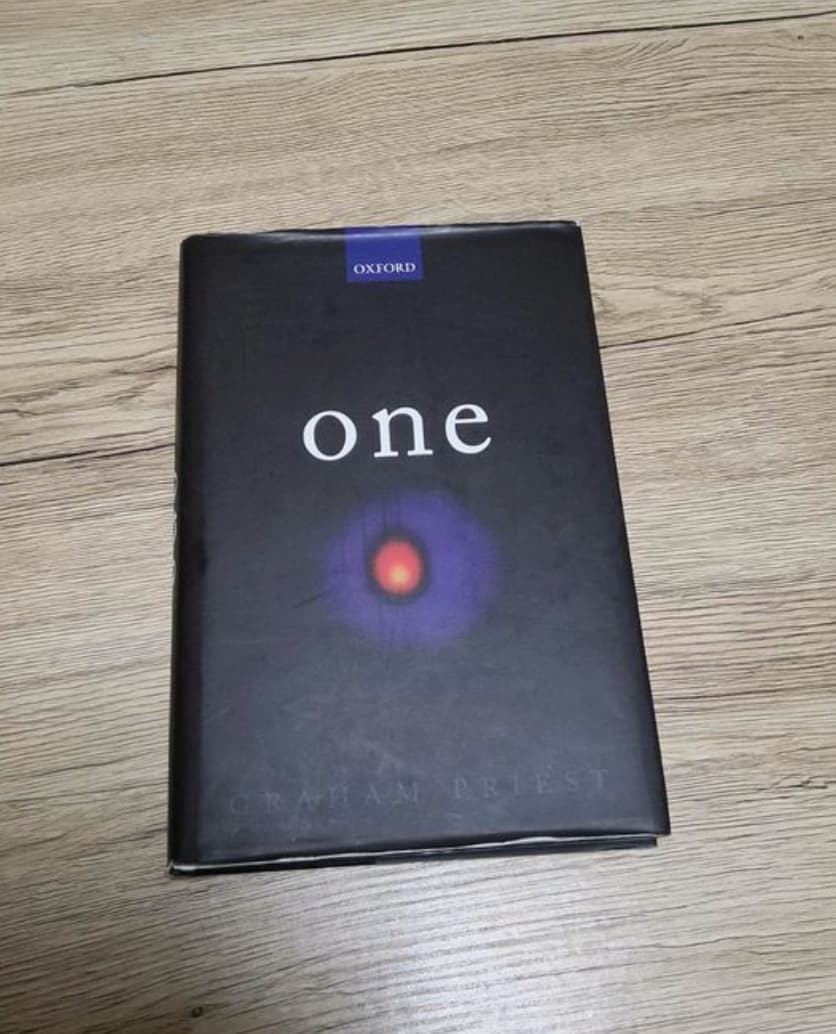
About Repetitions in Mnemonics [Very important point!]

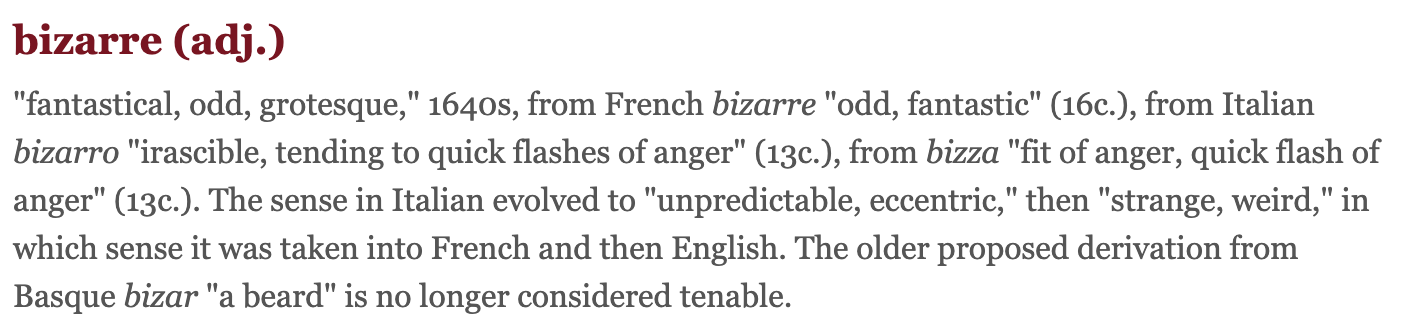
How are we defining “bizarre”?

I would say I use bizarre imagery all the time and that it is absolutely essential to my practice.

Further, I would say that it is the break my brain needs from the vast amount of tedious pablum that makes up the majority of information in the world.

Then there’s the non-tedious material that needs elaboration to become/be revealed to be as interesting as it is.

We might also note that etymologically, “bizarre” likely stems from action. And once upon a time I used the word itself to help me remember “zaino” in Italian.

3 Likes

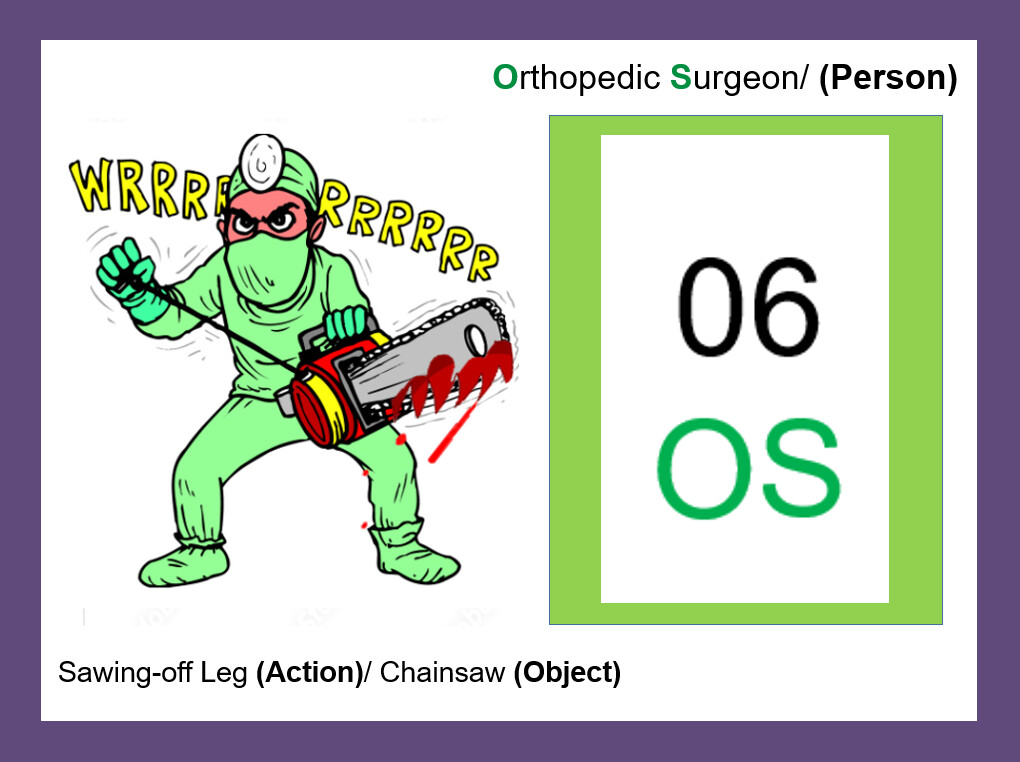
Doug I agree with @metivier I’m a huge fan of bizarre images. Without be-labouring the point the image I have for my PAO system that I am busy in the process of revising is testimony to that. Using the Dominic encoding system for my #06 = OS translates into an Orthopedic Surgeon (Person) for me. Giving the Orthopedic Surgeon the (Action) of Cutting off a leg is in all likelihood not bizarre. Giving my Orthopedic Surgeon a Chainsaw (Object) with which to fulfill the action is highly bizarre! Whilst I’m no specialist on how Orthopedic Surgeons operate, I would imagine a hand-held tool similar to a small hacksaw might get the job or rather “medical procedure” done expediently. My image of my #06 in my PAO as bizarre as it is, is probably only of 80% strength in ‘bizarreness’ if such a measure even exists but beyond the 80% level of bizarreness, I’m a little reluctant to share what I’m visualizing and imagining, least some men in white coats arrive to lock me away somewhere! LOL

In case you missed it:

Note, I added the blood to the chainsaw in the picture shown. Could have really used a bit more in the floor area but didn’t want to overcook things. You could invoke your senses to include the smell of the petrol being used by the chainsaw as well as the vibration in sound waves from the obvious ‘horrific’ (substitute the word ‘bizarre noise’ that the chainsaw is making! Fortunately no actual patients were harmed in the making of my image with resides only in my own head and is only used to make the recall of long-digit numbers easier for me to do.

@fred2, @metivier, I know this is a favorite quality of what we do. It seems unavoidable and necessary in a PAO system. But the research doesn’t say it’s any better than a more relevant image and when spinning stories relevant works better. I’m traveling but I’ll put up the citations soon.

Doug

2 Likes

I’m sure the citations are very interesting.

But scientific studies do not necessary capture or guide what we do or what we can explore.

So when we can, let’s avoid pronouncements that influence people to avoid exploring key areas of mnemonics that have also been clinically studied, particularly with memory athletes.

As every knows, I am into science. But what I’m not into is scientism. Using “bizarre” imagery is the ne plus ultra for many of us, as is using “un-bizarre” imagery.

So let’s encourage people to do the science themselves, and provide citations of many things – including the studies of memory athletes.

Finally, there is the science of doing at the n=1 level. Tentanda via est.

In our realm, this is known to be the most important science of all.

2 Likes

Possibly there is only one sole truth.

But that likely doesn’t play a role here.

There is almost certainly always a difference of application in mnemonics.

And also always a difference. Both can be true without contradiction, and all the more reason to promote memory as inherently a way that must be tried.

1 Like

I suspect it’s the other way around – as I alluded to the “vivid, detailed” part could be a problem due to the significant load it poses on working memory (this would IMO fall into the “extrinsic” category of cognitive load theory, which is generally not conducive to remembering). But bizarre imagery is very easy to picture and remember, even without trying to imagine vivid detail (just the idea of “cat eating bicycle” is enough to form a very memorable image instantly in my mind, for example).

But maybe it’s one of those things that seems like it should work but in practice doesn’t show any significant benefit. I’d be keen to see those citations.
However as long as it’s not actually detrimental to remembering, then I’d keep bizarre imagery in my toolbox because it’s kinda fun!

1 Like

Although I can see such activities placing more cognitive load on some minds, that doesn’t mean all minds.

In any case, the mnemonist who wishes to reduce cognitive load to the bare minimum can and many do. This is well-known and the exercises for doing so are also incredibly fun.

And in my experience, best served with the bizarre heaped as bizarrely high as possible.

I think that repetition could be useful once you find a system effectiveto remember. For example review the images or words several times to reinforce it.

1 Like

My metaphysical @metivier,

Bizarre is not ruled out of my scope of techniques where it becomes necessary as the images become limited, as in a PAO system, and especially under competitive stress where the advantage is not retaining the information over a long period of time. I agree that it is absolutely essentital. I personally have a hard time with retaining imagery that seems unpredictable in behavior in a narrative logical way and have found that I do better with stories. That was proven to me through my experimentation over several years. I can’t and won’t pronounce my experience as authoritative because I have seen many others do extremely well with it. That’s what honest science is to me. It’s an assertion, a repetition of results without one person’s unique experience, then a theory formed around it.

The process and the constraints of the studies are what makes it difficult to make a broad statement about psychology studies for me. I would love to see much more research that explores all the facets of how we memorize.

So for the study and research and it’s impact on my thinking now. One of my favorite aggregations of research in memory is James Worthen’s Mnemonology: Mnemonics for the 21st Century. If you are dealing with non-cued information, bizarre is wonderful according to Worthn. Those unusual images bubbling up stick in your mind in the confluence of the physical world and the world of our imagination. He doesn’t say they are bad, just that they have an advantage over cued information that we store through mnemonics I think.

The golden era of marketing mnemonics in the '60s repeated the assumption of memory researchers that bizarre imagery was more memorable than ordinary images. The assumption was put under scrutiny in 1972 and Wollen found out that the interaction was more important than the bizarreness per se. (Adaptive Memory: Animacy and the Method of Loci, Janell Blunt’s dissertation is where I found this). The example given was that a piano smoking a cigar was just as memorable as the cigar sitting on the piano (even though I would have the cigar setting the piano on fire eventually for more interaction).

Bizarre imagery also sticks out better when surrounded by dull imagery. I worked with a list of completely odd images which became lifeless and hard to see as a whole as they piled up in my mind asking for constant review. But then Jerry Lucas memorized scripture that way. I’m just not built that way.

@user_7e, theories are not about working or not working. They are temporary ideas to be tested and retested if you stay within the science realm. Anecdotal evidence is great for generating ideas for testing but not as proof. That’s why we test and retest to iron out all those possible errors of logic and produce a good set of results that seem to make sense. Personally, I hated all the subjective terms that I found in mnemonic descriptions and one of the hardest analytic tasks I put myself to. I spent probably over three years to refine the definitions, provide synonyms of how other people used them, and give examples to clarify what any term was about in my glossary I produces. It wasn’t for others as much as it was for me to feel like what I said had a meaning that wasn’t going to flop all other the place when confronted with another usage.

What’s interesting to me is that even though I had provided solid documentation for terms and techniques, no one interacted with those descriptions while they were free for years here on the forum. And again, you won’t be able to say that my term is right or wrong, because we are not dealing with a matter which has an unchangeable truth, more likely to be a point of contention in philosophy. The terms and my analysis of techniques are up for conversation as should be in an open discussion with a basis of science. I’ve never had a problem with scientism, hopefully because I like to draw in some common sense, but if you feel I lean that way, let me know.

@Ganxel, I think you seem to get my drift here. It’s not detrimental. But in practice, I’m a bigger fan using other techniques if possible.

@fred2, chainsaws make noise and messes. That’s not bizarre. If they made cotton candy, then we have bizarre.

So, @metivier, don’t think I’m a naysayer of some useful skills and techniques. As I did my full survey of available mnemonic styles, I was suprised that some of the systems I thought were childish and were surpassed in effectiveness by more modern systems had excellent specialized uses that were the best. All systems have benefit is what I’ve concluded but it’s up to the user to develop the system for their mental environment and purposes.

I’m still travelling for a few weeks so won’t be getting back regularly. And maybe this topic has been hijacked by me to refer to bizarreness, so if @Josh wants to reroute it, it wouldn’t be a bad idea.

Doug
4 Likes

Many thanks, @thinkaboutthebible.

No, I don’t think you have any issue with scientism, but it is an issue overall worth highlighting.

My “metaphysical” reaction (if it was metaphysical and if there is a “me” to own it) stems from the notion of “better” based on material found in studies.

It is most certainly “better” to read and be informed by studies where we can. But given free will issues, polysemy in how we use words and how they get interpreted and the need for personal experimentation, this “I” feels called for us to avoid pronouncements.

@user_7e truth is most certainly important, but the truth about truth is even more so. Accurate observation about what others do in memory is perhaps the highest stake issue and I’m fairly confident it will lead us to the same conclusion Aristotle had in De Memoria and that has been repeated countless times since. It is probably the only thing Aristotle and Bruno agreed upon:

Genchi genbutsu.

1 Like

@user_7e, @metivier,

Excellent discussion. What I hear is a theme of “keep it real.” Not too much science, not forcing other people’s opnions out of the discussion, look at what we do in practice, etc. I’m happy you have respect for the scientific method, @user_7e. I enjoy hearing your filtering logic and empircal observations.

Well, kind of. They have a spectrum of being able to do both. If they “work” then they have a good grasp of reality in the physical world. If my theory is that I can only do mnemonic work when I have absolute quiet and no one around, it’s “true” so to speak because I can but it’s not a good grasp on when I can memorize well overall so doesn’t represent my mind.

Laws are just easily describable observations by formulas I think. They describe what happens. Theories describe how these laws might work together in a system like evolution or quantum mechanics. I should call all of my ideas my theory if it’s all about why it works. I tend to use the word “rule” instead of law when describing the skill of any technique. But I could always try to impress people by titling a book “The 3 Laws of Mnemonics.”

I’m just going to set aside discussion on truth and reality. Our resident polymath, @metivier, develops a good solution concerning the whole person and memory in his writings. But to focus on information theory, data is information that hasn’t been interpreted. And knowledge is information that has been made useful. Those are my terms and I do try to see eye-to-eye with people on their terms as long as I understand what they mean. Internally, I’m a mnemonic monsemist, @metivier.

Doug

1 Like

I’m not sure my etymological read on “monsemist” means what you intend by the word, but you do point out the language game Wittgenstein and others have warned against.

If data is information that hasn’t been interpreted, then so to is data always yet to be interpreted again and an interpretation of the original interpretation against the new interpretations ad infinitum.

This is why Bruno and Dickson and Fludd and dare I say “me” (in the absence of such an entity), urge people to see and experience memory as beyond name and form.

The regresses are not necessarily vicious. But some will get caught in them viciously and fail to take action… which many other forces and “laws” of reality could equally ensure no matter what we do.

Thus, “keep it real” is indeed a worthy theme. It’s in one of Bruno’s less memory-oriented books, Seal of Seals.

It’s just that we lop off the notion of the “real” in favor of a philosophy of pure immanence which is countlessly interpreted as a philosophy of transcendence for reasons that seemed to puzzle ye olde Bruno almost into madness. It’s both a complete mystery and completely of no wonder at all that he abandoned lectures “wasted” on deaf ears and gave up at his trial.

2 Likes

@metivier If you open any of these treatises, the text will be understandable, but the meaning for most will not, because there are no access keys. For example, you will read about some divine or not so divine abstractions and understand nothing. Moreover, you can conclude that the author has lost his mind, which does not correlate with reality.

In 1591, Bruno set about teaching the art of memorization to a Venetian aristocrat, Giovanni Mocenigo. Their relationship at some point soured and Bruno was denounced to the Venetian inquisitor.

His workbooks describing mnemonic memorization through images, among which were skulls, devils and other evil spirits, were enough for the Inquisition to accuse him of heresy. The result was the bonfire.

Could Bruno explain to the Inquisitors what was drawn in his notebooks? He could. But, according to what we know, he wouldn’t. Just as a magician wouldn’t want to tell a child the secret of a trick, only to reassure him that it was just “magic”.

The interesting thing is that adults don’t believe in magic. But they believe in mysticism! And they watch out for mystics. For example, it is absolutely correct to say that mnemotechnology is ancient mystical knowledge. Such a fact alone will scare away many potential students.

Doug I agree with what you’ve said above that…“chainsaws make noise and messes that’s not bizarre (in itself). If they made cotton candy, then we have bizarre.”

But so that my example of “bizarreness” in the example I gave is not taken out of context, it would be difficult to argue that an orthopedic surgeon using a “chainsaw” to perform a procedure that requires bones to be cut would not be bizarre or as I said, a Roald Dahlish kind of macabre. Obviously professional specialist orthopedic surgeons would have to exercise a high professional degree of care and ethics and using “chainsaws” to perform their procedures would not be tolerated by any medical board in the world. Thus the use of chainsaws by Orthopedic Surgeons would (to my mind) be bizarre?

1 Like

Can you tell me what shadows are, in your opinion, once you have familiarised yourself with the treatise? Thanks.

1-2 years ago, a friend and I, and another mnemonicist, were reading Bruno’s works and generally studying the history of mnemonics. And we had some answers to our questions. There was a kind of synchronicity, it clicked in our heads.

And I always liked the opening treatise “De umbris idearum”. Bruno did a very good job of laying out the critique of mnemonics, which is exactly the same now as in any other century. More than 400 years have passed since Giordano Bruno’s work on mnemonics. The criticism, blindness, obscurantism and scepticism are still the same. The false myths have only become more entrenched.

You don’t need ‘unusual’ images, you just need to imagine subject 1 and subject 2, linking them without animation or movement. There is information encoded in them. You don’t need to think about how they are different, absurd or whatever. It only shows that one is new to the art of memorisation. You just work with the material, encode it into images and that’s it. Very simple.

So why not represent in motion or vividly, when most of the forum advises so? It’s for your energy saving. The connection will be created in any case, but in my case you spend less time and units of energy (conditional), in the second case a little more.

When you memorise a lot of information (not sports) and it takes 2-8 hours, it’s important to calculate your energy correctly, because you tend to get tired. The connections between images should be made in 0.5 to 3 seconds if you are well trained. Coding, that’s what it’s all about. It takes more time than memorising.

And I’ll write again about the fact that there is neural reinforcement and mechanical repetition/active repetition. The mnemonist only uses reinforcement, by looking at images in the head. He does not need to repeat everything several times to remember anything at all. He doesn’t need active repetition, however much you like it.

  1. For 5 years, I only memorize mnemonically.
  2. The information I write on the forum has been revealed in practice.
  3. I have friends who do mnemonics and they share their findings, which are often the same.
  4. If I criticise something, I suggest a better option, the right way, even if it is considered wrong or weaker than the criticised by society. In this forum, my task was to fill in the gaps of information.

To be honest, as long as I observe this forum, I observe a huge number of misconceptions, myths, mistakes and untruths. Even if ineffective methods work, that doesn’t mean you should only follow them with dogma. I have no aim to argue with everyone, to prove how things really are. Your thoughts and brains are only yours to change. He who seeks, he will find.

@fred2, my non-polysemistic (maybe monosemist is better, all these words are not in the dictionary) mind wants to define bizarre as unassociated with any expected behavior no matter how exaggerated. In other words, surgeons cut. If they use the most gruesome type of instrument to cut that normally cuts, that’s OK. Imagination throws ethics to the wind.

So, I relate action to bizarre. I can see that you use extremely abnormal qualities as bizarre. I like abnormal that comes from exaggeration but when I make an association, if it doesn’t make sense in a narrative sequence of actions, it doesn’t work for me. Thanks for explaining. That kind of bizarre is very useful.

Doug

1 Like

I don’t know what treatises you are referring to, and I don’t know where the idea the Inquisition was concerned with Bruno’s memory images comes from either.

I haven’t read everything, but in the trial documents I have read, their key concerns have to do with other issues, not mnemonics. It is highly unlikely that his execution had anything to do with anything other than his refusal to recant. His stubbornness (or conviction that being right was better than being alive) is probably the true source of his early demise based on his conclusions about the nature of the solar system and its implications for the definition of God.

“Magic” in Bruno is basically what we now call science. You can say that it is “absolutely correct” that these techniques are “ancient mystical knowledge,” but this kind of pronouncement is precisely the kind of thing that likely raised Bruno’s ire. Many scholars agree that it is incorrect to interpret him as mystical, hermetic or any such thing.

If you think it through in the larger sweep of philosophy, his texts read a lot like Schopenhauer and Nietzsche. This is why it is one of history’s cruel ironies that Nietzsche dismisses Bruno – and I have it from good sources that this is because Nietzsche only had access to a few poems of Bruno’s that were sent to him from a friend.

Beyond that, including the trial documents and his books, we have every reason to believe that Bruno was a nondual materialist who lived through a proto-scientific era populated by people not ready to resolve into facts and features of reality most of us now take for granted.

As for him “hiding” his memory techniques from the Inquisition, that I would like to see. He certainly doesn’t hide them in his books, but he is clearly aware that without action (the clavis magna), nothing happens for the learner.

Hence, the occasional flirtation with outrageous statements about how some people will fail to
understand him, etc. It’s pretty clear to me he’s trying to prompt action and engagement.

It is the Renaissance equivalent of when Tony Robbins used to say, “Stop the tape. Don’t listen further until you do the exercise… Now, I’m trusting you here. You stopped the tape and did the exercise, right? No? Then go back and do the exercise!”

So here’s an exercise: Let’s try and stop ourselves from saying “You don’t need…”

Not one amongst us knows what the new student (or even the more familiar student of mnemonics) need.

All we know is Yoda 101. Do or do not. There is no try. Once the doing is in place, it’s easier to figure out what might be needed to improve.

How it works out for one is ultimately at small variance with how it works out for all. But none of us actually knows and each needs to experiment.

The very notion of repetition is itself variable both to the individual learner and the context of what they are learning and when.

And that’s where we find the real problems that raw mnemonics simply do not solve on their own. The real problems are contextual to the material that needs to be learned.

And that’s why cliches like “seek and ye shall find” sound good, but rarely work. Let’s strive for better.

1 Like