New UCLA research indicates that lost memories can be restored. The findings offer some hope for patients in the early stages of Alzheimer’s disease.
For decades, most neuroscientists have believed that memories are stored at the synapses — the connections between brain cells, or neurons — which are destroyed by Alzheimer’s disease. The new study provides evidence contradicting the idea that long-term memory is stored at synapses.
“Long-term memory is not stored at the synapse,” said David Glanzman, a senior author of the study, and a UCLA professor of integrative biology and physiology and of neurobiology. “That’s a radical idea, but that’s where the evidence leads. The nervous system appears to be able to regenerate lost synaptic connections. If you can restore the synaptic connections, the memory will come back. It won’t be easy, but I believe it’s possible.”
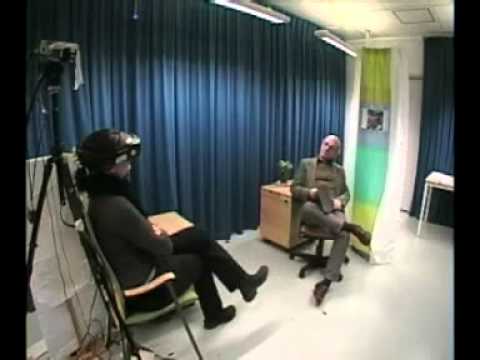
Apparently PTSD victims don’t remember either, they often see the incident through 3rd person view. They did an experiment where they simulated 3rd person/OBE view to persons present in a lecture. The group who were not simulated did better in recall than those having 3rd person view.
They hypothesise that reversing the same technology demonstrated in the video would be beneficial for reconstructing PTSD patients’ memories.
Maybe the Josh’s article’s claim that “memories not stored in synapses” and “lost synapses can be regenerated” also explains the 3rd view —regenerates—> 1st view, I could hypothesise about an existing network of synapses (3rd view) is helping to reconstruct a similar network to it (the original lost 1st view). But why did the 3rd view exist in the first place? They say the trauma causes incorrect store into neural-network. Perhaps every memory generates first a rough sketch, then continues with constructing the master Web. Sketch is not so specific and harder to break, it can be used to reconstruct the master Web of synapses.
I am a bit in doubt about this, maybe because I have a wrong image in my mind about what happens in the brain during the process.
What I understood from it is that with certain substances or methods, the scientists want to restore broken connections. I am not sure how this would look, but to me it would seem like it is almost too easy. If connections would be severed, I can imagine how it would work, but what if the connections are completely gone? Getting those connections back would seem to me like a challenge and a huge open gap that can be filled with false memories because the brain wants to make sense of things.
But again, I don’t know enough about neurology, the experiment or even alzheimer’s to give a solid opinion.
Amazing plasticity the brain has. Just read this Josh’s post of a severe case of hydrocephalus - a guy with an IQ of 126 got a math degree and accidentally later discovered he was missing 95% of his brain! If that’s true, I’ll believe anything about plasticity.
Wonder if brain can really compensate/regenerate almost everything, including lost memories, then is true that “from a drop of water we can deduce the existence of Niagara Waterfalls”, meaning if a future scientist gets a tiny sample of someone’s brain, he could use it to construct a new whole one from it identical to the original. If so, first the “Niagara” would have to be visioned, a computer model made of it. And from that model he could read your whole life story out of.